At engineering firm S&ME in Raleigh, employees don’t just work at the company; they own it.
“Employee-owned firms, typically, the decision-making remains local. We’re not reporting to a Board of Directors somewhere else,” President & CEO Stewart Laney said.
It’s a model that city officials hope others will adopt to avoid what Mayor Janet Cowell calls the “silver tsunami.”
“It’s when a lot of business owners who are 55 and over are going to retire, and they may sell their business to somebody outside the state or the area,” Cowell said. “That’s very destabilizing, not just for the people who work there, but for the whole community.”
Cowell said potentially thousands of Raleigh-area businesses are at risk.
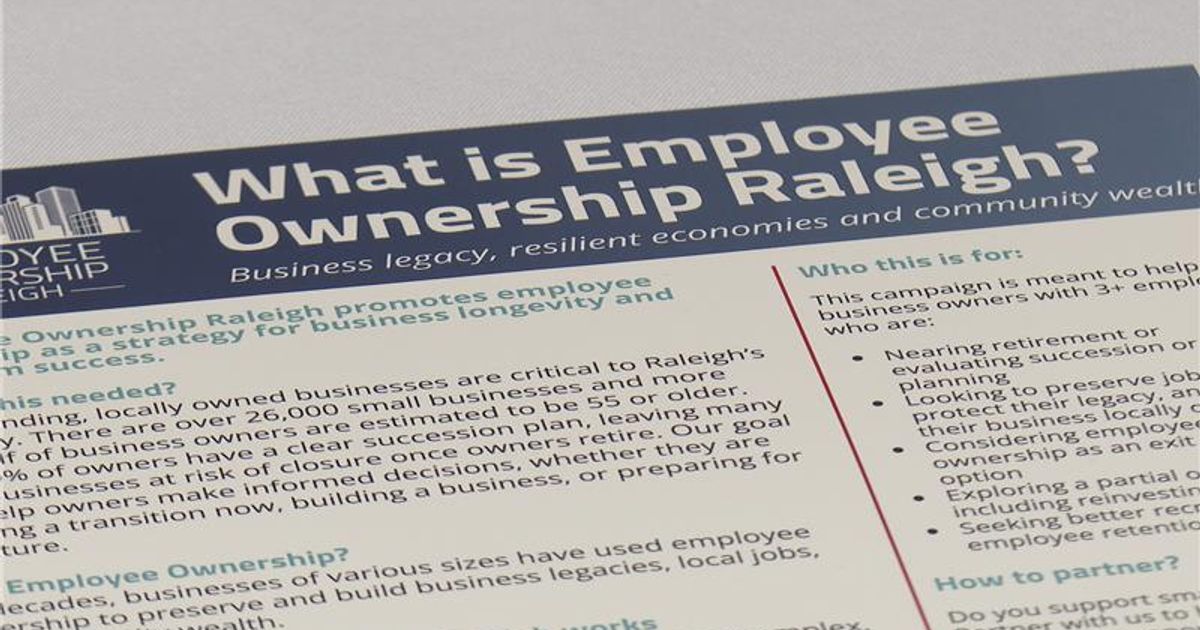
On Wednesday, she announced that city will be a partner in the Employee Ownership Raleigh Initiative, hoping to keep businesses, and the tax dollars they generate, local when owners retire.
The initiative will run for one year and provide resources plus coaching to businesses with the goal of keeping them local.
Laney explains at employee-owned businesses, commonly referred to as ESOPs, instead of 401(k) employees own all company shares, which are then paid out at retirement.
There are roughly 750,000 employee owners in North Carolina, according to the NC Employee Ownership Center.
Critics say the model can come with financial risk for employees and lower sale prices for owners.
“Do you want the legacy of what you’ve built to continue? This is a way to do that,” Cowell said.
For Laney, the model can come with challenges, but he says employees and communities can benefit.
“When the company performs well, because of the performance of the employees, it’s imperative we return that value. That takes time to educate,” Laney said.
Other cities like Durham, New York and Atlanta have started similar efforts.