

New University of Miami Miller School of Medicine research links long‑term physical activity, diet quality and social engagement to stronger cognition and brain resilience in older adults.
Staying physically active, eating well and remaining socially engaged over the course of adulthood may do more than support overall wellness. They may help protect the brain against cognitive decline later in life.
That’s the conclusion of a new study led by researchers at the University of Miami Miller School of Medicine’s Comprehensive Center for Brain Health, published in the Journal of Alzheimer’s Disease.
Tracking Lifestyle Habits Across the Adult Life Span
Drawing on data from the Miller School’s Healthy Brain Initiative, the study found that adults who reported maintaining or improving healthy lifestyle behaviors since early adulthood showed better cognitive performance, greater brain resilience and healthier brain structures in later life, especially when multiple healthy behaviors were combined.
“What makes these findings especially meaningful is that we’re capturing lifestyle patterns across decades, not just a snapshot in older age,” said Magdalena Tolea, Ph.D., research assistant professor of neurology at the Miller School, associate director of research at the Comprehensive Center for Brain Health and lead author of the study. “Participants who reported maintaining or improving healthy behaviors since early adulthood consistently showed better brain health outcomes later in life, with similar benefits observed in men and women.”

The research team analyzed baseline data from 260 adults ages 50 to 92 enrolled in the Healthy Brain Initiative. Participants undergo annual cognitive testing, physical and neurological exams, brain imaging and blood‑based biomarker assessments.
In this cross-sectional analysis, participants were asked to compare their current lifestyle habits — physical activity, diet, cognitive activity and social engagement — with how they remembered their behaviors at age 25. Researchers then examined how reported changes across adulthood were associated with present‑day brain health.
To measure outcomes, the team assessed global cognition, a composite Resilience Index reflecting protective brain health factors, blood‑based markers of Alzheimer’s disease and neurodegeneration and structural brain changes on MRI.
“By asking people to reflect on how their lifestyles have changed since young adulthood, we’re able to approximate long‑term patterns that are otherwise very difficult to measure as they typically require repeated assessments throughout life,” Dr. Tolea said. “Those patterns, which correlate well with current activity levels and health, appear to matter for how the brain ages.”
Physical Activity and Diet Show the Strongest Cognitive Links
Among individual behaviors, physical activity and diet emerged as the most consistent predictors of better brain health.
Participants who reported maintaining or increasing physical activity since early adulthood scored higher on global cognitive tests and showed greater brain resilience than those who reported declining activity levels. Similarly, those who maintained or improved their diet, often reflecting healthier eating patterns such as the MIND diet, demonstrated better cognitive performance and resilience.
“Physical activity and nutrition appear to form a foundation for brain resilience,” said Dr. Tolea. “These behaviors help the brain better tolerate age‑related and disease‑related changes.”
Notably, these associations were observed even among participants with mild cognitive impairment, suggesting that healthy lifestyle behaviors may remain relevant after early signs of decline emerge.
The Power of Combining Healthy Behaviors
The strongest effects were seen when researchers examined combinations of lifestyle behaviors.
Participants who reported positive changes in both physical activity and diet showed significantly greater benefits for cognition and resilience than those who improved only one behavior. These combined effects were stronger than expected from either behavior alone, suggesting a synergistic relationship.
Social engagement also played an important, supporting role. While increased social activity alone was more strongly linked to resilience than to cognitive test scores, it was associated with larger amygdala volume, a brain region involved in emotional regulation and memory that is affected early in Alzheimer’s disease.
“No single behavior works in isolation,” Dr. Tolea said. “Our findings reinforce the idea that combining movement, nutrition and social connection offers the greatest potential to support brain health as we age while helping us identify targets for intervention to prevent cognitive decline.”
Implications for Patients and Prevention
Although lifestyle changes were not strongly associated with Alzheimer’s disease biomarkers in blood, the researchers emphasize that this does not diminish their importance. Many participants were cognitively normal or in early stages of impairment, when pathological changes may still be subtle.
Instead, lifestyle behaviors may exert their protective effects by building cognitive reserve and resilience, allowing the brain to function better despite underlying changes.
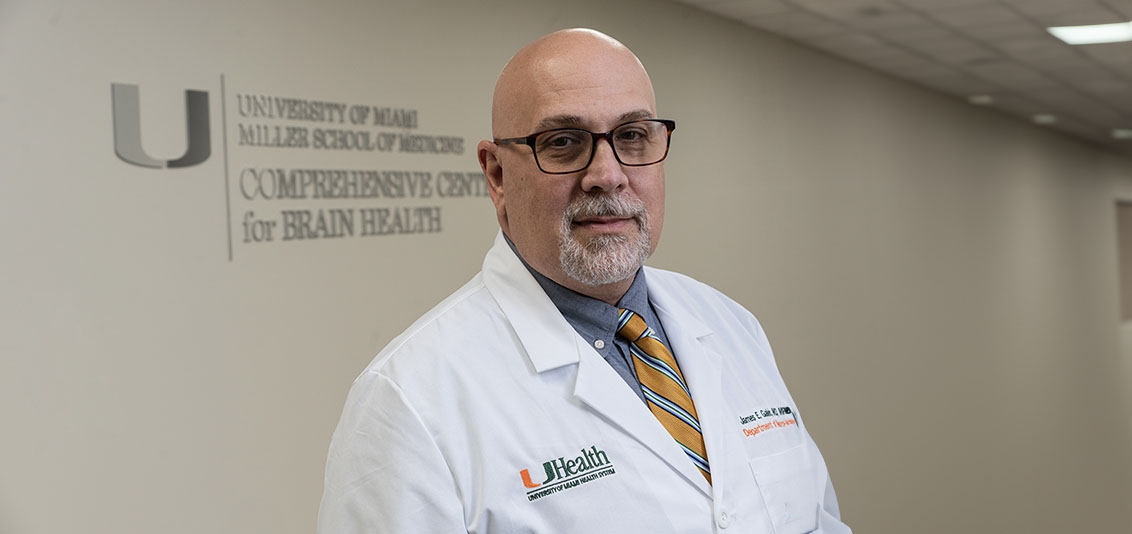
“These results are encouraging because they suggest people have meaningful opportunities to support their brain health across the life course,” said James E. Galvin, M.D., M.P.H., professor of neurology at the Miller School, chief of the Cognitive Neurology Division, founding director of the Comprehensive Center for Brain Health and director of the Lewy Body Dementia Research Center of Excellence. “Even later in life, maintaining healthy behaviors may help preserve cognitive function and quality of life. These findings reinforce our mission and vision at the Comprehensive Center for Brain Health that you can ‘Build a Better Brain, Build a Better You.’”
For patients and clinicians, the takeaway is both practical and hopeful. Long‑term engagement in healthy lifestyle behaviors may play a measurable role in promoting brain health and reducing the risk of cognitive decline.
Tags: Alzheimer’s disease, brain health, cognitive decline, Comprehensive Center for Brain Health, dementia, Department of Neurology, Dr. James Galvin, Dr. Magdalena Tolea, neurology, Newsroom