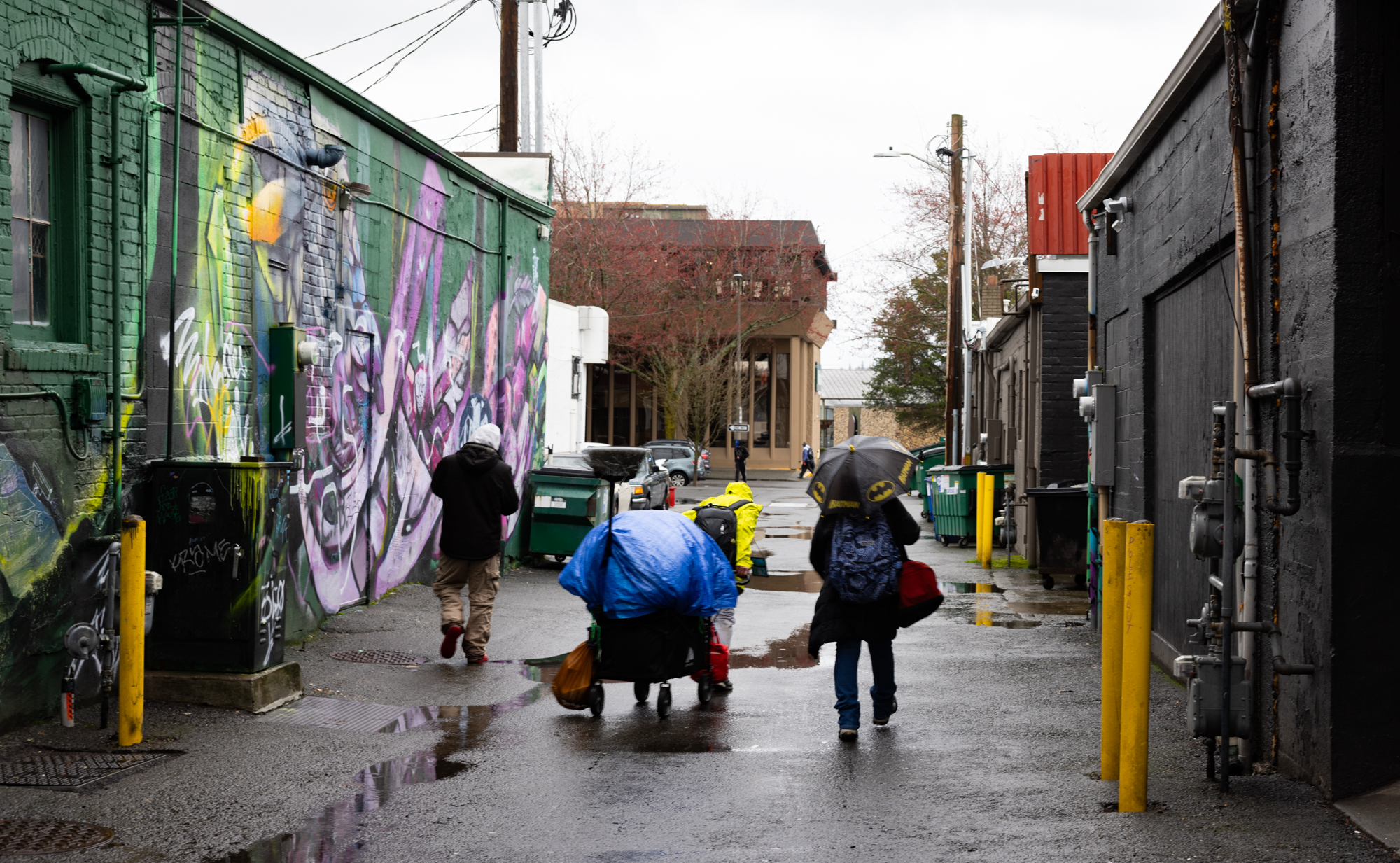
Some downtown Bellingham alleys may be fenced off to disrupt drug dealing and use, and other illegal activities that have pushed nearby businesses to a breaking point.
An ordinance proposed by City of Bellingham staff would allow the police chief to request the temporary closure of an alley in order to discourage drug dealing, provide a respite to business owners and implement design improvements. City council introduced the ordinance Monday, March 23.
Bellingham Police Department Deputy Chief Jay Hart told the council that in his 26-year tenure with the department, some alleys have always had higher crime rates, but that the conditions are now “probably the worst” that he’s seen.
In 2025, the police department documented 108 incidents of violence and 342 drug-related calls, including 89 overdoses, on one three-block section of the Railroad/Cornwall alley, according to the city’s staff report.
Mayor Kim Lund said she’s concerned businesses adjacent to the alleys are reaching a “tipping point” and facing the possibility of permanent closure because of the impacts on their employees. Multiple business owners told Cascadia Daily News they were concerned and frustrated about open drug use and dealing downtown.
Horseshoe Cafe co-owner Kate Groen said she’s “intrigued” to see how the strategy works. The alley between Magnolia and Holly Street has been an issue for a long time but conditions have worsened since the pandemic, said Groen, who has owned the cafe since 2015.
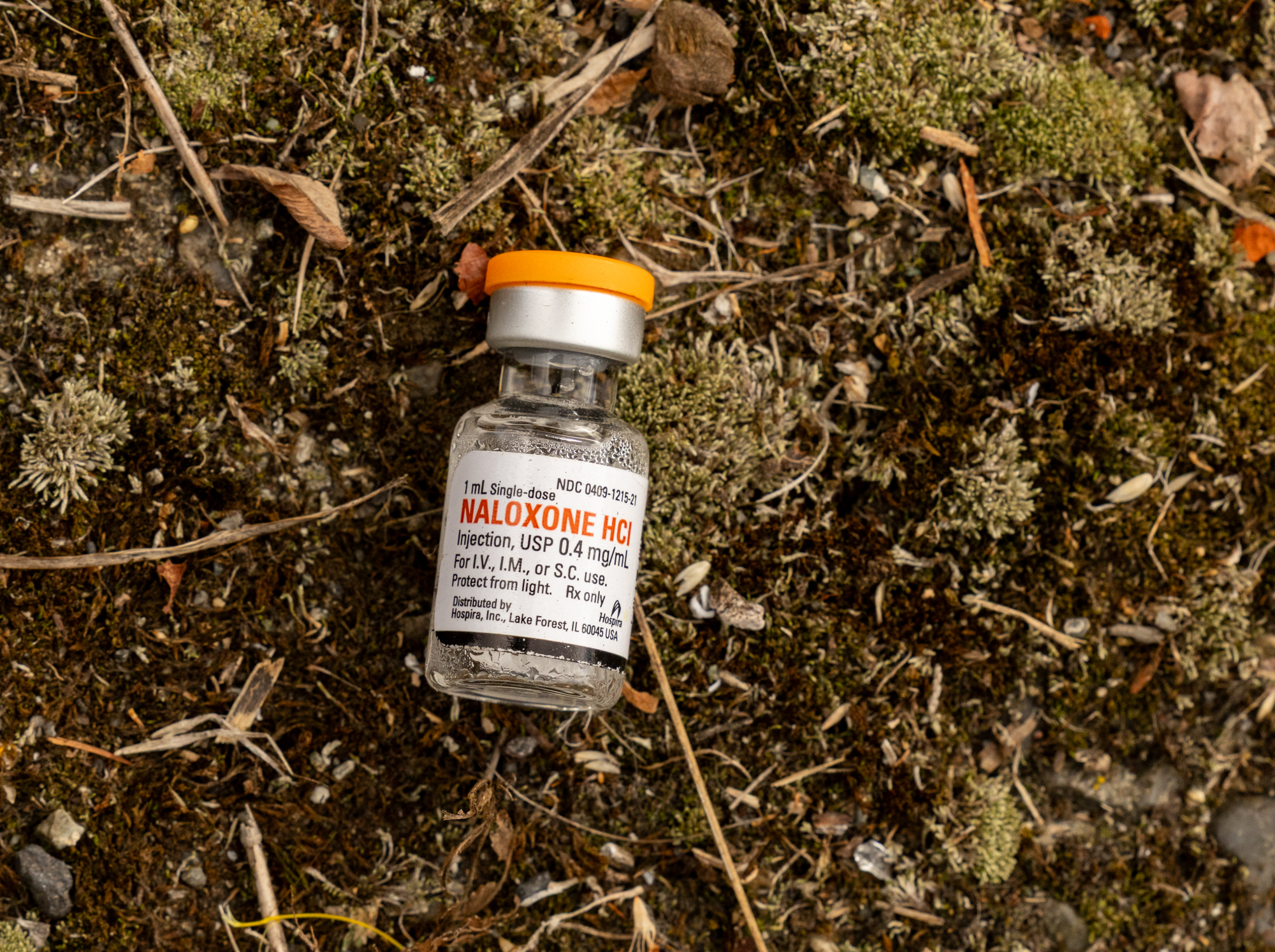
She said it can be “overwhelming and traumatic” for staff members who have to call 911 or administer naloxone to people overdosing on drugs. Horseshoe Cafe has lost employees who said they simply couldn’t work downtown anymore.
Groen said she has “a lot of compassion” for the people who have nowhere to go, but said it seems inhumane to allow drug use and other harmful behavior to continue unabated.
“We see all the darkness that comes along with drugs,” she added.
Council member Hollie Huthman said that as a downtown business owner, she expects and even appreciates a “certain level of shenanigans,” but that weapons, aggressive behavior and biohazards are “nothing people should be encountering” when working in retail or food service.
Deputy administrator Forrest Longman said the closures will be “experimental, targeted and temporary.”
The fenced alleys will remain open for business owners and workers, delivery drivers, trash collectors, emergency responders, government employees and contractors, and the gates will likely not be locked to enable easier access. Longman said Bellingham staff visited a few Seattle alleys that were similarly closed last year and found the areas devoid of people.
Unauthorized entering of the closed alleys will be a misdemeanor if the ordinance passes, but Longman said the goal is not to hand out citations. He acknowledged that temporary closures could just shift people to different areas of the city, but said the city will monitor crime rates and gather feedback from business owners and service providers to gauge impacts.
In February 2024, the mayor signed an executive order focused on improving downtown while addressing the fentanyl crisis. The order included increased cleaning and sanitation of public areas and a more visible police presence.
Groen said the order made a big difference — at least for a while. Cafe employees didn’t call in a single overdose for six months. She thought the situation may have been resolved but now thinks it’s going downhill again.
The alleys pose a health hazard as well as a safety risk. Longman said that in 2025, public works spent $234,000 cleaning downtown, with 80% of that focused on two sections of alley. Fencing and surveillance of one alley will cost the city around $10,000, but will also enable more permanent environmental improvements like lighting, cameras, closure of vestibules and dumpster consolidation.
“We understand it’s not going to fix everything, but it could disrupt a pattern and give all the businesses a reprieve,” Groen said.
Peggy Platter, the owner of Sojourn Boutique on Railroad Avenue, told the council Monday night, “there are no encampments behind our stores … just people really down and out, using a lot of illegal drugs.”
Opponents of the ordinance who spoke at Monday’s meeting and sent emails to the council called it a way of criminalizing and displacing homeless people and said it would escalate the cycle of violence without offering any solutions.
“Our focus when we talk about enforcement; it’s enforcement on predatory drug dealing,” the mayor said. “This is not about people who are navigating the challenges of substance use disorder, this is not about people who are unhoused … this is really the epicenter of illegal and illicit criminal drug dealing in our community.”
Plus, Lund said, because the alleys have been the site of public, visible dealing for so long, first-time users know to go there to buy drugs.
Huthman said she knew alley closures are a “Band-Aid solution” but pointed to resources that are available downtown for people struggling with substance use disorder, such as the Way Station health and hygiene center and the didgʷálič mobile clinics. She also noted the city’s community and mental health courts, the annual Whatcom County opioid summit, the many millions of dollars the city spends every year on affordable housing, and the recent effort to open a year-round day shelter.
Six council members voted in favor of the ordinance on Monday night; council member Michael Lilliquist was absent. A second and third reading are required at upcoming council meetings before it will go into effect, if approved.
Julia Tellman writes about civic issues and anything else that happens to cross her desk; contact her at juliatellman@cascadiadaily.com; 360-922-3090 ext. 107.