
Introduction
The global healthcare landscape continues to evolve as medical technologies advance and the demand for specialized treatments increases. Among these innovations, spinal fusion devices have become a critical component in modern orthopedic and neurosurgical procedures. These devices help stabilize the spine, relieve chronic pain, and correct deformities that arise from degenerative conditions or injuries.
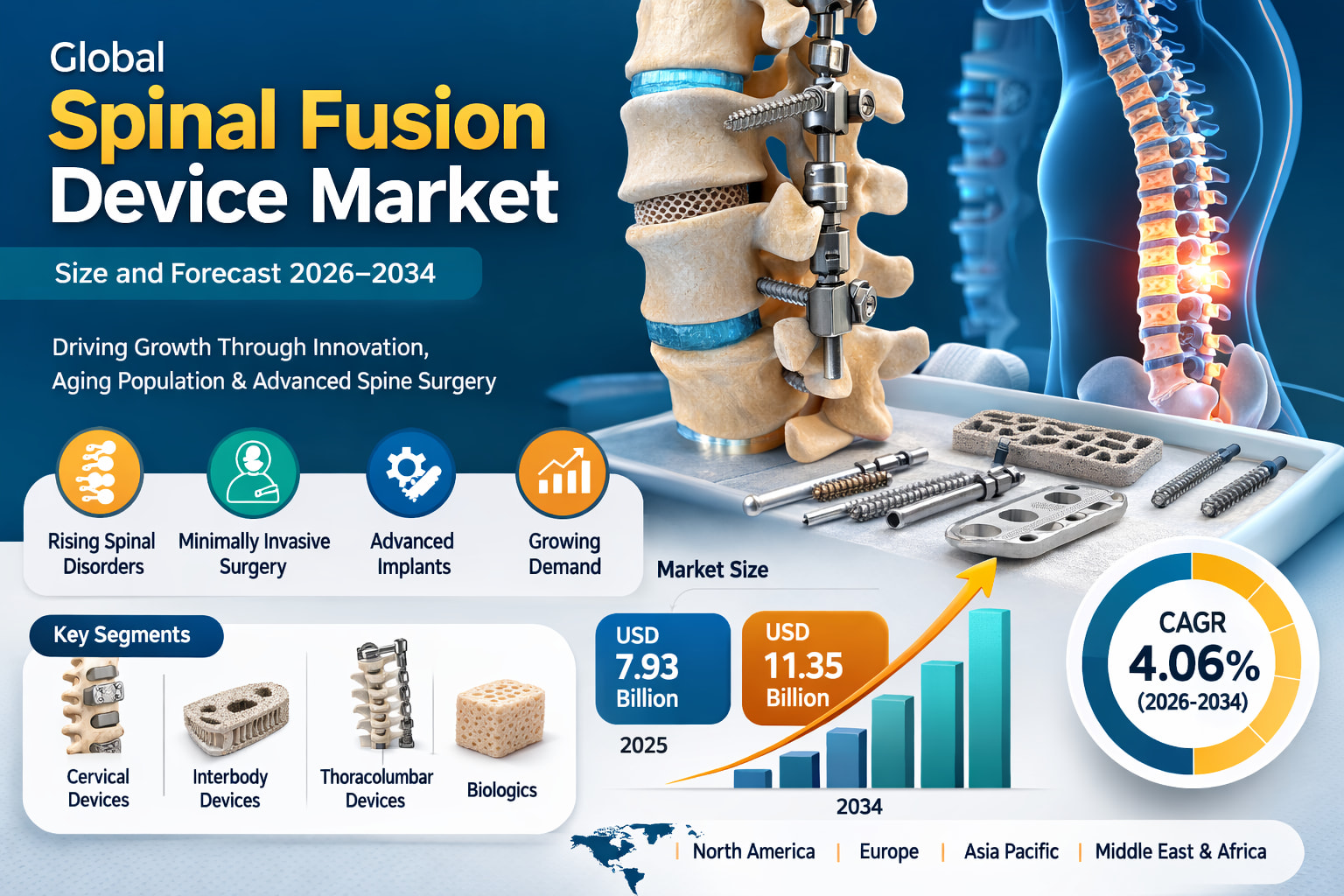
According to Renub Research, the global spinal fusion device market is projected to grow from US$ 7.93 billion in 2025 to US$ 11.35 billion by 2034, registering a compound annual growth rate (CAGR) of 4.06% during 2026–2034. This growth is primarily driven by the rising prevalence of spinal disorders, increasing life expectancy, improvements in implant materials, and the rapid adoption of minimally invasive surgical techniques.
With the global population aging and sedentary lifestyles becoming more common, spinal health issues are emerging as a significant healthcare concern worldwide. Consequently, spinal fusion technologies are becoming increasingly important in the treatment of severe spinal conditions.
Spinal Fusion Device Market Outlook
Spinal fusion devices are medical implants used in surgeries designed to permanently connect two or more vertebrae in the spinal column. The main objective of spinal fusion is to eliminate movement between vertebrae, stabilize the spine, and reduce chronic pain caused by spinal disorders.
These procedures are commonly performed to treat conditions such as:
Degenerative disc disease
Spinal stenosis
Scoliosis
Vertebral fractures
Spondylolisthesis
A typical spinal fusion system includes devices such as rods, screws, plates, interbody cages, and bone graft substitutes. These components work together to hold vertebrae in place while the bone heals and fuses into a single solid structure.
Over the past decade, spinal fusion surgeries have become increasingly common due to technological advancements and improved surgical outcomes. Innovations in implant materials—including titanium alloys, PEEK (polyether ether ketone), and biodegradable materials—have enhanced durability, compatibility, and patient recovery.
Furthermore, improved imaging technologies, navigation systems, and robotic-assisted surgeries are transforming the accuracy and safety of spinal procedures. As these technologies become more widely available, the demand for spinal fusion devices is expected to continue growing across the globe.
Key Growth Drivers of the Spinal Fusion Device Market
Rising Prevalence of Spinal Disorders and Aging Population
One of the most significant factors driving the spinal fusion device market is the increasing prevalence of spinal disorders worldwide. According to global health estimates, more than 15 million people are currently living with spinal cord injuries or severe spinal conditions.
Lifestyle changes have contributed significantly to this trend. Sedentary work environments, poor posture, obesity, and reduced physical activity are increasing the incidence of chronic back pain and degenerative spinal diseases.
The aging population also plays a critical role in market expansion. As individuals age, spinal discs naturally degenerate, leading to conditions such as spinal stenosis and degenerative disc disease. With life expectancy increasing worldwide, the number of patients requiring spine care is steadily rising.
By 2050, the global population aged 65 years and older is expected to double, creating a substantial patient base requiring advanced spinal treatments.
Healthcare statistics also highlight the growing demand for spinal surgeries. Between 2010 and 2021, spine procedures increased by approximately 193%, demonstrating the rising reliance on surgical interventions when conservative treatments fail.
Advancements in Surgical Techniques and Implant Technologies
Technological innovation remains one of the strongest drivers of the spinal fusion device market.
Minimally invasive spine surgery (MISS) has revolutionized spinal procedures by reducing surgical trauma, shortening recovery time, and minimizing hospital stays. Unlike traditional open surgeries, minimally invasive techniques use smaller incisions and advanced imaging technologies to perform precise procedures.
This shift toward minimally invasive procedures has made spinal fusion surgery more accessible and appealing to both patients and surgeons.
In addition, innovations in implant materials are improving surgical outcomes. Modern spinal implants are increasingly manufactured using materials such as:
Titanium alloys
PEEK polymers
Porous bioactive materials
These materials enhance bone growth, improve osseointegration, and increase implant durability.
Technological advancements also include robotic-assisted surgeries and navigation systems, which allow surgeons to perform highly precise procedures. These technologies reduce surgical errors and improve patient outcomes.
In November 2023, Spinal Elements introduced its Ventana 3D Printed Interbody Portfolio, featuring anterior cervical, posterior lumbar, and lateral lumbar systems as part of its MIS Ultra platform.
Increasing Healthcare Spending and Access to Advanced Care
Global healthcare spending continues to increase, enabling hospitals and clinics to adopt advanced surgical technologies.
Governments and private healthcare organizations are investing heavily in modern hospitals, specialized surgical centers, and advanced diagnostic infrastructure. This investment is improving access to complex procedures such as spinal fusion surgery.
Additionally, the expansion of health insurance coverage and reimbursement policies is encouraging more patients to undergo spinal treatments. In many developed countries, insurance programs cover a large portion of spinal surgery costs, making these procedures more accessible.
Emerging economies are also contributing to market growth through healthcare infrastructure development and medical tourism. Countries across Asia and the Middle East are expanding their spine surgery capabilities and attracting international patients seeking high-quality treatment at competitive costs.
In August 2024, NanoHive secured US$7 million in funding to support the development and commercialization of its 3D-printed titanium spinal interbody fusion devices, highlighting the growing investment in this sector.
Key Challenges in the Spinal Fusion Device Market
High Procedure and Device Costs
Despite technological advancements, spinal fusion surgery remains expensive. The procedure requires sophisticated implants, specialized surgeons, advanced imaging equipment, and highly equipped operating rooms.
Devices such as screws, rods, plates, and cages significantly contribute to the overall procedure cost. For many patients—especially in developing countries—these costs can be prohibitive.
Limited insurance coverage in certain regions further restricts patient access to spinal fusion procedures. Even in developed healthcare systems, hospitals face pressure to balance high-quality treatment with cost efficiency.
As a result, affordability remains a key challenge for the widespread adoption of advanced spinal fusion technologies.
Risk of Post-Surgical Complications
Another factor limiting market growth is the risk of complications associated with spinal fusion surgery.
Potential risks include:
Infection
Implant failure or loosening
Non-union of vertebrae
Nerve damage
Adjacent segment degeneration
These complications may lead to prolonged recovery periods or additional surgeries.
Moreover, long-term outcomes of spinal fusion procedures are still being evaluated for certain patient groups. As a result, some physicians prefer conservative treatment approaches before recommending surgery.
Alternative treatments such as artificial disc replacement and non-surgical therapies are also gaining popularity, potentially limiting demand for fusion procedures.
Spinal Fusion Cervical Device Market
Cervical spinal fusion devices are designed specifically for surgeries involving the neck region of the spine. These devices help stabilize vertebrae, relieve pain, and restore spinal alignment in patients with cervical spine disorders.
Conditions commonly treated using cervical fusion include:
Cervical spondylosis
Herniated discs
Trauma-related spinal injuries
Degenerative disc disease
The increasing use of digital devices and prolonged screen time has contributed to poor posture and rising cervical spine disorders worldwide.
Recent innovations in cervical implants—including low-profile plates, advanced screws, and improved cages—are enhancing surgical precision and patient recovery. Additionally, minimally invasive cervical fusion devices are gaining popularity due to reduced tissue trauma and faster healing.
Spinal Fusion Interbody Device Market
Interbody fusion devices, commonly known as cages, are implanted between vertebral bodies to restore disc height and promote bone fusion.
These devices play a critical role in spinal fusion surgeries by providing structural support and improving spinal alignment.
Advancements in implant materials—particularly titanium, PEEK, and porous materials—are significantly improving fusion rates and bone integration.
Surgeons increasingly prefer interbody devices because they offer better spinal stability and improved biomechanical performance. As a result, the interbody device segment continues to represent a major portion of the spinal fusion device market.
Minimally Invasive Spinal Fusion Device Market
The shift toward minimally invasive procedures is transforming the spinal surgery landscape.
Minimally invasive spinal fusion devices are designed to reduce tissue damage, minimize blood loss, and shorten recovery times.
These procedures often utilize advanced technologies such as:
Image-guided navigation systems
Robotic-assisted surgical platforms
Specialized minimally invasive implants
Patients are increasingly seeking procedures that allow quicker recovery and reduced hospital stays. As healthcare providers adopt these technologies, the minimally invasive spinal fusion segment is expected to experience rapid growth in the coming years.
End-User Analysis
Hospitals
Hospitals represent the largest end-user segment for spinal fusion devices. These facilities offer advanced surgical infrastructure, specialized spine surgeons, and comprehensive diagnostic capabilities.
Complex spinal procedures require sophisticated equipment and multidisciplinary medical teams, which are typically available in large hospitals.
The growing number of spinal surgeries performed in hospital settings continues to drive demand for advanced fusion technologies.
Specialty Clinics
Orthopedic and spine specialty clinics are also emerging as significant users of spinal fusion devices.
These clinics offer specialized expertise, shorter waiting times, and personalized patient care. Many less complex spinal fusion procedures are now performed in outpatient clinics.
The growth of ambulatory surgical centers and outpatient spine surgeries is further supporting the expansion of this segment.
Regional Market Insights
United States
The United States remains one of the largest markets for spinal fusion devices due to advanced healthcare infrastructure and a high number of spine surgeries.
The country has a large patient population suffering from spinal disorders, obesity-related complications, and degenerative spine conditions.
Innovation and the presence of leading medical device companies also support market growth.
In May 2025, Xtant Medical Holdings launched OsteoFactor Pro, a bone growth factor solution designed to enhance spinal fusion success rates.
United Kingdom
The United Kingdom spinal fusion device market benefits from its well-established public healthcare system.
The National Health Service (NHS) plays a crucial role in providing spinal treatments, particularly for degenerative spine disorders. Rising demand for minimally invasive spine surgeries and an aging population are contributing to market expansion.
India
India’s spinal fusion device market is expanding rapidly due to growing healthcare infrastructure, rising awareness of advanced spine treatments, and increasing lifestyle-related spinal disorders.
Private hospitals and specialty clinics are expanding their spine surgery capabilities, while medical tourism continues to attract international patients.
In April 2024, Joymax obtained regulatory approval for its range of minimally invasive endoscopic spine surgery products in India.
Saudi Arabia
Saudi Arabia is emerging as an important market for spinal fusion devices as the government invests heavily in modernizing healthcare infrastructure.
Lifestyle-related conditions such as obesity and spinal disorders are increasing demand for advanced spine treatments.
In January 2025, Spineway strengthened its presence in the Middle East by participating in the Arab Health exhibition and forming new distribution partnerships to expand access to its spinal implant technologies.
Competitive Landscape
The global spinal fusion device market is highly competitive, with several major medical technology companies investing heavily in innovation and product development.
Leading companies operating in this market include:
Medtronic Plc
Stryker Corporation
Zimmer Biomet Holdings
Orthofix Medical Inc.
NuVasive Inc.
Globus Medical Inc.
Xtant Medical Holdings
Alphatec Holdings Inc.
These companies focus on technological innovation, product development, strategic partnerships, and global expansion to strengthen their market position.
Final Thoughts
The global spinal fusion device market is entering a period of steady and sustained growth. Rising spinal disorders, aging populations, technological advancements, and expanding healthcare infrastructure are collectively driving demand for advanced spine treatments.
While challenges such as high procedure costs and surgical risks remain, continuous innovation in implant materials, robotic surgery, and minimally invasive techniques is expected to reshape the future of spinal care.
As healthcare systems worldwide focus on improving patient outcomes and expanding access to specialized treatments, spinal fusion devices will remain a critical component of modern orthopedic and neurosurgical medicine.
The market’s projected growth to US$11.35 billion by 2034 reflects the increasing importance of spinal health in global healthcare systems and the continued advancement of medical technology.