The US economy has been remarkably resilient for years, withstanding historic pandemic-era inflation, $5-a-gallon gasoline, a dramatic hiring slowdown and the Federal Reserve’s war on inflation.
Now, the economy faces a new test: an actual war.
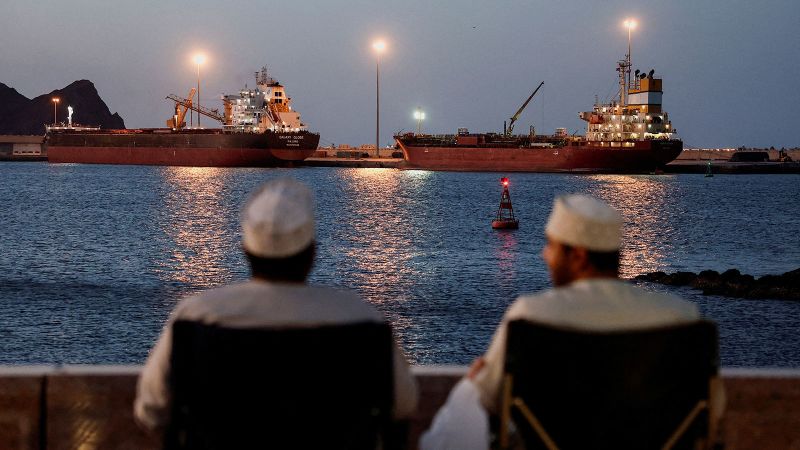
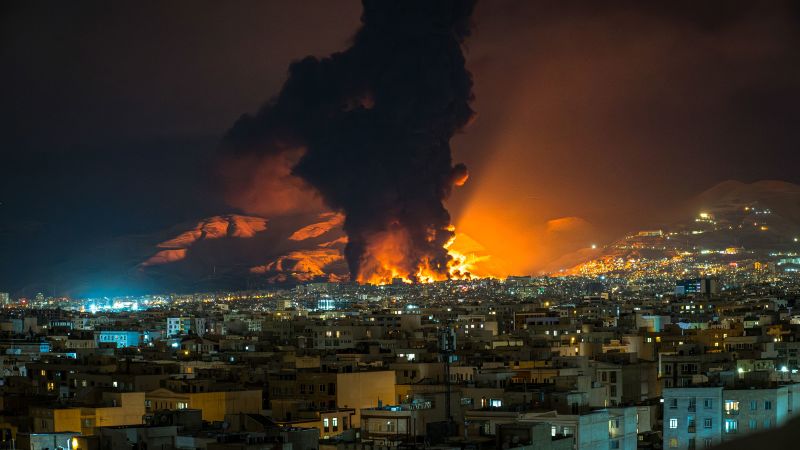
The war with Iran has sparked an epic oil supply disruption — the biggest in history — and price spike, driving up the cost of everything from gasoline and diesel to jet fuel.
Economists warn that the war has increased the risk of a recession. And the longer the crisis lasts, the greater the danger to an economy that already looked vulnerable before the chaos in the Middle East.
“The US is and has been on the precipice of recession for quite some time. It only requires one thing to knock us over. Could oil do it? Absolutely,” said Justin Wolfers, an economics professor at the University of Michigan.
Though the war could do real damage to the US economy, most economists don’t expect a recession.
The stock market has retreated, but not dramatically enough to imply that Wall Street is penciling in an imminent downturn.
And if there is a quick end to the closure of the Strait of Hormuz, oil prices would likely return toward pre-war levels.
Still, the odds of a recession this year spiked to as high as 35% early on Monday, when US oil prices briefly hit as high as $119 a barrel, according to prediction market Kalshi. That’s up from about 20% in early February before the US military build-up in the Middle East.
“The risk of a recession has materially increased, but we’re not there yet. The US is a $30 trillion dynamic and resilient beast. It has plenty of room to absorb an oil-based shock,” said Joe Brusuelas, chief US economist at RSM.
The key thresholds for a recession, according to Brusuelas, are if oil prices jump to $125 a barrel, gas prices climb to $4.25 a gallon and inflation heats up to 4% a year.
Gas prices have already surged by 50 cents, going from $2.98 a gallon before the war started to $3.48 a gallon on Monday.
“The speed with which it’s hitting gas stations has left consumers shocked,” Diane Swonk, KPMG’s chief economist, told CNN’s Zain Asher on Monday. “But it would need to get a lot worse” to get to a recession.
Every sustained $10-a-barrel increase in oil prices could cost the typical US household close to an extra $450 annually, according to Moody’s Analytics chief economist Mark Zandi.
The hit to household budgets is key because the US remains a consumer-led economy.

If Americans cut back on shopping, traveling and going out to eat, businesses would be forced to lay off workers, causing consumers to cut back further. That can become a doom loop that ends in recession.
And the job market looks more vulnerable than in 2022, when there was an oil price shock from Russia’s invasion of Ukraine. Back then, the economy was adding hundreds of thousands of jobs per month.
Flash forward to today: The US economy added just 116,000 jobs for all of 2025, the lowest outside of a recession since 2002. In fact, the economy has lost jobs in five out of the past nine months, after going years without a month of job losses.
The job losses and surging gas prices are “a very nasty one-two punch to the economy,” said David Kelly, chief global strategist at JPMorgan Asset Management. “But I still bet that the economy will muddle its way through this.”
Kelly pointed to expectations for bigger tax refunds to American families made possible by the One Big Beautiful Bill, President Donald Trump’s signature tax and spending law.
“It’s just a pity that people will have to spend so much of their tax refunds just to fill up their SUVs,” said Kelly.
A second related risk is that the war and energy price spike cause a bear market, with US stocks seeing a 20% decline from prior highs.
A market plunge would likely depress spending — even by the affluent families carrying the weight of today’s K-shaped economy.
“I don’t even think oil has to go to $120 or $150 a barrel. If it just stays at $100 and pushes the stock market lower, it could have an adverse impact on higher-income and higher-wealth consumers,” Ed Yardeni, president of investment advisory Yardeni Research, told CNN in a phone interview on Monday.
Yardeni still thinks the United States will avoid a downturn. But the risk of a negative wealth effect is one reason that on Monday he upped his odds of a market “meltdown” that includes a recession from 5% to 20%.
A third pathway to a recession would be through a major blow to business confidence.
It’s easy to see how employers, who were already on the fence about hiring or expanding, would be deterred by a sustained oil price gain.
“The jobs report last Friday was not good, and there is a danger that hiring could pull back even more,” said JPMorgan’s Kelly. “We’re more vulnerable today. It would only take one more shock to put us in the soup.”
But there are key differences between today’s oil shocks and past ones.
Unlike in 2022, when gas prices skyrocketed to $5 a gallon, the United States — not Russia — has a large say in when this war ends.
Perhaps America controlling its own military fate in the Gulf was a factor in Trump telling CBS News that the war is “very complete.” Of course, ending the war would not be enough to end the disruption in the Strait of Hormuz.
Yet Trump’s comments helped ease investor panic. After spiking to as high as $119 a barrel late Sunday into Monday, US oil prices tumbled to $92 a barrel.
And the United States is now a net energy exporter.
That means that while many consumers are hurt by high energy prices, some parts of the US economy benefit, including ones in the oil and natural gas industry and those who own shares in fossil fuel companies.
And while it’s still a global market, the United States is not nearly as dependent on foreign oil as in the past.
“This episode obviously raises the risk, but I don’t see it leading to a recession,” said Glenn Hubbard, a former top economist to President George W. Bush who is now a professor at Columbia Business School.