
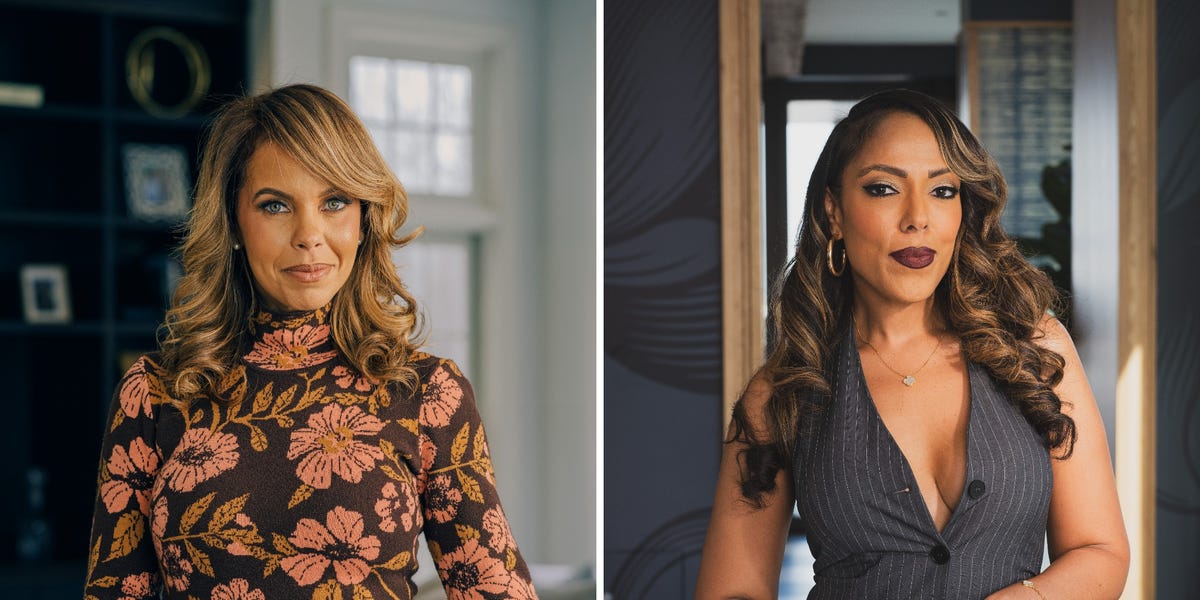
After more than a decade working in TV, Tiara Neal felt compelled to change the channel.
“I was terrified to walk away from television,” Neal told Business Insider. “I went to school for it; it was all I had ever known, and I had built my entire identity around it.”
Neal spent years working in production for networks like BET and Warner Bros. Discovery before a health crisis made her reexamine her career. Diagnosed with stage one breast cancer at 34, she learned during treatment to navigate a complex medical system, ask harder questions, seek second opinions, and demand to be heard.
Greg Kahn for BI
It was then that Neal was introduced to Bexa, a health-tech company dedicated to advancing equitable early breast cancer detection for women and people of color. She quickly realized that the work aligned with the purpose that had been on her heart since being diagnosed in 2019.
“Even with great insurance, I realized how easily women could be dismissed,” she reflected.
Two years shy of her 40th birthday, Neal left television altogether in 2023 and became the founding executive director of Bexa Equity Alliance, the company’s nonprofit arm. Neal now leads a team that does outreach to help close the detection gap in underserved communities. In 2025, for example, Bexa partnered with the Essence Festival of Culture in New Orleans, where it cohosted a “We Love Us” Community Day to provide essential services to locals.
Greg Kahn for BI
“It’s funny because I never imagined television would prepare me for this, but being able to show up at music festivals, conferences, and major cultural events, places I used to work behind the scenes, has become the perfect bridge,” Neal said. “We’re meeting women where they are. We’re providing breast exams at concerts, at large gatherings. Entertainment became the gateway to make early detection feel approachable.”
The midlife crisis is getting a rebrand
Instead of treating her pivot as a midlife crisis, Neal, now 40, said she sees her pivot as a rebrand. She isn’t alone.
For many millennials, turning 40 looks different from how it did for previous generations. They’ve spent decades expertly ticking off the boxes: degrees, careers, kids, mortgages. Somewhere around the milestone birthday, the life they may have worked hard to have 20 years ago doesn’t quite match the person they’ve become.
Forty has become the new launchpad — the moment when starting over feels not only possible, but necessary. The shift is both structural and psychological. Elder millennials came of age during recessions, mass layoffs, and a pandemic that upended entire industries, making the idea of career stability fragile. At the same time, they’re entering midlife with something they didn’t have in their 20s: experience, credibility, leverage, and a clearer sense of what they truly value.
Some of the most recognizable second acts began after 40: Jan Koum cofounded WhatsApp at 42. Julia Child debuted her famous book “Mastering the Art of French Cooking” at 49, and Vera Wang left a stable editorial career at 40 to turn her name into an eponymous fashion label.
And the data suggests a similar pattern: According to research by Pierre Azoulay, a professor at the Massachusetts Institute of Technology, the average age of successful business founders is around 40.
Greg Kahn for BI
It was true for Danielle Scott, who left a 22-year career at the Department of Homeland Security to pursue interior design as she entered her 40s. “I come from a mom who was in the federal government, so the message was always go get a ‘good government job,'” Scott, now 41, told Business Insider. “That’s all I knew in terms of guaranteeing stability.”
“I became a GS-15 at 28,” she said, which is the highest civilian leadership ranks in the federal government, “so I had already reached that plateau. I was really looking for what the next challenge would be.”
Although Scott had been feeling the lingering thoughts to pivot for years, her first major shift came during the six-week furlough under the first Donald Trump administration in 2018. The pause gave her time to reflect and reconsider what stability meant, especially after she realized how much of her identity had been tied to government service.
Scott used the time to take real estate and interior design courses, building blocks she’d one day depend on. “I didn’t want to be caught flat-footed,” she added.
By the time she turned 34, she founded The Styled Hause, an interior design firm. Since then, Scott’s company has designed premium suites at the Washington Commanders stadium, completed commercial real estate projects for companies across the D.C., Maryland, and Virginia area, and created residential spaces for a range of private clients — from professional athletes to music executives. Along the way, they’ve won more than 25 industry awards.
Scott told Business Insider that what once felt like treading water now feels like a blessing, as new partnerships, visibility, and business growth have affirmed her leap into entrepreneurship.
Greg Kahn for BI
A midlife pivot rarely has to do with career boredom, one expert said
Executive coach Monique Shields told Business Insider that professionals tend to pivot in their careers in their 40s, but it rarely stems from a lack of interest.
“People assume midlife pivots are about boredom,” Shields said, “but it goes much deeper than that.”
Shields, who’s also the founder of Seven Pines Leadership, a development firm that helps high-achieving women grow and navigate career transitions, said that many “arrive at a point in your career where achievement is no longer the goal.”
“You’ve done all the striving,” she continued, “and now, the questions become more about well-being and legacy.”
For those looking to go out on their own, one of the biggest misconceptions about starting over in midlife is the belief that entrepreneurship or independent work will be significantly harder.
“People fear that pursuing something unique or entrepreneurial will be more difficult,” she said. “But they underestimate how much energy they’re already spending navigating politics, bureaucracy, and environments they can’t control. When those go away, the capacity you gain is surprising.”
The largest barrier to making the entrepreneurial jump, Shields said, is often fear of losing financial stability, but she argues that many people have never sat down to examine their finances with clarity, adding that “most are surprised by what’s actually possible when they look at the real numbers.”
For many professionals approaching midlife, that shift from surviving to imagining is often the first step toward the most defining chapters of their careers.
“The fear is gone. I’m not operating from survival anymore,” Neal said. “My 20s and 30s were about surviving. My forties are about execution. I’m operating from calling.”