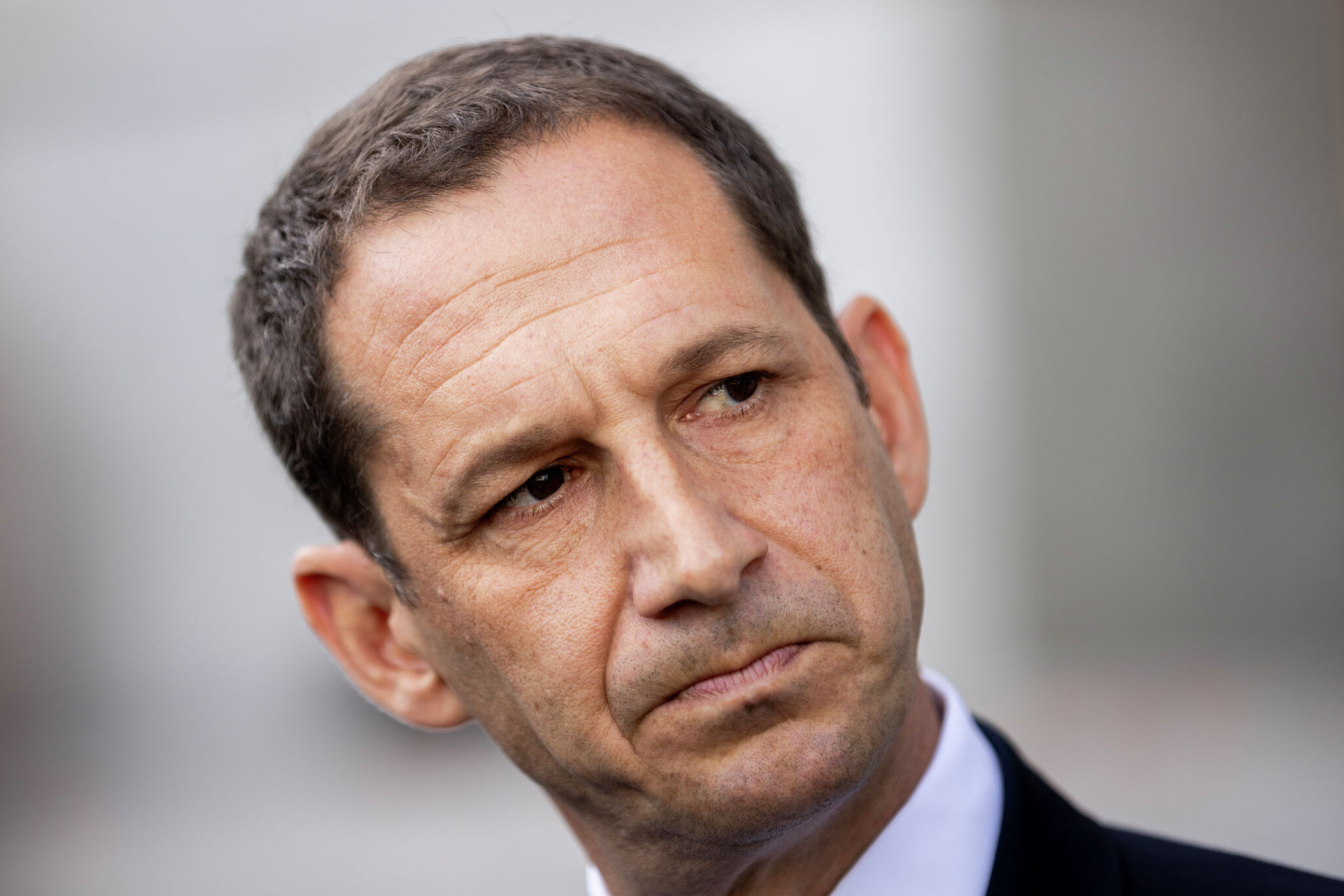
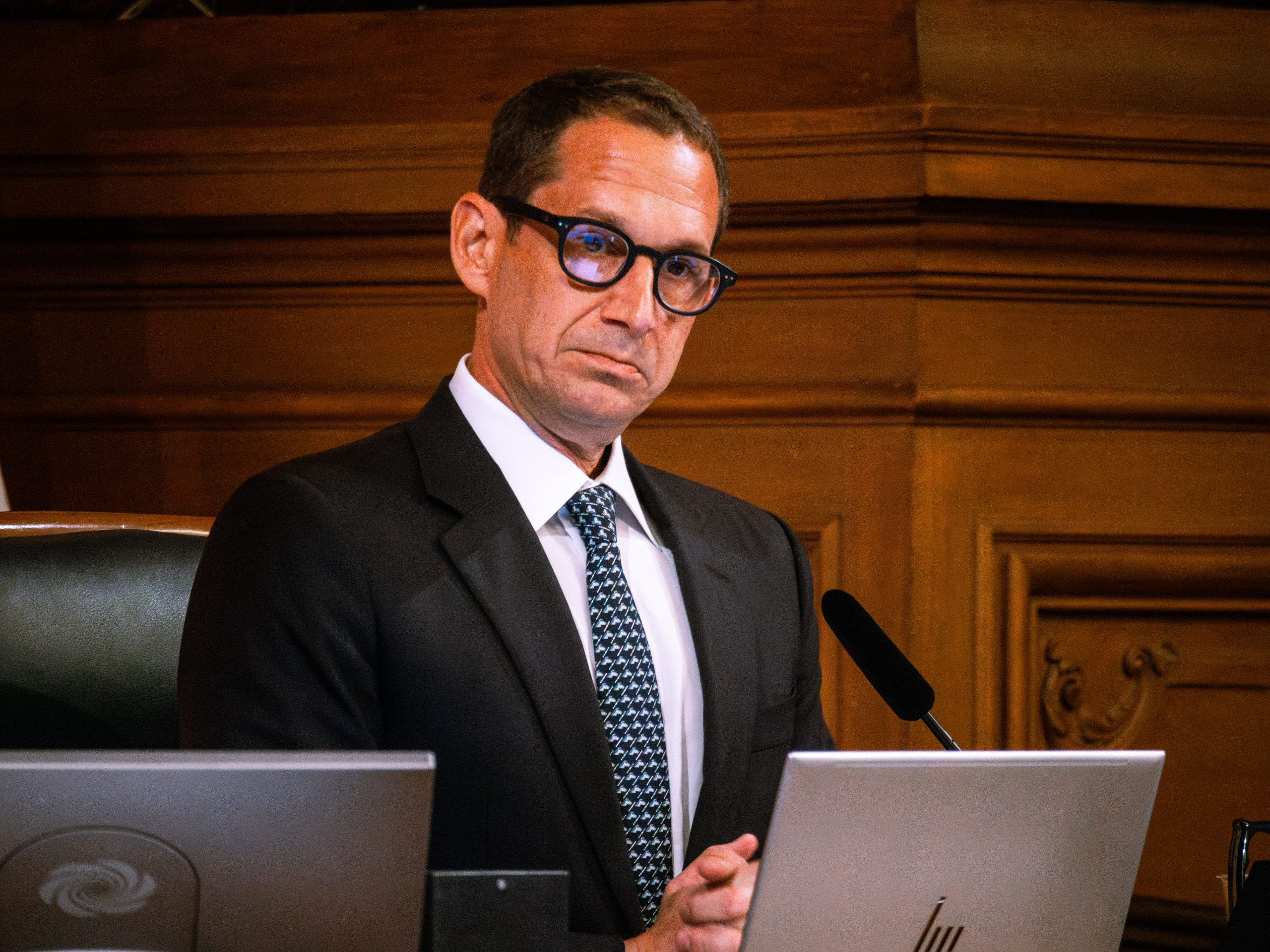
Mayor Daniel Lurie announced today that he won’t be supporting either of two competing business-tax measures going onto June’s ballot.
“Neither measure moves San Francisco forward,” Lurie said.
The conflict began in November, when a coalition of San Francisco unions announced a plan to collect signatures for a ballot measure to raise $200 million a year for the city. They proposed increasing taxes on businesses whose CEOs earn at least 100 times their median employee’s pay.
The business community objected to the tax and, in December, began collecting signatures for a competing measure. It would increase the minimum amount a company must make to be taxed from $5 million to $7.5 million, but essentially keeps the tax rate the same.
Labor leaders say that the revenue from their tax measure is necessary to prevent cuts to healthcare and other essential city services as the city faces a billion-dollar deficit. Eight of the city’s eleven supervisors agreed, and have backed the measure.
Lurie said the measure would not be helpful with the city’s budget crisis.
“They have no impact on the imminent budget deficit or federally imposed healthcare cuts we face right now,” he said, because money from labor’s tax won’t arrive until 2028.
Instead, he echoed arguments made by the business leaders who put the competing measure on the ballot: The new tax will lead to more businesses leaving San Francisco at a time when the city is working to attract businesses back to downtown.
“We cannot be complacent about our recovery,” Lurie said.
Feb. 2 was the deadline for the measures to be pulled from the ballot. Compromise talks between labor and business did not succeed.
Lurie said that the competing measures on this year’s ballot have motivated him to move forward with reforming San Francisco’s charter.
One change that charter-reform advocates are considering is making it harder for measures to qualify for the ballot.
Right now, San Francisco requires 2 percent of voters — around 10,000 San Franciscans — to sign on for a measure to qualify. Most other cities require 10 to 15 percent.
Any changes to the charter are going to be placed on the ballot and will require a simple majority to pass.
“This November, working alongside dozens of city leaders, voters will have the opportunity to fix our bloated City Charter and a deeply flawed initiative system, and keep San Francisco’s recovery moving forward,” Lurie said, saying that the current system is broken, and “rewards insiders at the expense of everyday San Franciscans.”
He pointed out that, less than two years ago, in Nov. 2024, voters passed Proposition M, which lowered the tax that labor’s measure is now raising. Prop. M reformed the city’s business-tax structure and was intended to reduce incentives for businesses to leave the city.
Labor leaders have already expressed skepticism about changing the rules for ballot qualification, in part because a higher threshold will raise the costs of putting a measure on the ballot.
Almost all voter initiatives qualify for the ballot by hiring paid signature gatherers, which typically costs around $250,000. Both labor’s tax and the competing measure used paid signature gatherers.
“This can’t just be for rich people and powerful corporations to put something on the ballot because they can fund it,” John Doherty, vice president for subcrafts at the San Francisco Building and Construction Trades Council, said at a recent meeting of the Charter Reform Working Group.
Kim Tavaglione, the executive director of the San Francisco Labor Council echoed Doherty’s sentiment: “I think voters are going to be very concerned with what will appear to be a consolidation of power and possible corruption come November.”