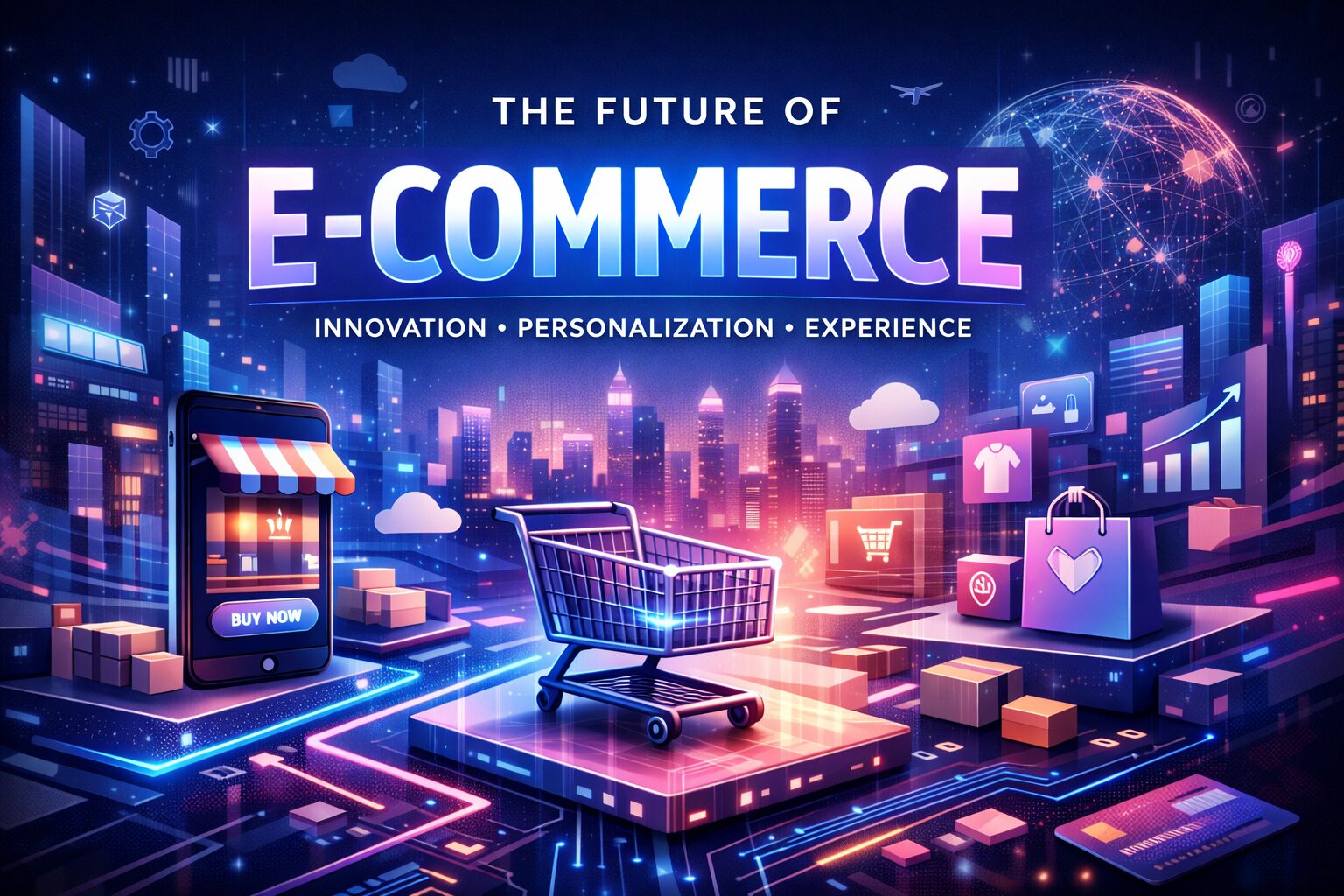
E-commerce isn’t having a revolution. It’s having a reinvention—quiet, architectural, almost invisible unless you know where to look. And in this shifting landscape, brands are rediscovering something essential: technology should help them sell, not slow them down. This is where platforms evolve, where architectures stretch and warp, and where businesses finally embrace the tools that match their ambition.
And somewhere along that frontier, a new wave of Shopify ecommerce development services emerges—not as a technical detail but as a strategic decision.
Below, you’ll walk through a world where commerce becomes less about a “store” and more about an ecosystem, where merchants redesign their digital backbone with an almost artistic boldness. This isn’t a standard industry report. It’s a narrative about what happens when creativity meets engineering at scale.
The Unexpected Return of Craftsmanship in Digital Commerce
The digital store was supposed to be fast, automated, almost lazy in its convenience—but the opposite happened. Brands now obsess over detail. Over nuance. Over experience.
Below is the turning point: a world where e-commerce becomes crafted again.
The Age of Overwhelming Choice
Fifteen years ago, the only real question was: What platform should we install? Today, the questions breed like rabbits. Should the storefront be headless? Should the checkout live on Shopify but the catalog on a custom backend? Should search be driven by an AI engine? Should personalization be real-time, rule-based, generative?
Choice is magnificent. Choice is paralyzing. And this is where the return of craftsmanship begins—because the brands that win aren’t the ones choosing the most tools, but those combining them with uncommon clarity.
Why Architecture Becomes Creative
Here is the truth nobody tells founders: E-commerce decisions are design decisions. Design shapes behavior. Behavior shapes revenue. A modular storefront pushes customers faster. A composable checkout removes friction. A decoupled CMS lets marketing breathe while developers build. Every architectural move rewrites the psychology of shopping.
Why Shopify Became the Default Canvas for Modern Brands
As stores needed agility, brands ran toward Shopify—but not for the reasons you think. Shopify wasn’t just “easy.” It was elastic. It gave breathing room. And it adapted to ambition like clay to a potter’s hand.
The Freedom to Experiment at Speed
Shopify introduced something subtle yet revolutionary: the idea that development velocity directly correlates with conversion rate. If you can launch a new landing page in two hours instead of two weeks, you learn faster. If you can test five versions of a checkout, you fail faster.If you can integrate a new payment method by Monday morning, you will sell faster. Speed doesn’t replace strategy—it multiplies it.
The Rise of Experience-Driven Commerce
A surprising trend emerged in 2024 and accelerated into 2025: merchants wanted the store to behave like a story. Animations mattered. Micro-interactions mattered. How a product felt on the screen mattered almost as much as price.
This ushered in the era of custom themes, dynamic components, APIs woven together in ways that looked more like digital sculpture than coding. And that’s where professional Shopify teams rose—not as developers but as co-architects of growth.
Read about: Costa Rica is a Less Complicated Country for Doing Business in 2026, According to International Analysis
When Enterprise Enters the Conversation: The Adobe Commerce Shift
Around the center of the industry lies a different force—one built for massive catalogs, regional complexity, omnichannel gymnastics, and enterprise-grade workflows. This is where Adobe Commerce website development services start to dominate the discussion.
If Shopify is the canvas, Adobe Commerce is the astronaut suit: engineered for environments where pressure is high, data is heavy, and scale is non-negotiable.
The Need for a Larger Digital Skeleton
Large retailers learned the hard way that growth creates drag. 10,000 SKUs behave differently from 100. International taxes behave differently from domestic ones. A store with six microservices strains differently from a monolith. Adobe Commerce steps in when businesses don’t just sell products—they orchestrate operations.
Personalization Becomes a Non-Negotiable
In enterprise retail, personalization isn’t a “nice to have.” It’s survival. Adobe Commerce, with its deep segmentation, rule-based logic, and AI-enhanced insights, became the tool for retailers who don’t merely show products—they choreograph them per user, per location, per intent. And yes, it’s heavy. But so is a rocket engine. Purpose defines the machine.
The Hybrid Era: Why Most Brands End Up Between Two Worlds
Commerce used to be a single decision: pick a platform and live with it. But 2025 changed everything. Now brands treat platform strategy like urban planning—multiple districts, interconnected roads, different rules depending on who’s visiting.
Hybrid is the new normal. And it looks nothing like the earlier era of “multi-platform confusion.”
When Shopify Owns the Front and Adobe Owns the Back
A growing number of brands are choosing a counterintuitive model: Shopify for the storefront, Adobe Commerce for the operations layer. The logic is brutal and brilliant:
Shopify = speed
Adobe Commerce = control
This separation of concerns—design here, complexity there—creates something neither could achieve alone: commercial agility without architectural compromise.
The Invisible Backbone: APIs as the New Real Estate
APIs are no longer utilities. They’re highways. They define how goods, data, users, and decisions flow. They decide whether a store feels fast or sluggish, modern or archaic.
The rise of composable commerce didn’t just shake up platforms; it forced brands to think like engineers. E-commerce became a city, not a storefront.

What Today’s Customers Really Want (And Why Most Brands Get It Wrong)
Brands talk endlessly about personalization, but personalization is just the symptom. The cause lies deeper:
Customers want frictionlessness. They want emotional resonance. They want truth—prices that make sense, delivery that works, support that feels like conversation rather than punishment.
Speed Is the New Loyalty
Every millisecond shaved off your checkout is a handshake with the customer. Every unnecessary click you remove is a quiet “we respect your time.”
Speed breeds trust. Trust breeds repeat orders.
Transparency Is the New Currency
Return policies. Shipment delays. Stock updates. Brands lose customers not because they make mistakes, but because they hide them. Transparency is now part of the product.
Experience Is the New Marketing
The store is the ad. The cart is the message. The interaction is the brand voice.
You don’t “market” and then “sell.” You sell through the experience itself.
Why the Future of E-Commerce Will Be Less Platform-Centric and More Personality-Centric
The next evolution won’t be determined by Shopify or Adobe or any platform at all.
It will be determined by identity—the unique signature of how brands interact with their customers across channels and moments.
Commerce as Identity
Shoppers no longer ask, “Where should I buy this?” They ask, “Which experience feels like it belongs to me?”
This flips the old system upside down. Brands that feel generic disappear. Brands that feel lived-in, messy, human—those are the ones that survive.
The End of the “Template Era”
Templates were used to dominate digital commerce because nobody had time for custom work. But 2025 brought a new truth: If your store looks like someone else’s, it might as well be someone else’s. This is not a technical challenge. It’s a creative one.
Conclusion: The Future of e-commerce Belongs to the Brands Who Dare to Build
Commerce is not about technology. Commerce is not about pages, checkouts, platforms, themes, or modules. Commerce is the friction less expression of a brand’s intention to serve its customers better than anyone else.
Shopify will help you move fast. Adobe Commerce will help you scale deep. APIs will stitch your world together. But the winner is never the platform. It’s the brand brave enough to build with purpose and reinvent with imagination.
Because the next era of e-commerce won’t be defined by tools. It will be defined by confidence—the confidence to build something people remember
Read about: How to Start a Business in Costa Rica?
– Advertisement –