Thank you very much for taking the time to speak with us today. To begin, I would like to ask from a macro perspective. One of the major challenges Japanese companies face is the population decline caused by a low birth rate and aging society. Japan, the world’s most aged nation, is experiencing a shrinking population each year. This presents not only difficulties in hiring but also the challenge of a contracting domestic market that once was large and robust. As a result, many companies are being forced to explore overseas markets. How has your company responded to this challenge, and to what extent do you view international expansion as a solution?
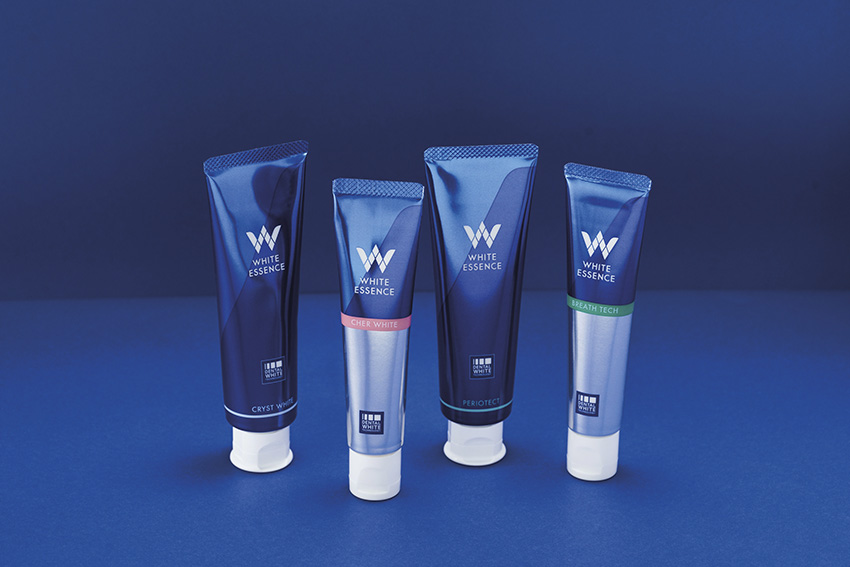
As you rightly point out, Japan’s population decline is a structural societal issue, and the domestic market itself is on a downward trajectory. Companies that cling to Japan-centric business models will find it increasingly difficult to sustain growth. Therefore, for us at White Essence, overseas expansion has become an inevitable path. However, this development was not strategically planned from the outset—it evolved naturally over time.
Across the industry, while mature sectors were being urged to globalize, for emerging business fields like ours, international expansion was not originally assumed. Yet, our overseas journey began when the founder of a listed Taiwanese company operating hospitals worldwide persistently invited us to bring the “White Essence” franchise to Taiwan. Initially, we declined, but ultimately accepted, making it our first overseas venture—driven more by strong external demand than by our own necessity.
Furthermore, just before COVID-19, our participation in the world’s largest dental exhibition, the World Dental Show, proved to be a turning point. We received inquiries from over 80 countries, which profoundly changed our perception of our brand’s global positioning and potential.
That is truly an inspiring story. To help our readers better understand your company, could you tell us about your domestic franchise expansion? Over more than 20 years since its founding, White Essence has grown to around 300 member clinics nationwide, holding over 80% market share in Japan’s medical whitening market. What would you identify as your core strengths supporting this remarkable success? How do you differentiate yourselves from competitors?
Thank you. I don’t believe we had any overwhelming strength from the very beginning. However, the key to our success has been the clarity of ROI (Return on Investment). On average, clinics joining our franchise achieve a payback period of 1.7 years, a very attractive figure for many prospective operators and a major reason for expansion.
In Japan, it has been difficult to generate profit solely from whitening services due to high material and labor costs, posing a major burden on clinics. We built a franchise model that enables efficient, low-cost profitability, packaged for easy adoption by clinics nationwide. The timing and alignment with market needs formed the foundation of our success.
Additionally, Japan’s national health insurance system benefits patients but imposes restrictions on clinic management, making it difficult to secure enough staff. During my training in the U.S., I observed clinics operating efficiently with 5–7 staff members, which highlighted a stark contrast. Our comprehensive oral care menu, including whitening, improves clinic profitability and enables both financial performance and treatment quality that were difficult to achieve under the traditional model.
I’d like to explore your marketing philosophy further. You redefined whitening not as a medical treatment but as a “beauty service.” Could you explain how this consumer-centric approach contributed to your success?
Yes. From the start, we adopted a strategy that directly appeals to consumers, positioning whitening as a pursuit of health and beauty. Whitening is not a treatment for disease—it’s a service that fulfills personal satisfaction, health, and aesthetic goals. Therefore, rather than leaving promotion entirely to clinics, we actively engaged in direct consumer marketing and awareness campaigns to uncover latent demand.
Traditionally, dental care focused on disease treatment, with aesthetic improvements considered secondary. We shifted this perspective by advocating “lifestyle improvement through whitening,” transforming the mindset of both dental professionals and patients. This approach led us to capture more than 80% market share in Japan.
In 2018, your company obtained a patent for the dental bleaching agent “Whitening Pro,” an original formulation that, when combined with a light device, achieves three times the whitening effect of conventional treatments. How did you establish the core principles behind such product development?
When I first opened my clinic, I personally developed a bleaching agent. However, commercialization required compliance with Japan’s Pharmaceutical and Medical Device Act, similar to the FDA approval process. Fortunately, through collaboration with the Japanese pharmaceutical industry, we were able to develop and obtain approval for an entirely new bleaching agent from scratch.
That said, technological superiority alone is not enough. To earn trust from both consumers and clinics, brand reliability and marketing image are essential. By manufacturing the bleaching agent in-house, we reduced costs and provided high-quality products at affordable prices while ensuring sufficient profit margins for clinics.
Moreover, we focus not only on short-term whitening effects but also on maintaining oral health through ongoing care. We position whitening as part of long-term preventive healthcare, rather than a one-time cosmetic procedure, encouraging patients to make regular clinic visits.
You’ve emphasized the importance of continuous engagement with customers. What strategies have you implemented to ensure that whitening doesn’t remain a one-time service?
That’s an excellent point. Whitening originally began in the U.S. as a preventive measure against cavities and gum disease. We have inherited that philosophy by combining whitening with regular cleaning and preventive care to increase customers’ lifetime value (LTV).
Many dentists worry that whitening ends after a single visit, but in our case, we have many customers who have continued coming to our clinics for 10 to 15 years. We believe the key lies in offering both long-term dental health and aesthetic improvement—not just temporary whitening.
Since 2023, you have begun exporting products to countries such as Vietnam and Mongolia. As part of your global strategy, which regions or products are you currently prioritizing?
Following the strong response at the World Dental Show, we received inquiries from around the world. However, given our limited resources, we had to prioritize. We chose to begin with Asia, even though we had invitations from North America, Latin America, Europe, and Africa. Our strategy is to expand cautiously within the geographically and culturally closer Asian region.
It remains difficult for Japanese companies to establish strong global competitiveness in Western beauty and healthcare sectors. Therefore, for now, we are focusing on deepening our presence in Asia—starting with exports of office whitening products and gradually expanding our offerings.
How about partnerships in overseas markets? In Mongolia, you reportedly held an event in collaboration with a local dental group that attracted one-third of the city’s dentists. What kind of partnerships are you seeking going forward?
Indeed. However, we find it difficult to convey our products properly through typical distributor partnerships. Whitening is not just a medical treatment—it offers aesthetic value. Standard distribution channels often fail to communicate this effectively to consumers.
Thus, we prioritize direct partnerships with local dental chain owners who share our values and commitment to quality. The Mongolian case is a successful example of this model, and we aim to replicate such collaborations in other countries.
Do you plan to exhibit again at international trade fairs like the World Dental Show?
Absolutely. Our participation in the World Dental Show was a major turning point. We are currently in discussions with several dental organizations across Asia and recognize the importance of exhibitions as gateways for global expansion.
With the widespread use of the internet and smartphones, dentists around the world can now access information in real time. We are also building brand awareness through social media and web platforms, using exhibitions to further strengthen trust and secure new partnerships.
In addition to clinic-based treatments, you have also developed consumer-oriented products such as “White Essence Home Whitening” (certified in 2021) and the “WeCare” brand. What led to this diversification, and how are you approaching customer base expansion?
This was driven by the growing demand for at-home care, especially among younger consumers. While in-office whitening requires a certain financial commitment, home whitening products are more affordable and accessible, allowing younger generations to experience whitening easily.
When the whitening concept was first introduced in Japan around 2000, roughly 95% of the market consisted of home-use products, while only 5% was for in-office use. At that time, we focused on spreading whitening through dental clinics, but now we are revisiting the potential of the home market. We aim to expand our customer base by appealing to younger demographics and cultivating new user segments.
You mentioned that your office whitening products are being exported to Asia. Are you also considering overseas expansion of your home whitening products?
At present, we only export office whitening products. The home whitening market is already saturated and differentiation is difficult. However, we plan to begin exports within this fiscal year, with improvements and branding strategies already in place. In the long term, we hope to offer our whitening products as part of a holistic lifestyle experience for customers worldwide.
Finally, if we were to have the opportunity to interview you again five years from now, what achievements would you like to have accomplished by then, and how would you like your company to be positioned at that time?
While numerical goals such as revenue or market share are important, our greatest priority is to deliver the core values of “empathy, communication, and hospitality” to our customers. The name “White Essence” reflects our mission to embody “the essence of white teeth and smiles,” and we aim to engrain that sentiment in the hearts of our clients.
If, five years from now, people—whether young or old—naturally think of White Essence whenever they wish to beautify their teeth, that would represent the true value of our brand. Achieving that would bring me immense satisfaction.
For more information, please visit their website at: https://www.whiteessence.co.jp/en/