Apparently not — or at least not yet. Out-of-state movement surged in 2025, per the latest numbers released by the Census on Tuesday: a net loss of around 33,000 people to other states in the 12 months that ended on July 1. That’s up from 19,000 the previous year, and more in line with the year before that. (At least the 19K number was revised downward from the 27,500 figure for 2024 that came out a year ago.)
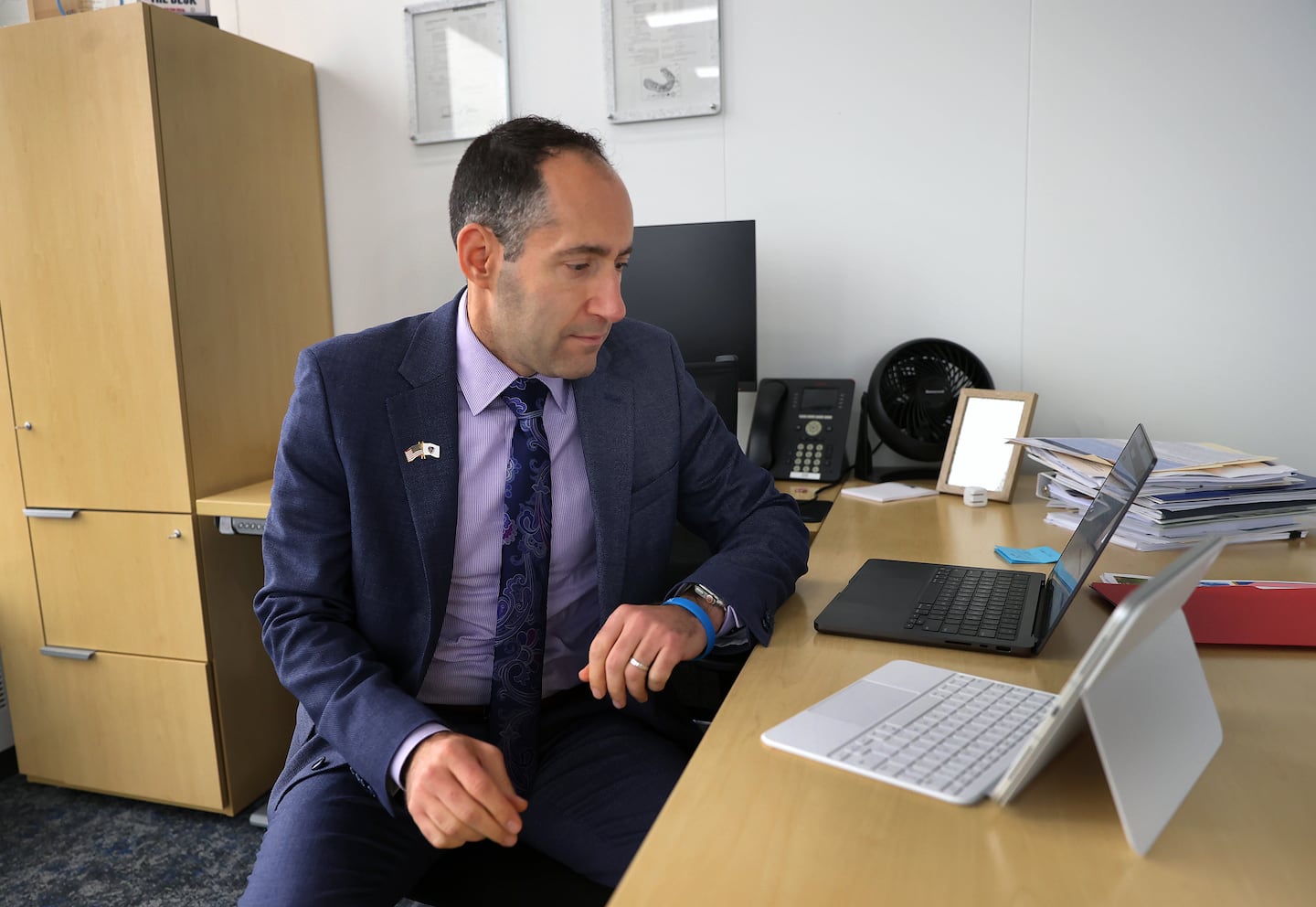
Governor Maura Healey brought Paley, a prominent partner at VC firm Founder Collective, on board as her new economic development secretary in September. Among Paley’s many tasks: finish the work his predecessor, Yvonne Hao, started in curbing the exodus to other states.
Paley argues it’s not an exodus at all, once immigration from other countries is factored in. The state’s overall population continued to grow, reaching nearly 7.2 million last summer. To the Healey administration, that’s worth celebrating — though this growth engine for our state is under threat by the Trump administration’s crackdowns.
In terms of the talent pool, Paley worries particularly about the 22- to 35-year-old demographic. Many younger workers look elsewhere because of cost concerns, particularly housing. As people get older, Paley argues, they’re more likely to value what they get for the price of admission in Massachusetts: great schools, top-notch health care, one of the best life expectancies in the country. State officials and their private-sector partners need to do a better job of telling that story, he says, particularly to the younger talent most likely to leave.
He has a similar prescription for businesses: showcase what Massachusetts offers, turn the psychology around. Overall sentiment among Massachusetts employers has been negative for 10 months straight, per polling by AIM, the statewide employer group.
The bright side, and the opportunity Paley sees: AIM’s polling shows employers are more confident about their businesses’ fortunes than about the broader local economy even while gross state product expands at a steady clip — the fastest in the nation by one measure, an annualized 3 percent in the first three quarters of 2025.
If employers’ perceptions of the local economy improves, he adds, they’ll be more likely to invest in new jobs or business expansions. That’s particularly important with post-pandemic job growth here lagging most of the nation.
Specifically, Paley hopes to roll out plans with the quasi-public agencies he chairs to encourage younger workers to stick around. He’s also got a new infusion of state funds at his command — thanks to a $4 billion economic bond bill Healey signed in late 2024 — to deploy for efforts to spur emerging sectors where Massachusetts can lead. Think AI, quantum computing, clean-tech. The hope is to show the next generation of whiz kids that they can start their own companies or grow their careers here.
If half, or even a quarter, of the people who would otherwise leave can be persuaded to stay, Paley says the impact could be huge for the state’s economy. A great opportunity. But also a necessity if fewer immigrants end up legally working here.
Boston University’s Mark Williams says the migration trend is not our friend. Williams, finance professor at BU’s Questrom School of Business, sees the rise of domestic outmigration last year as a troubling sign. In 2024, Williams produced a report blaming taxes, health care, and housing costs as the main culprits, and showing a worst-case prediction for net domestic outmigration of 96,000 by 2030. It seemed a bit extreme at the time to me. But the latest Census report, he says, nudges us closer toward that troubling scenario.
Healey, a Democrat, is now back on the campaign trail, stumping for reelection in November. And she faces three Republican candidates eager to paint her as falling short on economic issues.
Speaking to AIM on Thursday, Healey made the case that she and her team members, including Lieutenant Governor Kim Driscoll, another former basketball player, are hustling every day — playing offense and defense to further the twin issues of economic growth and affordability.
Afterward, when I asked her about the latest Census numbers, she responded by saying she’s been really mindful about the outmigration issue, a problem that existed long before she became governor in 2023. She rattles off key accomplishments that could help — getting a tax reform bill over the finish line at the State House in her first year, for example, and an ambitious housing bond bill in her second.
Another piece of legislation she’s pushing now, known as DRIVE, would provide some relief for universities hurt by federal research cuts. And she’s taken a harder line lately on natural gas and electricity costs, including with a 15-percent cut to electric bills in February and March funded by penalties from suppliers that fell short of their renewable energy mandates.
Then there’s her competitiveness council. She convened a cadre of business leaders at the State House in December, and charged them with brainstorming ideas to improve the state’s economic environment — as quickly as possible. Taxes, regulation, workforce development, business incentives. Everything’s on the table.
She said the council, led by former Bain Capital executive Mark Nunnelly and Harpoon cofounder Dan Kenary, is already giving her information about things her administration can do. Healey promised to stay focused on the issue of competitiveness this year.
Perhaps no one on her team understands that pressure better than Paley does.
He views his job the way a VC investor would: figuring out how to marshal the state’s limited funds for the most effective economic efforts, the ones with the best upside.
As any venture capitalist would tell you, that often means seeing opportunity in unlikely places. For Paley, that means looking at the silver lining with these outmigration numbers, and how much more Massachusetts will benefit if they get turned around.
Jon Chesto can be reached at jon.chesto@globe.com. Follow him @jonchesto.