WEST VALLEY CITY, Utah (KUTV) — New video obtained by 2News has raised legal questions about federal immigration enforcement after agents broke through the glass door of a locked auto body shop in West Valley City to detain two employees.
A witness said agents with U.S. Customs and Border Protection entered the business by force and told those inside they did not need a warrant.
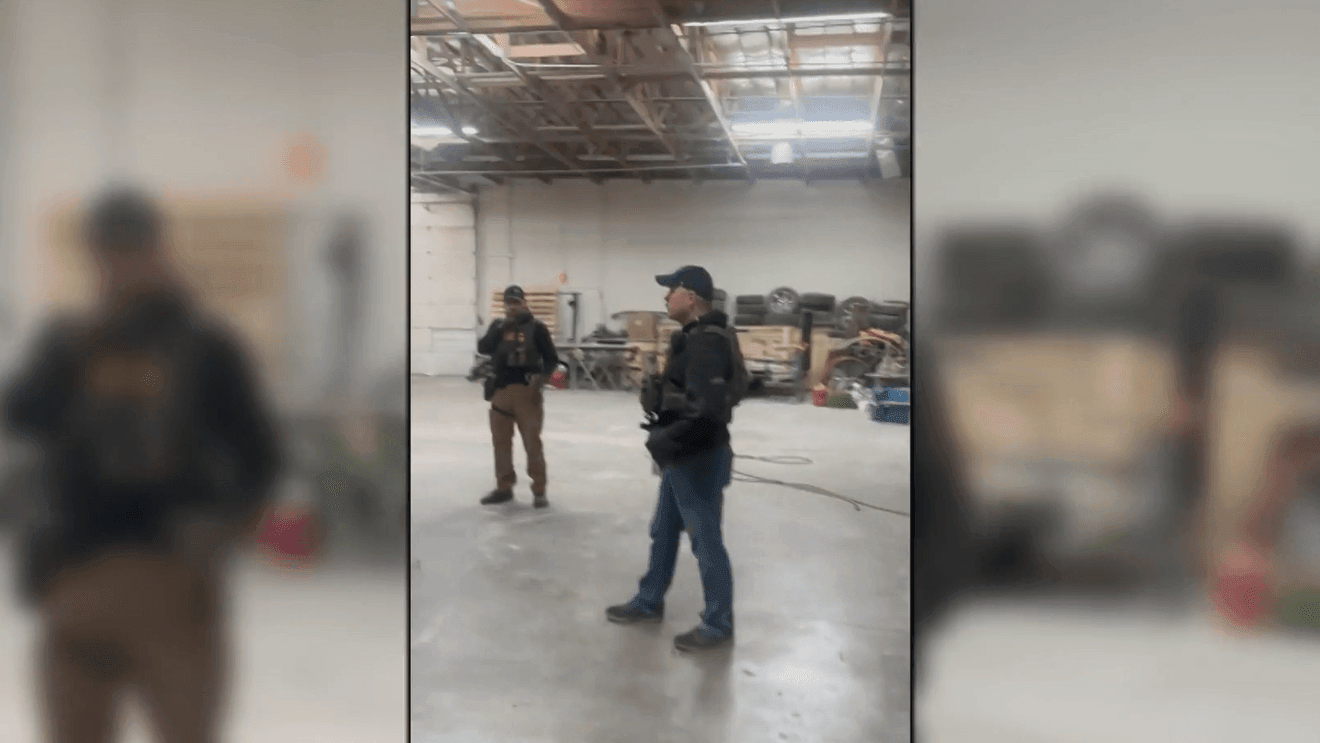
The video shows the aftermath of a shattered glass door at Viper Auto Body, along with a heated exchange between agents and the witness.
“You guys broke the f’ing window,” a woman can be heard saying in the video.
“Yes, we did,” an agent responds.
“You guys don’t have a f’ing warrant.”
“We don’t need one.”
MORE | Related Stories
A woman who asked to be identified only as Lilly told 2News she is married to one of the men detained. She said her husband, Wilmer Menjivar, worked at the auto body shop and had no criminal record. The shop’s owner was also detained, she said.
“I wasn’t mentally prepared for them to take him,” Lilly said. “He’s never done anything, has no criminal record.”
A search of court records by 2News did not turn up any criminal charges for either man.
Lilly said her husband told her he believed he was being followed by unmarked vehicles as he arrived at work. She said he did not know why agents were attempting to pull him over.
According to Lilly, her husband exited his vehicle, ran into the auto body shop and locked the door behind him. She said agents then smashed the glass door, entered the business, searched inside and detained him.
In another portion of the video, Lilly asks agents who was arrested.
“That’s not how this works,” an agent replies.
Carlos Trujillo, an immigration attorney not connected to the case, said the circumstances described raise serious Fourth Amendment concerns.
“They should have knocked on the door. They should have provided the warrant,” Trujillo said.
“If they didn’t have a warrant authorized by a judge to enter that specific place, they cannot go in, and they cannot break the door violently the way they did it.”
Trujillo said federal agents can, in limited situations, enter private property without a warrant if there are exigent circumstances, such as an immediate danger to others, the destruction of evidence or the pursuit of a dangerous criminal suspect.
“But let’s be clear,” he said. “None of those exigent circumstances are presented in this case.”
Trujillo said law enforcement agents may justify their tactics by saying Menjivar was fleeing. He questions the validity of that argument.
“Anybody, any U.S. citizen, who is being followed by an unmarked car may flee, because you don’t know who’s behind you,” he said. “That is not fleeing at the command of an officer. You are being followed by an unmarked vehicle; you may not know who is coming after you.”
Trujillo also raised concerns about whether agents had reasonable suspicion to initiate the attempted traffic stop in the first place. Lilly said her husband did not know why agents were trying to pull him over and believes he may have been profiled based on his appearance, the low-rider truck he was driving (often associated with Chicano or Hispanic culture) and the color of his skin.
Lilly said she did not believe officers were wearing body cameras and is not confident she will ever get answers about the interaction.
2News reached out to ICE for its account of the incident. Late in the day, ICE directed questions to Customs and Border Protection.
2News asked CBP what reasonable suspicion agents had to attempt a traffic stop, whether agents had a judicial warrant to enter the business, and, if not, what exigent circumstances justified breaking a locked glass door.
As of publication, CBP had not responded. Lilly said she cannot afford to fight her husband’s immigration case and that he plans to return to his home country of El Salvador.
She said she and her three children, all U.S. citizens, plan to move with him to keep their family together.
“I feel like that’s the safest choice,” Lilly said. “I have to protect my family.”
2News will continue to update this story if federal officials respond or new information becomes available.
______