Compared to other global citizens, Europeans tend to shop for their beauty essentials at the pharmacy. French beauty shoppers scour the shelves of Citypharma and Pharmacie Monge for the same products in their mother’s medicine cabinets, while German shoppers can choose from over 2,000 Dm-drogerie market locations to replenish their beauty stock.
Reliance on brick-and-mortar beauty retailers has meant that Europe lags behind other regions in terms of digital beauty market penetration. On average across Europe, e-commerce accounts for less than 22 percent of the beauty market’s overall value: In the US that number almost doubles to 43 percent, and in China it doubles again to a staggering 87 percent, according to NielsenIQ data.
That’s changing quickly. Enticed by convenience, social media and premiumisation, shoppers across the continent are dedicating a larger share of their online spending to beauty. Countries including Ireland, Italy and the Netherlands have seen the largest lifts here, between five to seven percent year on year. Across the continent, online beauty sales are growing by 10 percent YoY, per NIQ.
As companies, brands and retailers in the US and China strengthen their omnichannel strategies, their counterparts in the EU are scaling and maturing their own — while at the same time contending with the arrival of TikTok Shop and the dominance of Amazon, the continent’s top beauty merchant. But the deep nuance of the European market means plenty of opportunity for local players to tap into the recent surge of digital demand. First they will have to convince shoppers to purchase online; then they need to win their sales.
“It’s not necessarily a case of the digital channel being the homogenous beast coming to eat everyone’s lunch,” said Jon Copestake, a consumer senior analyst at EY Global. It’s more about assessing the threat, or the opportunity, posed by those new digital players generating significant interest.
Matchmaking Audience and Assortment
In Europe, the prospective e-commerce beauty buyer is spoiled for choice, able to shop from specialty retailers such as Sephora, Boots and Douglas, and on dedicated digital beauty platforms including Zalando, Notino and Flaconi. But the market is also exceptionally fragmented.
“Some people think that Europe is the same everywhere, and so is the strategy — that is not the case,” said Virginie Duigou, head of beauty buying at Zalando.

Success within specific regions demands nuance. Attracting customers means curating assortments that will be influenced by local brand heroes, climate conditions as well as varying sensibilities from country to country.
“In Spain and Italy, they’re very good on SPF. A stronger foundation is Double Wear from Estée Lauder, because it sticks,” said Duigou. “But when you go to the Nordics, for example, you need more rich creams — because it’s so cold.”
Europe is the most sustainability- and “clean” beauty-conscious market. But even this skews according to country: From North to South Europe, concerns around clean labelling, green credentials and natural ingredients soften, points out Copestake, influenced by a country’s wealth-per-capita, and larger national anxieties around sustainability. Marketing around a product’s renewable packaging might be front and centre in Norway versus a footnote in Greece.
Curating a winning assortment in Europe means adapting a retailer’s POV to every different market, even if only slightly. German e-tailer Flaconi, which has rapidly expanded into eight new markets since 2024 and plans to add a further seven this year, is less concerned about intense localisation. “Step one is going very fast into the new country. The second is localisation in terms of payment methods,” said Bastian Siebers, CEO of Flaconi. “Then we’re looking at special brands.” Its model is working: In three years, the retailer has doubled its revenue and added 2 million active customers, per Siebers.
Amazon also localises by allowing brands to upload country specific images, offering translation through its Amazon Ads service and tailoring product availability by region. TikTok Shop follows a similar model — include a winning assortment, then tweak it locally — but TikTok Shop also has the guidance of its regional creators to pick up on trends and understand their customer.
Still, neither retailer has established themself as an attractive destination for the most luxury assortment. (Chanel still isn’t drawn to selling on TikTok Shop, said Flaconi’s Siebers.) Building partnerships with those brands is how the German retailer translates its credibility fast within new markets. A shopper may not visit Flaconi for Chanel specifically, for example, but is far more likely to trust the retailer seeing the vaunted label in its assortment.
Converting Offline Trust to Online Sales
A Parisian Citypharma shopper knows that as soon as they walk in the door, expert-led consultations on skincare and other products will be made available to them. European brick-and-mortar retailers, especially beauty pharmacies, are renowned for their ability to establish trust. It’s what makes selling beauty online, particularly premium beauty, so tricky within the region, said Copestake.
It’s an area where established premium omnichannel players like Sephora and Zalando have a clear advantage. “We don’t see digital and physical as separate,” said Catherine Spindler, Sephora’s president for Europe and the Middle East. “We consider our mobile app as its own flagship, and digital experience is built around curated content, expert advice, personalisation tools and strong connections to our in-store ecosystem.”
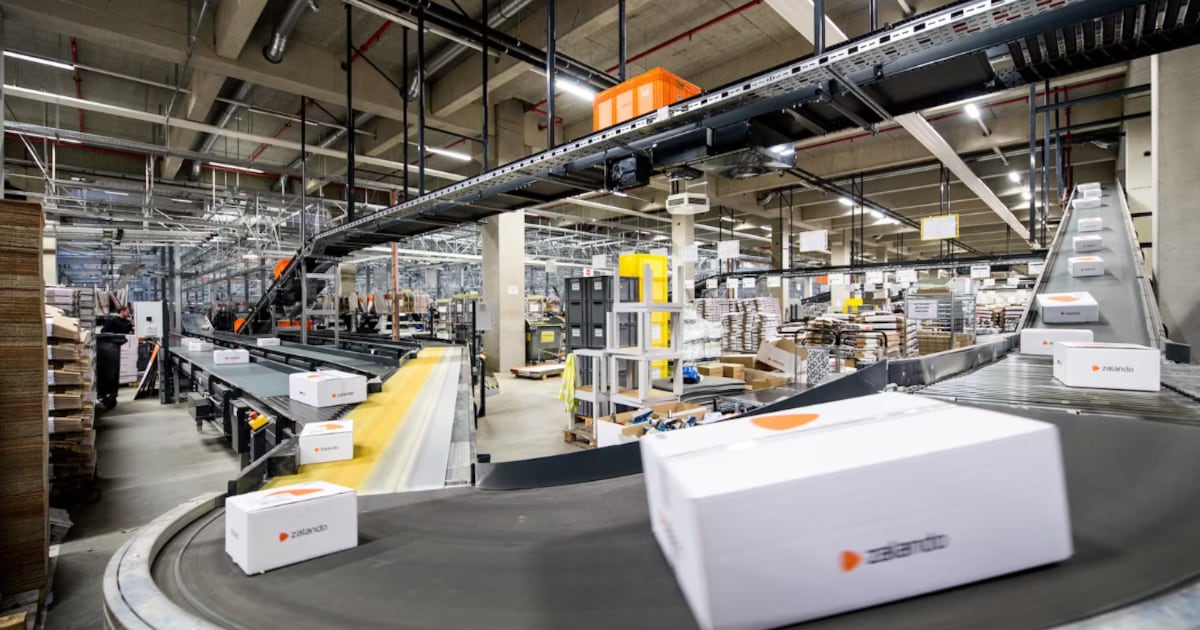
To bolster its premium offerings, Zalando has also invested in editorial content, launching an “insiders edit” in 2025 which invites industry figures like the facialist Sophie Carbonari and makeup artist Isamaya Ffrench to share their Zalando wish lists online.

Amazon is working inversely: Already dominant online, the retailer opened its first physical beauty store in Milan in February 2025. The move, along with the retailer’s online premium beauty marketplace — featuring higher-end brands such as Clinique, Lancôme and La Roche-Posay across UK, Germany, France, Italy and Spain — aims to drum up credibility and help establish Amazon as a premium beauty player.
For TikTok Shop, beauty livestreams are the foundation of trust. “They can ask questions and resolve all the doubts that they might have. It allows them to have that offline experience via an online store.” Indie makeup brands like Goovi in Italy and For.me in France have seen both great success on-platform and received an offline halo effect thanks to TikTok Shop activation, said Irene Salido, Head of Beauty at TikTok Shop Spain.
Though the threat of Amazon looms, the platform’s credibility has been damaged by the scourge of counterfeit products. TikTok Shop also has restraints: as well as failing to win over certain brands, the retailer is also yet to reach countries beyond the top five Western European beauty markets. Elsewhere in central East Europe, retailers like Flaconi, Douglas, Sephora and Zalando already operate extensively.
“Amazon and TikTok Shop are powerful platforms, but they are not a curated beauty destination where one can experience a brand,” said Douglas’ EVP of assortment purchasing Stefanie von Albert. “Premium beauty relies on expert curation, tailored advice and meaningful brand engagement.”
Sign up to The Business of Beauty newsletter, your complimentary, must-read source for the day’s most important beauty and wellness news and analysis.