
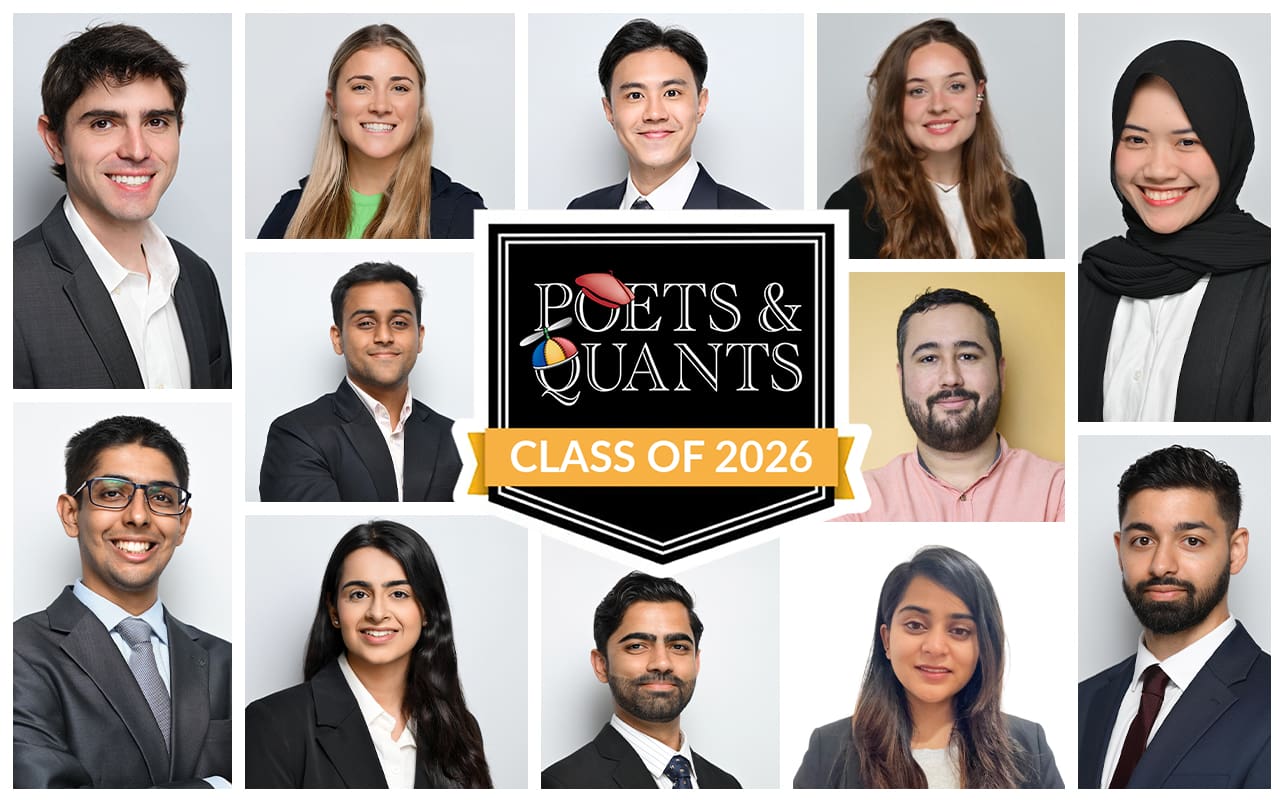
Set within one of the world’s most respected science and technology universities, Imperial Business School holds a distinct position in global management education. Embedded inside Imperial College, the School draws directly on the university’s strengths in engineering, medicine, climate science and computing and translates them into a full-time MBA designed for leaders navigating an increasingly technology-driven economy.
That integration sits at the heart of what Imperial describes as its STEMB focus, a deliberate blend of science, technology, engineering, mathematics and business. According to Dean Peter Todd, the model reflects how modern organisations actually operate.


Imperial Business School Dean Peter Todd: “Graduates leave with enhanced prospects to shape business in the AI era.” Courtesy photo
“Imperial Business School benefits enormously from being integrated into a world-leading science and technology university,” he explains. “It’s an interdisciplinary environment where innovation thrives in tech-driven domains like AI, fintech, climate and sustainability, and health technology.
Todd says that students get unique opportunities like gaining practical skills in technology and data analytics, developing future-ready solutions through initiatives such as the Imperial Innovation Challenge.
“The curriculum blends business principles with STEM expertise, equipping students to think critically, lead in technology-driven sectors, and tackle complex global challenges. Our STEMB focus, combining STEM and business, along with industry partnerships, provide strong career outcomes and entrepreneurial opportunities, particularly in technology and sustainable business sectors.”
Together, these experiences are designed to ensure Imperial MBA graduates can perform from day one, with the confidence to bridge technology and business, work across disciplines and deliver practical solutions in complex organisational environments.
“Graduates leave with enhanced prospects to shape business in the AI era,” Todd affirms.
For the Imperial MBA Class of 2026, those ideas show up daily in classrooms, project work, competitions, leadership development and career exploration. And they are reflected in how students describe why they chose Imperial and what they hope to become by the end of the year.
THE STEMB MBA IN PRACTICE
What differentiates Imperial most clearly, students say, is how deeply technology and analytics are woven into the MBA. Not as electives on the margins, but as part of how leadership and strategy are taught.


Rafael Caspary Blay. Courtesy photo
Rafael Caspary Blay, a former data science manager who started a football analytics blog while studying Computer Science at University of Southern California, chose Imperial Business School because it treats technology as a core driver of business rather than a buzzword. “The curriculum consistently challenges students to understand how technology can be applied to solve real-world business problems,” he shares, particularly for those moving from technical roles into strategic leadership.
That theme resonates across backgrounds. Hassan Malik, trained as an engineer and consultant in the UK, says the MBA integrates AI and digital strategy with ethical decision-making and emotional intelligence. “It’s not enough to just keep up to date with new technological developments but we should also understand the implications of new technologies at a societal level.”
Samraat Gupta, a graduate of UC Berkeley who previously worked in engineering and construction in the U.S. values Imperial’s evidence-based approach to leadership, while Georgina Voss highlights how STEM thinking complements creativity, allowing complex technical ideas to be translated into compelling narratives.
Voss studied Media & Communications in Australia, and comments that this ability to bridge STEM insight and business strategy is critical. “We’re in the age of digital and AI, so pairing this will be fundamental for all businesses moving forward.”
Several students point to Imperial’s access to the wider university ecosystem as a major advantage. Nopparut “Nuke” Praditkamjornchai describes the ability to engage with engineering, design and entrepreneurship across campus, from the Dyson School of Design Engineering to the Imperial Enterprise Lab, as “rare and incredibly powerful,” allowing ideas to be stress-tested against real technical and commercial constraints.
That integration is visible through initiatives such as the Imperial Innovation Challenge, where MBA students work alongside engineering, medicine and science faculty on live technical challenges with industry partners.
The curriculum is further reinforced by a wide range of electives focused on innovation, AI and digital transformation. From AI Ventures to simulation-based learning they allow students to test strategic decisions in uncertain, technology-driven environments.


Imperial Business School campus. Courtesy photo
LONDON AS A LIVING CLASSROOM
For many students, Imperial’s appeal begins with its location. London offers proximity to global finance, consulting, technology, startups, policy and culture, all within a city that rewards ambition and curiosity.
Sushrut Deo, a former credit research analyst, describes London as a “living laboratory,” where classroom concepts are constantly reinforced by what is happening in markets and institutions just a few Tube stops away. Samraat Gupta says the city “feels like a place where the world comes to you,” offering exposure to more industries and perspectives in a few months than years elsewhere.
For Chayanika Misra, a former software engineer, London’s breadth matters because it supports transition. “Many people do an MBA to achieve a career transition,” she says. “London is one of the best places for that, because you can move into almost any industry.”
Others point to the city’s energy beyond work. Georgina Voss highlights the “electric buzz” that extends learning well beyond campus, while Dr. Géraldine Streib, a former medical doctor turned consultant values the balance London strikes between a strong job market and a vibrant and deeply rich cultural life. “It has opened a world of fantastic creative expression through theatre, music events, museums and street art, as well as providing those everyday interactions with very inspiring individuals.
Classroom learning is reinforced by structured global exposure, including a Global Experience Week, a transformative opportunity designed for the MBA students to build commercial judgement, cultural awareness and leadership adaptability across international markets. Last year, the students travelled to Nairobi, Kenya – a dynamic hub of entrepreneurship, sustainability, and economic growth. The theme of the trip, ‘How can business address inequality?’, was the driving force behind the journey.
LEADERSHIP, SELF-AWARENESS & JUDGEMENT
Alongside analytics and innovation, Imperial places unusual emphasis on leadership development, particularly through its year-long LEADS module and the Personal Leadership Journey.
For Hassan Malik, that focus on self-awareness and empathy was “surprising and refreshing,” helping develop resilient, thoughtful leaders rather than just technically strong managers. Géraldine Streib says the programme has pushed her to confront weaknesses in presenting, networking and leading in a setting designed to support real growth.
Others describe the MBA as a space to move from execution to judgment. Jasmine, who comes from a marketing and startup evaluation background in India, says she is learning to shift from “doing” to “leading with vision.” She describes the year as a shift from tactical execution to strategic leadership, learning how to anticipate long-term impact and guide teams with clarity.
Mihir Bhandari, with experience in renewable energy finance, is focused on strengthening leadership under uncertainty, particularly in sustainability-driven sectors.
Across the cohort, students describe learning how to balance analytical rigour with intuition, and how to make high-quality decisions when the data is incomplete and the path forward is unclear.
Enterprise Lab, courtesy photo
ENTREPRENEURSHIP, INNOVATION, AND REAL-WORLD APPLICATION
Across the Imperial MBA Class of 2026, entrepreneurship is less an aspiration than an operating mindset. Students highlight hands-on learning through venture competitions, consulting projects, and collaboration with founders, investors and faculty.
Chayanika Misra points to the Imperial Enterprise Lab as a critical resource from idea surgeries to innovation competitions. “Events like Community Collider and innovation competitions such as WE Innovate give me a chance to form teams, test ideas and meet people with strong entrepreneurial energy.
Firdaus Nur Pratiwi, who grew up in a family ice cream business in Indonesia before studying Industrial Engineering, values the chance to test and refine business ideas through the Entrepreneurial Journey module. “It’s a chance to pitch a proposition to a panel of venture capitalists and connect with other faculties in Imperial in order to create a fully-fledged business proposal.”
Diego Cáceres Saldaña, who spent over four years with Mastercard launching digital payment solutions across multiple markets before heading to London now wants to take that experience and explore product ideas at the intersection of fintech, inclusion and digital ecosystems. “The Enterprise Lab’s mentorship, workshops and access to technical talent across Imperial will allow me to test and refine ideas in a way that’s both structured and creative.
Hassan Malik describes competing in the Turner MIINT impact investing competition leveraged the Imperial network of business founders as part of our company sourcing strategy. “It’s a competition involving real people, real money and real impact,” he enthuses.
Others emphasise how innovation at Imperial is tightly linked to application. Nuke Praditkamjornchai focuses on energy transition and infrastructure, while for Mihir Bhandari who brings experience in renewable energy finance, the MBA has been about developing system-level judgement to understand how regulation, capital and technology intersect to drive sustainable growth at scale.
Across sectors, students describe learning how to turn ideas into scalable, responsible solutions, not just pitch decks.


Full-time MBA students, courtesy photo
A GLOBALLY MINDED, COLLABORATIVE COHORT
With students from across Europe, Asia, the Americas and Australia, and pre-MBA employment across multiple sectors from consulting, tech and finance to retail, energy, media and healthcare, the Class of 2026 consistently describes its diversity as one of its strongest assets.
Rafael Caspary Blay notes how perspectives from emerging and developed markets enrich discussions about growth and impact. Chayanika Misra describes a culture of collaboration that extends beyond the Business School into engineering, medicine and design. Firdaus Nur Pratiwi values learning from peers who bridge corporate experience and entrepreneurship, while Georgina Voss highlights the willingness of classmates to engage across disciplines.
Many also speak about contribution. Hassan Malik serves as Academic Lead for the MBA, Mihir Bhandari as Student Staff Committee Chair, and Chayanika Misra as President of the Innovation and Entrepreneurship Careers Club. These roles reinforce Imperial’s emphasis on shared responsibility and community impact.
PREPARING LEADERS FOR WHAT’S NEXT
Taken together, the Imperial MBA Class of 2026 reflects a cohort deeply aware of the complexity of modern leadership, one that demands fluency in data and technology, comfort with ambiguity, ethical judgment and the ability to work across disciplines and cultures.
As Sushrut Deo puts it, the goal is learning how to move from “what does the model say?” to “what opportunity are we not seeing yet?” That mindset is analytical yet imaginative and forward-looking, and sits squarely at the heart of Imperial’s STEMB approach.
For early-career professionals seeking an MBA that mirrors the realities of technology-driven business, the Class of 2026 suggests Imperial Business School is less about stepping away from complexity, and more about learning how to lead within it.
Next page: An interview with MBA Academic Director James Barlow and the profiles of 12 Imperial College MBA students.
© Copyright 2026 Poets & Quants. All rights reserved. This article may not be republished, rewritten or otherwise distributed without written permission. To reprint or license this article or any content from Poets & Quants, please submit your request HERE.