Sausalito’s planning to adapt to sea-level rise will include engineering ideas from shoreline businesses.
“The most important direction that we want to give tonight is to make sure the consultants and subconsultants work directly with the owners and businesses at the waterfront,” Mayor Steven Woodside said at the City Council meeting on Jan. 20. “Many of them have already done some of that engineering analysis.”
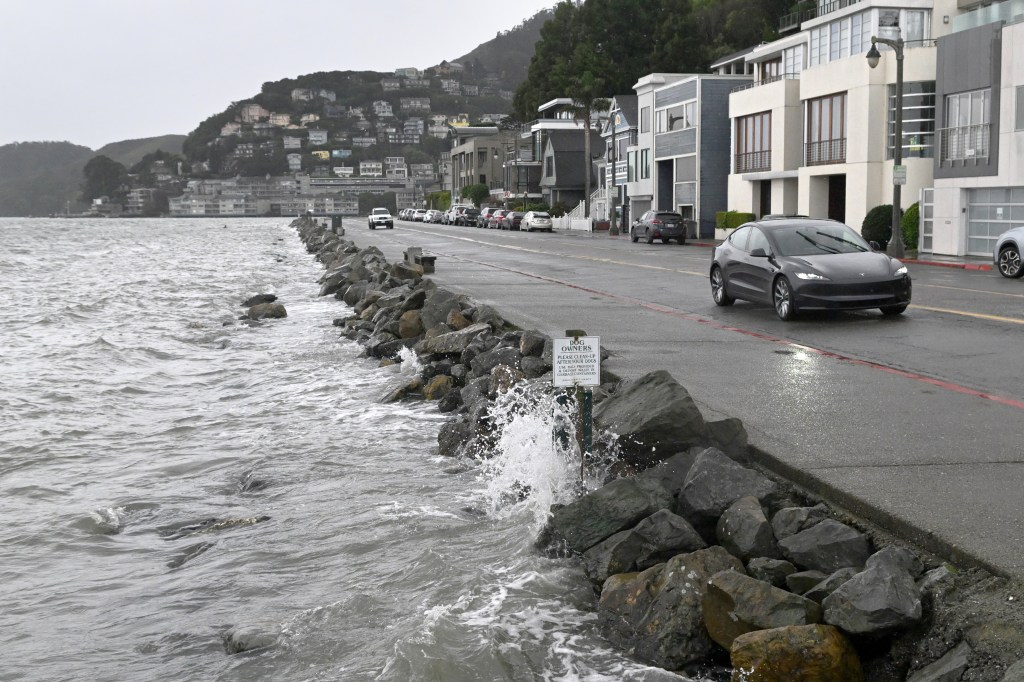
The city’s draft shoreline adaptation plan catalogues numerous threats and responses to rising bay waters along every section of the city’s 2.5-mile shoreline. Sausalito received a $1 million state grant in early 2023 to create the report, which will be used by city officials and the region’s governing bodies.
When the 168-page draft was presented to the council in November, marinas and other shoreline business interests said they had not been consulted. They were dismayed the document predicted that the current shoreline would not be protected, which threatened their livelihoods and the city’s maritime culture.
The draft, relying on state data, projects that Richardson Bay will be 10 inches higher by 2050 and 4.3 feet higher during king tides and storms. By 2100, bay levels will be 3.1 feet higher and reach 6.6 feet in storms and surges. At the same time, stretches of bayfront will sink, which is already happening in the Marinship area.
Earlier this month, a mix of king tides and southerly winds pushed bay waters more than 7 feet above sea level, leading to widespread flooding in low-lying areas.
Catie Thow Garcia, Sausalito sustainability manager, told the council her team would hold a series of meetings with waterfront business and property owners to gather concrete suggestions for countering rising waters while preserving the shoreline.
The document would more explicitly address “hold the line” options, she said. It would also discuss creating a new public financing authority to pay for infrastructure.
During the public comment portion of the council meeting, Jim Madden, whose family built Sausalito Yacht Harbor, said he hopes the city’s outreach would be “more than a box-checking exercise.”
Some possible responses in the draft presented in November were “unrealistic,” Madden said. He cited construction of floating parking lots and offshore levees, and raising the elevation of Bridgeway.
On the other hand, he said raising the Johnson Street parking lot and Dunphy Park “would be more realistic, more durable, significantly less costly while providing effective flood control.”
“Preserving the existing shoreline needs to be presented in that plan,” Madden said. He said there “ultimately needs to be a public and private sector cooperation.”
The Sausalito Sustainable Waterfront Association submitted a letter just before the meeting endorsing the renewed outreach and urging pragmatic steps.
Councilmember Ian Sobieski suggested the plan should contain cost estimates for remediation measures. He said the grant’s more than $300,000 in unspent funds could begin to assess various engineering proposals.
Woodside said the special financing district should include the city’s entire shoreline, but noted the plan’s scope did not include fiscal strategies.
“We should always include the people who are more directly affected by sea-level rise,” he said of the outreach to shoreline businesses and property owners. “We only have to look back a couple of weeks to the high tides to know that many — even some people in this room — might have been surprised.”