Luo Guobing, president and vice chairman of LiuGong speaks to Andy Brown about the challenges the Chinese OEM faces, the opportunities, and a long-term vision for the future
One of the major themes of 2025 in the world of construction was tariffs.
Tariffs in themselves are nothing new, but President Donald Trump’s tariffs on raw materials and goods coming into the US caused major ripples around the world, including within the boardrooms of the world’s biggest OEMs and construction contractors.
China-based LiuGong certainly falls into this category, with the company ranked number 18 in International Construction’s Yellow Table – a ranking of the world’s biggest OEMs by sales – with US$4.1 billion of sales. Luo Guobing, president and vice chairman of the company, reveals in an exclusive video interview with International Construction that these tariffs have altered the way that the firm does business.
Challenges – and opportunities
“It really has created some significant challenges for us, and also for other Chinese companies to do business in the US,” says Mr. Luo, who has been with the company since 1994, and became president and vice chairman last year.
 Luo Guobing, who joined LiuGong in 1994, became president and vice chairman last year (Image courtesy LiuGong)
However, he adds that it has also led to positives as it has been a factor in the company accelerating its globalisation strategy.
“Before, basically, we made machines in China and exported globally. Now we think more about localisation and globalisation. This really had a big influence on us, but I think that it is good for us, for the globalisation strategy.”
The tariffs have turbo-charged an existing policy of building up local dealers, subsidiaries and support networks around the world. A figure that underlines how long this strategy has been in place – and how important it is to the company – is the percentage of LiuGong’s sales that come from overseas markets: 50%.
According to Mr. Luo, the company’s overseas revenue increased by 15% last year, and as a percentage of the company’s total revenue, he expects its share to increase by 2-3% every year.
Focusing back on the US, and Mr Luo makes it clear how vital the China-based firm sees it.
“We think the US market is a very important market. Number one market in the world. We need to be there. The US market is a strategic market, and we will never give up being there.”
Regarding the US, Europe and other mature markets, the president concedes that there is still some improvement that LiuGong can make. Mature markets have different expectations than developing ones regarding products and aftersales care.
While LiuGong and other major China-based OEMs have made significant strides in this area, there is more that can be done.
“We need more focus and more investments through the local value chain and to build capability to support local business and the after-market service. We need more focus on being close to the customers and very high efficiencies to sort out any issues that happen. There is some space in which we need to improve.”
Optimistic outlook
LiuGong performed well in 2025 with both revenue and profits up and Mr. Luo strikes a (cautiously) optimistic outlook for 2026. “I think global construction equipment will see a steady recovery; some increase, but not too much,” he says.
When it comes to their home market of China, he is more bullish, suggesting China will see a 5-10% increase in construction equipment sales this year. This will be mainly driven by government investment as 2026 is the first year in the government’s new five-year plan (2026- 2030) and there is a focus on projects such as energy transition and water conservation.
Interestingly, he makes the point that in China the main demands of the customers are changing. “It used to be that price was number one, the price of equipment. Now there is more [focus] on the value of technology and service.
More focus on research and development and global supply chains,” he says.
Another change in China – albeit one that has been going on for longer – is the move towards electric equipment. China is, by a considerable distance, the world’s biggest market for electric construction equipment. This has been driven by the government through strict emissions standards and subsidies on electric equipment.
“It is very important to say that now the general trend is very clear, and that’s electric and intelligent products,” says, adding that the “electric wheel loader had more than 50% penetration in 2025,” in China.
He also says that the increase in sales of electric equipment is not now due to government policy but due to customer demand for a product that is zero emissions, more comfortable to operate and has the same performance levels. While China remains the main market for electric equipment, he reveals that LiuGong has now launched electrical machines in more than 60 countries.
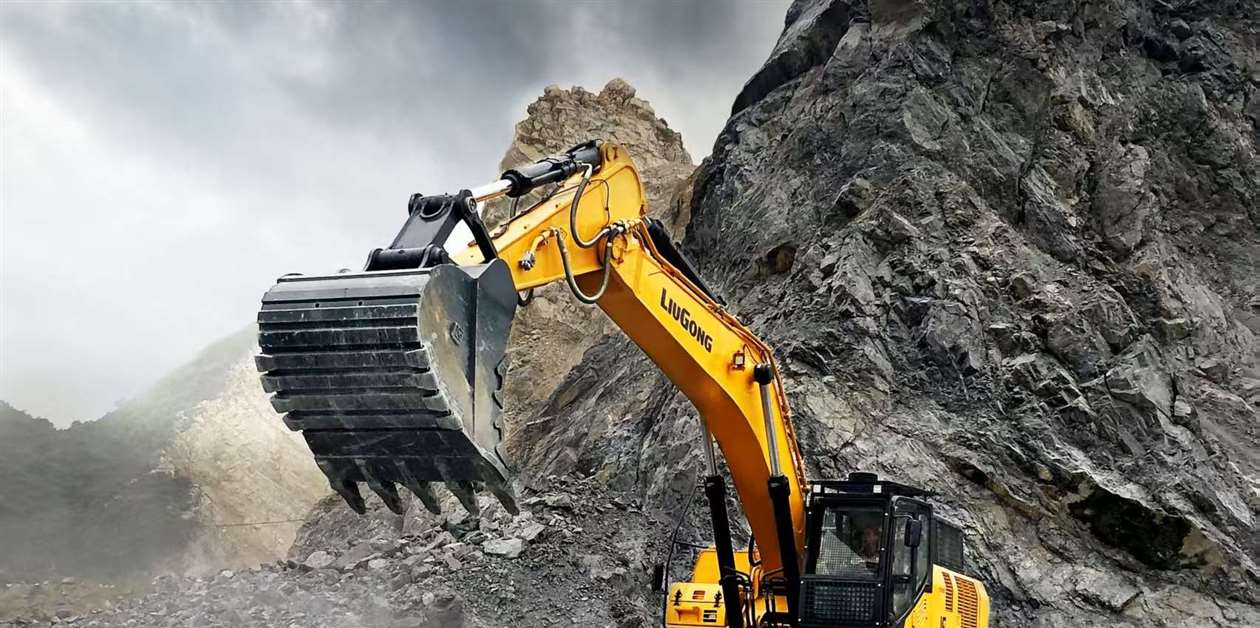
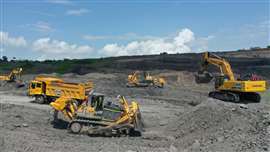 LiuGong earthmoving machinery at work (Image: LiuGong)
Long-term vision
One of the (many) impressive things about the global Chinese OEMs in construction is their long-term planning – they are typically thinking about the next five to ten years rather than what the financial results at the end of the year will look like.
It is clear from speaking to Mr. Luo that the company wants to transition more into being a player that focuses on high-quality products and providing the levels of service and support that customers expect from a producer of such products. Part of this strategy is – of course – to produce ‘intelligent’ equipment that is increasingly automated and comes in a wide range of power options. But the conversation keeps on returning to the things around machine sales.
“We want to be a very good global partner for customers. So, this means we will be more trusted and also have reliable products and quality service. Very important is customer trust and [being a] premium brand,” he asserts.
“We’ll set up more subsidiaries to be closer to the customers, together with our dealers to support the customers.”
The strategy is for LiuGong to continue its growth in mature and emerging markets and to see sales from overseas markets hit the 60% mark in five years’ time.
The president also reveals that the company’s sales goal is to be a RMB60 billion (US$8.6 billion) company by 2030. This is an ambitious target but one that, if the firm can manage to grow as it wants to in overseas territories while enjoying a relatively strong and stable home market, may be achievable. Given the growth that LiuGong has seen over the last ten years it is certainly not an ambition that can be discounted.