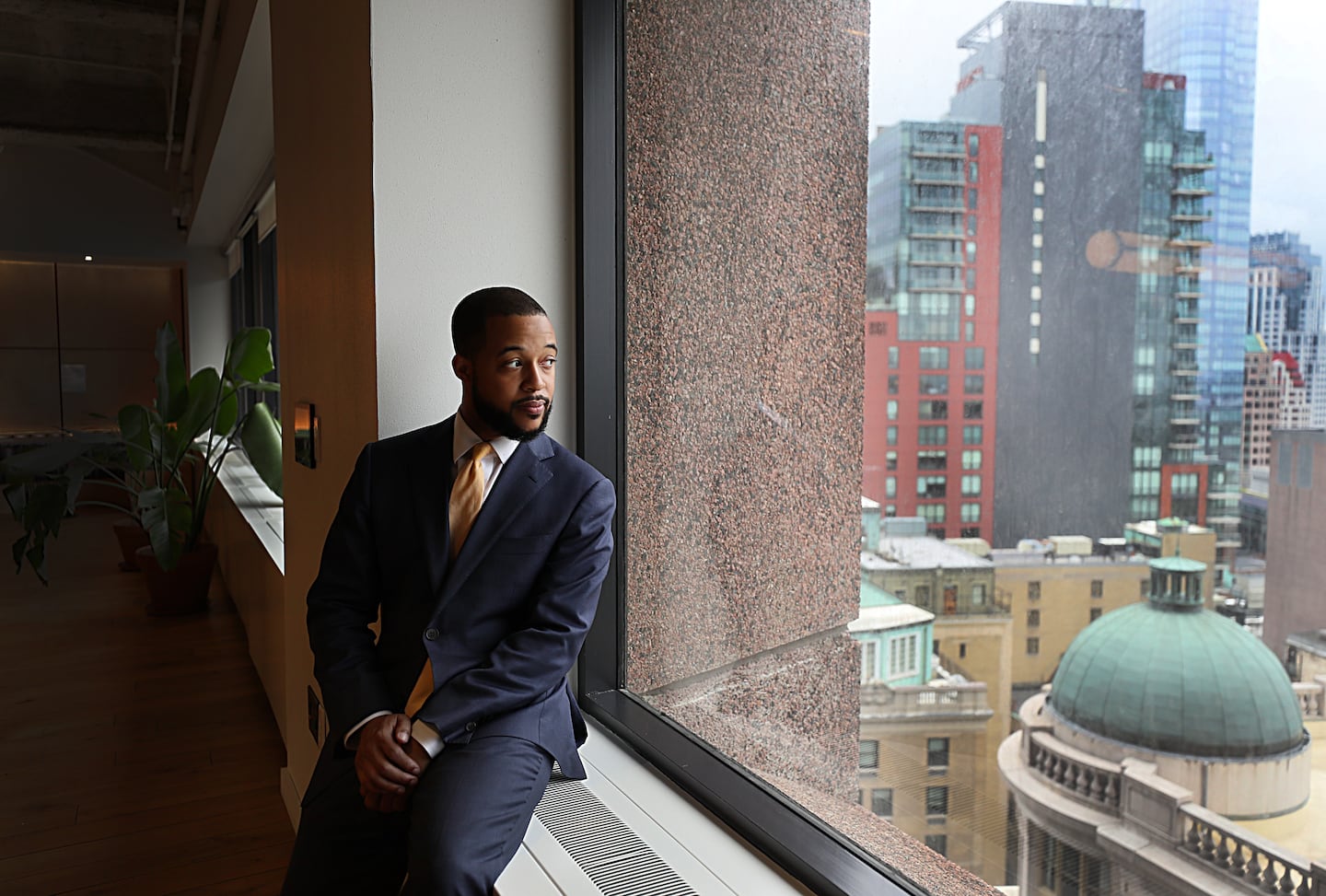
For four years, Idowu did just that, launching new grant programs for local businesses, doling out liquor licenses in parts of town that have few, and connecting far-flung commercial districts to the resources of City Hall. Then, Monday, Idowu announced he will step down at the end of February, to care for his elderly grandmother.
Idowu’s departure comes at a precarious time for Boston’s economy, amid threats to some of the city’s core industries, concerns over the vitality of the Financial District, and declining values of commercial real estate that powers the city’s budget. Now, business leaders are wondering: Will Wu, and whoever she picks to succeed Idowu, continue the neighborhood-focused approach to economic development, or will they pivot to prioritize a downtown that’s still struggling to rebound from the COVID-19 pandemic?
It’s a push-and-pull faced by Boston mayors for decades, from Kevin White’s efforts to revive downtown and the waterfront, to Thomas Menino’s more neighborhood-centric approach, to Martin J. Walsh, who oversaw an era of building all across the city. But Wu, in an interview this week, said downtown and the neighborhoods isn’t an either/or question for her administration.
“That’s a false dichotomy,” Wu said.
“When we invest in downtown, it strengthens our neighborhoods, and when we open and fill neighborhood retail space that also strengthens downtown,” she said. “We need our residents, neighborhood businesses, our large corporations, [and] philanthropic sector all to not only coexist, but cooperate.”
As of now, Wu said, she does not have a replacement for Idowu lined up. Whoever she hires, she said, their top priorities will include filling still-empty storefronts and adapting to Boston’s changing economic landscape amid federal attacks on higher education, health care, and research.
“This continues to be a really challenging and really consequential moment for Boston’s future,” she said. “We are laser focused on driving down the commercial vacancy rates downtown and throughout our commercial areas, and [strengthening] our innovation sector and all the industries that have supported Boston’s economy for centuries and need to [continue to do so] for the next generation.”
That is a slight shift in tone for Wu, who four years ago campaigned on shrinking Boston’s racial wealth gap by investing in communities of color. Catering to downtown and big business interests were not as high on the agenda.
For some Boston business leaders, even that modest shift is likely to be welcome.
Jim Rooney, president and chief executive of the Greater Boston Chamber of Commerce, said Idowu’s tenure has generally been good for the city at large. But he acknowledged that certain segments of Boston’s business community feel like City Hall has neglected the struggles of downtown and not done enough to make Boston’s business environment competitive.
“The view of the business community is that our [city and state] government partners should step up their game with respect to business attraction, retention, growth, expansion,” said Rooney. “And that not enough attention is paid or has been paid to those issues over time.”
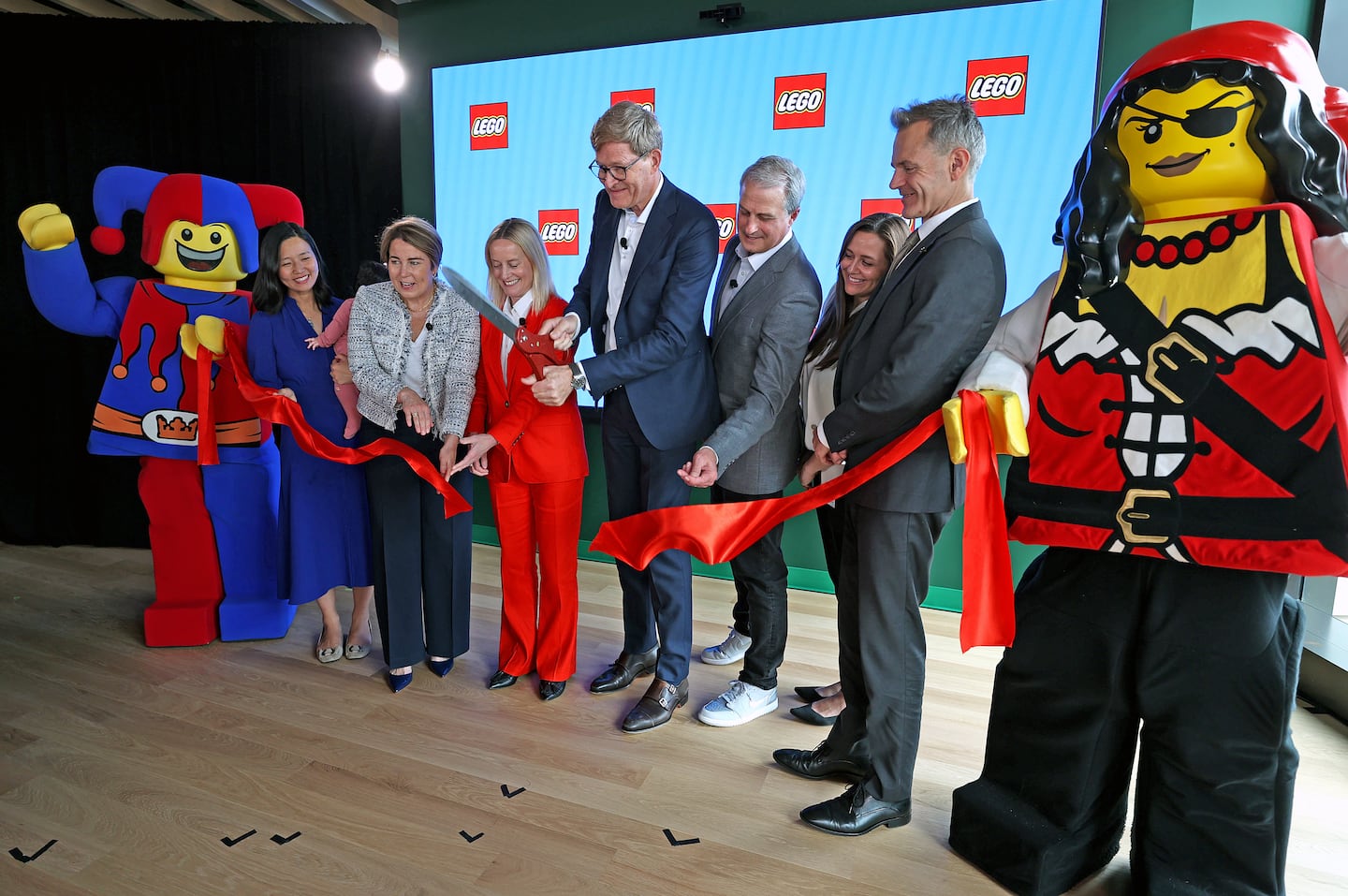
The Wu administration has had some big business wins. Hasbro, Lego, and Eli Lilly all moved big facilities to Boston in the last four years, which Idowu said shows that big employers appreciate his and Wu’s “holistic” approach to economic development, prioritizing businesses across the city and improving residents’ quality of life.
“Our strategy was, for the benefit of the commercial cores of the city, it’s important that we have healthy, vibrant neighborhood economies,” Idowu said. “It is not cheaper to move a company to the city of Boston. So why are they doing that? It’s because it’s a place where their employees will want to be.”
Still, for much of her first term, Wu contended with a perception that she is less friendly to big business interests and traditional power brokers than her predecessors. That has played out in clashes over property tax rates on commercial buildings, and over affordable housing and green energy policies that critics argue has stalled new construction.
Those are challenges that Idowu’s eventual successor will have to confront, along with stubbornly high office vacancy rates. Then there are broad economic shifts that are hurting small businesses all over the city, including downtown.
Bessie King, who co-owns the Villa Mexico Cafe in the Financial District with her mother, Julie King, said they received grants from the city to help them survive the roughest parts of the pandemic. But since 2022 they’ve seen City Hall’s emphasis pivot elsewhere.
“They shifted to promoting new businesses or encouraging people to open new businesses without really helping the existing businesses that are trying to survive,” Bessie said.
Last summer, Julie King sent a letter to Idowu saying she was on the verge of closing her quarter-century-old lunch spot. The letter prompted the city to connect the Kings to a small business consultant, who is now helping them update their menu. But Bessie King said it shouldn’t have taken a desperate plea for them to get help. And time is running short.
“For us, 2026 is crucial,” Bessie King said. “If we do not make a profit this year, we will close.”
At the same time, other parts of the city are growing. From Dorchester and Roxbury to Mattapan and Hyde Park, new small businesses are springing up, says state Representative Chris Worrell. He gives a lot of credit to Idowu and a renewed focus from City Hall.
“We are becoming destination boroughs, communities, and that’s [due to] all the investment that Segun has seen into it,” Worrell said. “You see it far and wide when you go into the Black and brown areas of Boston, you see his handprint throughout the city.”
If that was Wu’s goal, Idowu was a natural fit for the job. As president and chief executive of BECMA, Idowu had focused on supporting Black-owned businesses, with the goal of helping marginalized communities build generational wealth. Under his leadership, BECMA and several other advocacy groups in 2021 filed a federal civil rights complaint against the city, after an audit found that just 1.2 percent of the $2.1 billion City Hall spent on contracts between 2014 and 2019 went to Black- and Latino-owned companies.
Then he joined City Hall, aiming to change the system from the inside.
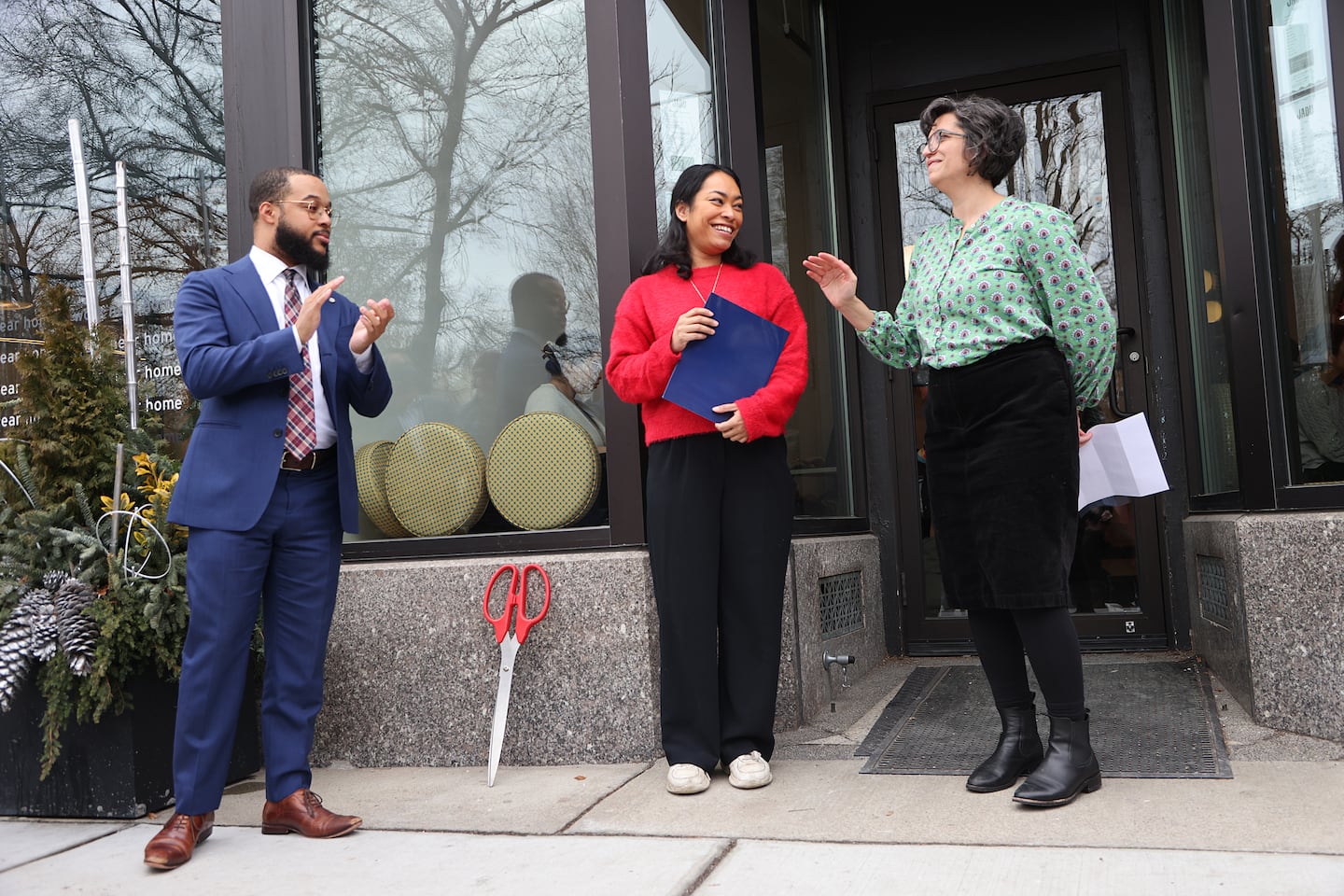
“Segun took the role to be transformational,” said Nicole Obi, his successor at BECMA. “Under his leadership [at City Hall], we saw real progress, whether that was increased contracting with diverse businesses or expanded access to capital, or policies that helped businesses stabilize and grow. That was all by intention.”
Over four years, Idowu and the city nearly doubled the amount in city contracts that went to minority- and women-owned businesses, including a $17 million contract between Boston Public Schools and City Fresh Foods in 2022, the largest contract the city has ever awarded to a Black-owned business.
And when Beacon Hill granted Boston 225 new liquor licenses, Idowu worked to help minority-owned businesses in historically disenfranchised neighborhoods apply for them. He also launched the SPACE Grant program, which doled out COVID-era recovery funds to small businesses to help them move into empty storefronts, not just downtown but all over Boston.
Idowu tackled those efforts with the help of a critical tool: an unprecedented pot of federal pandemic relief dollars. Nearly one-10th of the $560 million Boston received in COVID recovery funds went to Idowu’s Economic Opportunity and Inclusion Cabinet, funding many of Idowu’s marquee initiatives.
Now that money is largely spent, and Wu has warned her department heads to prepare for modest budget cuts. Whoever follows Idowu won’t have the same resources to work with.
Still, Karilyn Crockett, an MIT professor of urban history, public policy, and planning who worked for City Hall for several years under Walsh, said she hopes Wu fills Idowu’s role with someone who will continue his efforts to address longstanding racial disparities in the city’s economic development efforts.
“These were hard-won or hard-fought battles,” Crockett said. “This is a moment to continue this focus and commitment and double down on it.”
For his part, Idowu said he is not at all concerned about leaving behind a vacuum of leadership, even with several major events around the corner, from the FIFA World Cup, Tall Ships, and the country’s 250th anniversary, which are expected to bring a wave of investment and tourism to the city.
“I have tremendous faith in my team,” Idowu said. “I would argue that we’ve been one of the most productive engines of progress in the city in many, many years … and I think that the person who takes over is going to be standing on a very solid foundation.”
Niki Griswold can be reached at niki.griswold@globe.com. Follow her @nikigriswold. Janelle Nanos can be reached at janelle.nanos@globe.com. Follow her @janellenanos.