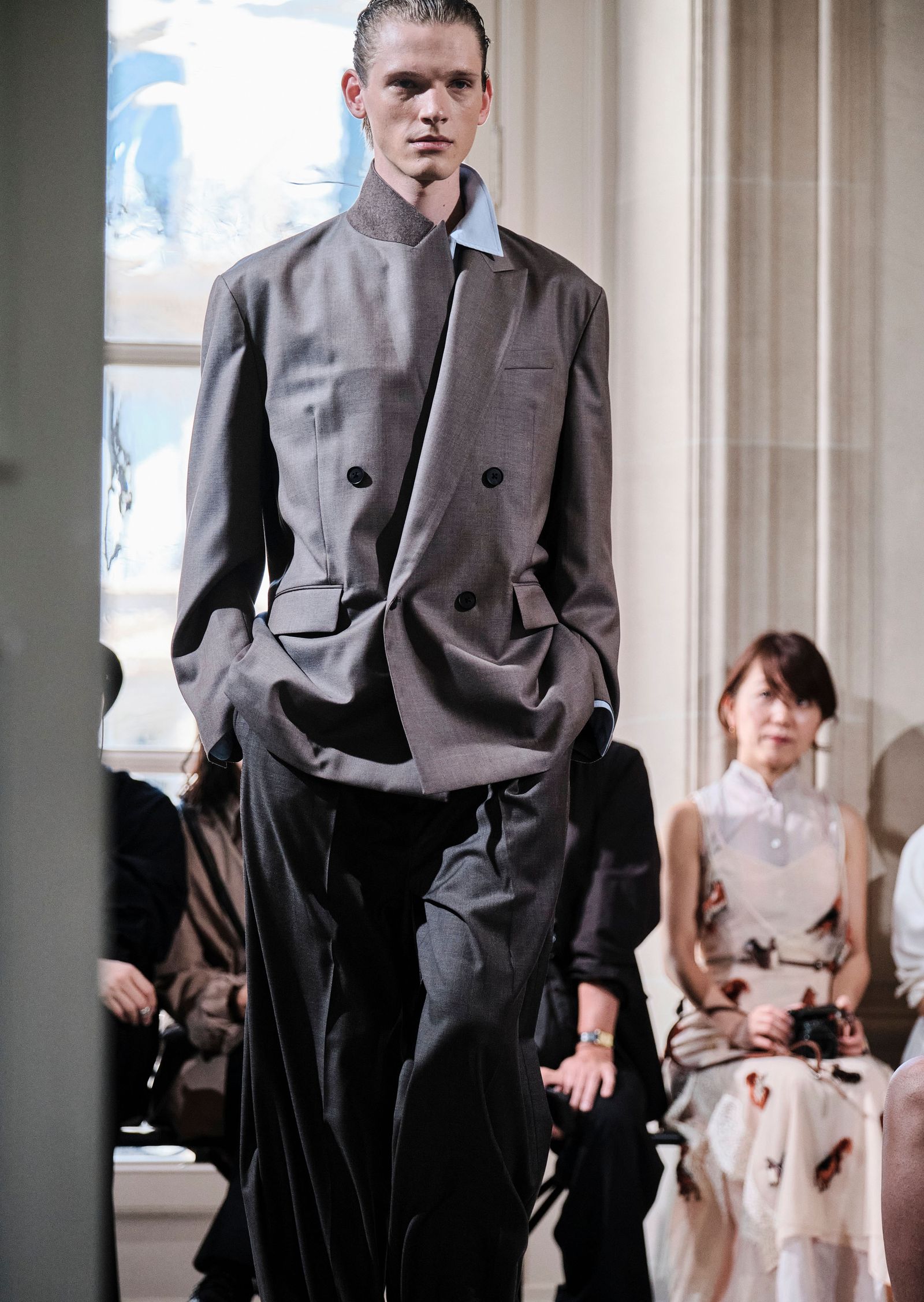
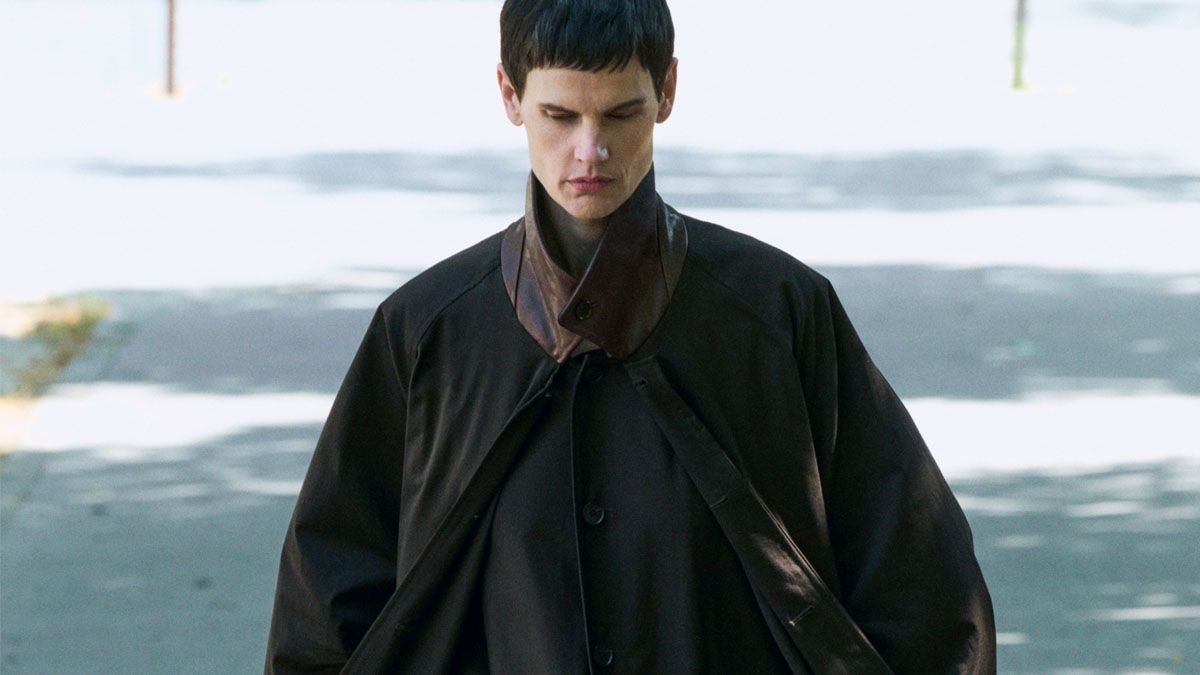
Over the past decade, Kiichiro Asakawa, the 39-year-old founder of independent, quietly tasteful brand Ssstein, has built a serious fashion business. With over 100 global stockists — which from the Spring/Summer 2026 season will include Selfridges, Mr Porter and Net-a-Porter — the brand’s annual revenue has nearly doubled to JPY 1 billion ($6 million) in the past five years.
Known for its floaty silhouettes and muted aesthetic that borders on austere, Ssstein has fast become a firm favorite among menswear fans, alongside fellow Japanese labels like Auralee and A.Presse.
After showing off-schedule in Paris for the past two seasons (which Asakawa says boosted annual sales by around JPY 250 million, or $1.8 million), this week, the brand lands on the official men’s calendar, where it will present its FW26 collection in a bid to further scale its international reach.
A former buyer, Asakawa founded his own store, Carol, in Tokyo’s Shibuya district in 2016, which he still oversees. It’s at Carol that I meet with the designer, two weeks before his Paris Fashion Week Men’s debut. Softly spoken and 185cm tall, his face is framed by an impressive mane of curly hair. He always wears an oversized black Ssstein blazer. As we look around, Asakawa explains that it was in this store that he borrowed his aunt’s sewing machine to begin remaking and selling jeans under the name Stein.
“I sold about 300 pairs of remade denim to customers, and the response was really good,” he says. “I felt a new kind of excitement that I’d never experienced before, and that feeling led me to want to make my own clothes.” Asakawa released the first official collection for Stein in FW17, started holding showrooms from SS18, and rebranded to Ssstein in 2024, adding the triple ‘S’ to avoid trademark issues on the global market.
A self-taught designer, Asakawa was born in Yamanashi prefecture and learned the ropes of design while working at Naichichi, a now-defunct store in Harajuku that sold repurposed vintage. He was constantly captivated by the pieces that surrounded him. “I was unstitching things and remaking them,” he says. “Even as an amateur, there are some things I could understand, and so I learned from there.”