
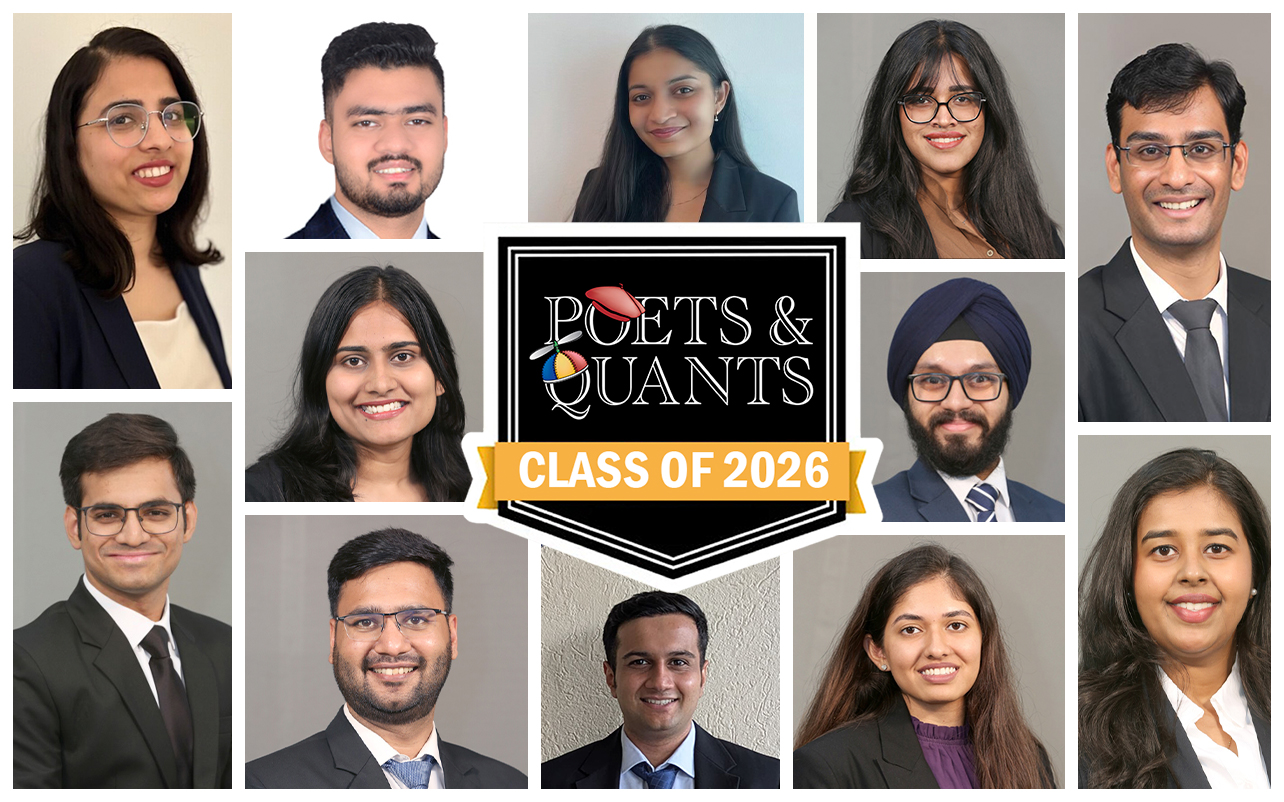
Just look at the numbers. They reflect a business school on the rise. In the 2025 Financial Times MBA Ranking, the Indian School of Business ranked 27th in the world – and higher than any business school in India. Within three years of graduation, ISB graduates were earning nearly $186,000 a year according to FT data. At the same time, alumni surveyed by The Financial Times gave ISB a Top 20 score in Career Services Support
That was just the start. Last year, ISB finished 3rd in Bloomberg Businessweek’s Asian Business School Ranking, courtesy of placing 2nd in its Entrepreneurship and Networking metrics and 3rd for Learning Quality. Most notable of all, ISB ranked 5th in the world when LinkedIn crunched its numbers – ahead of MIT Sloan, Northwestern Kellogg, and London Business School (among others). And ISB achieved this feat by scoring high in the metrics valued by LinkedIn: Graduate Hiring, Alumni Advancement, Network Strength, and Gender Diversity.
TALENTED RESEARCHERS AND ACCOMPLISHED EXECUTIVES
What is ISB’s secret? Ask the PGP Class of 2026 and you’ll hear the faculty. As the class nears graduation, many students are still in awe of their professors’ credentials. That includes Jasjeev Singh Sahni, most recently a product content strategist with Salesforce.
“The breadth is staggering: professors who’ve advised RBI governors on monetary policy; pioneers who literally helped invent cloud computing; practitioners who apply financial theories to billion-dollar M&A deals in real-time. I’ve learned optimisation from researchers pushing the boundaries of algorithmic decision-making; product strategy from former FAANG leaders who built products used by millions; and entrepreneurship from founders who’ve created some of India’s most successful startups.”
More than that, Singh Sahni adds, the ISB faculty aren’t past-their-prime war horses rattling off stories from their glory days. In fact, ISB ranks higher than any other Indian graduate business institution for the scope and quality of its research according to The Financial Times.
“They’re active players bringing cutting-edge insights directly from boardrooms, research labs, and startup trenches into our classrooms,” Singh Sahni continues. “When they discuss market dynamics, they’re often referring to deals they closed last month or research they’re publishing next quarter. The faculty embodies ISB’s unique positioning: academically rigorous yet practically grounded, globally connected yet contextually Indian. It’s like having a masterclass with the architects of modern business, every single day.”
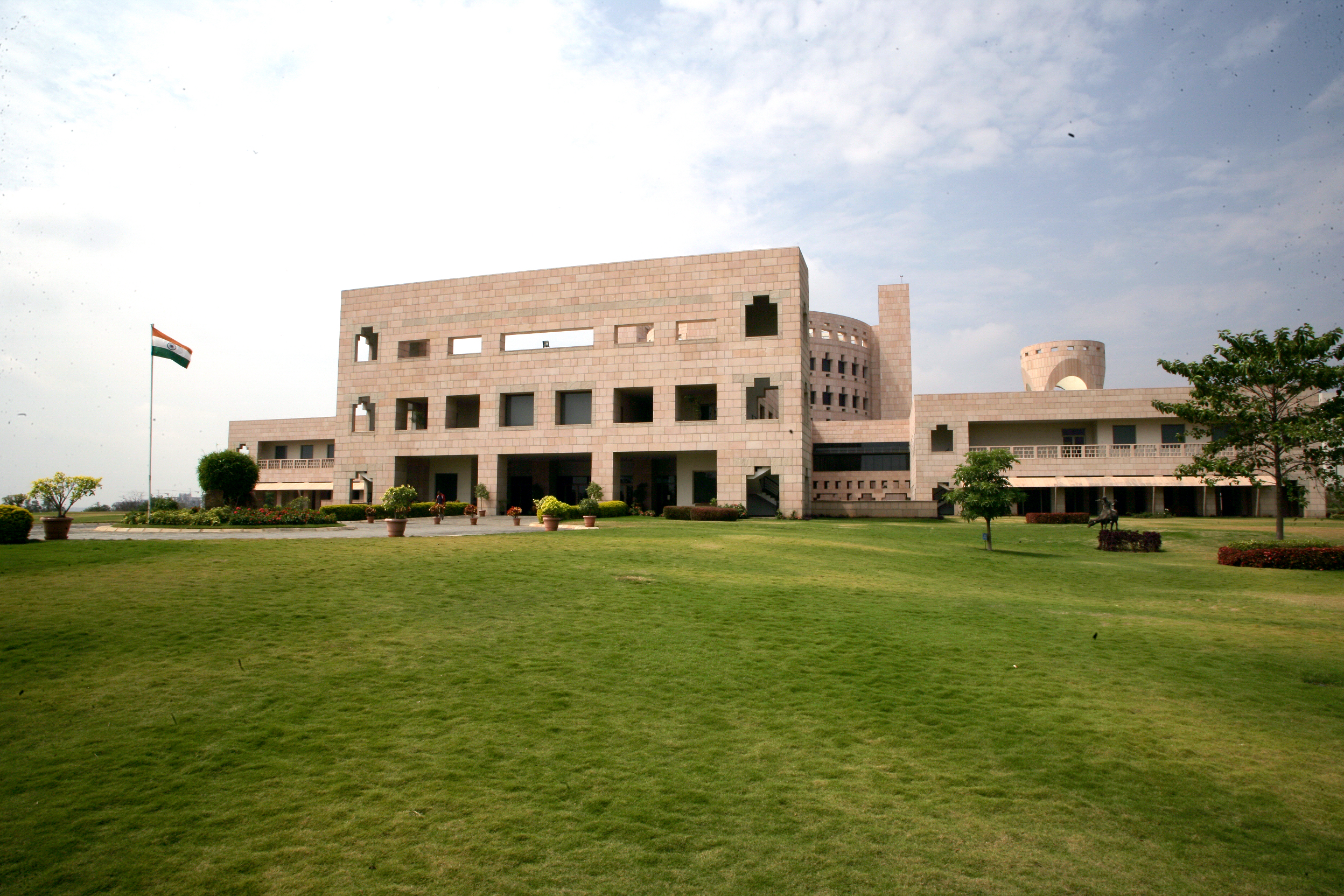
Indian School of Business in Hyderabad
CUTTING EDGE CLASSROOM PRACTICES
It’s one thing to possess this knowledge and experience. It’s quite another to effectively translate it to young professionals. That key area is another area where ISB faculty excel says Ananya Padhi, most recently a product manager at Goldman Sachs.
“ISB isn’t just great professors on paper; it’s people who push your thinking in class and then linger after to hash out your half-baked ideas. What really sold me was the mix: world-class resident faculty plus visiting profs who fly in from top schools. They bring fresh cases straight from industry and the stream of guest sessions from CXOs, founders, and VCs during ILS. It felt like every week I could connect the theory to someone who’s lived it. In a one-year program, that kind of access isn’t a nice-to-have; it’s the difference between studying business and learning how to do it.”
Overall, ISB boasts a 70-member faculty, a number that swells to 200 when researchers, adjuncts, and guests are factored into the quation. Among them, you’ll find Sanjay Kallapur, who teaches Corporate Governance and Business Ethics. He personifies the ISB faculty’s commitment to cutting edge practices. Using a custom-built web application that harnesses OpenAI GPT models to provide personalized feedback on assignments and readings.
“It functions like a private tutor,” Kallapur told P&Q. “It gives you hints, it nudges you forward, and it gives immediate feedback — which is key to learning any skill, especially soft skills.”
Not only does Anand Nandkumar integrate AI into his courses, but adds a virtual reality component. For example, in his Strategic Innovation Management course, Nandkumar uses AI to spit out case solutions. In doing so, students learn the limits of machine reasoning, such as failing to recognize context. This forces students to dig deeper, Nandkumar says. That includes developing four VR modules in his Competitive Strategy courses that act as living cases covering areas like car buying experiences.
“The videos are observational, not didactic,” Nandkumar tells P&Q. “Students watch, take notes, and connect what they see to the case discussion and theoretical models.”
FAVORITE COURSES
Among the Class of 2026, Akshita Goyal lists Frontier Technology as her favorite course. A former BCG senior analyst from a non-technical background, Goyal was so smitten with the content that she changed her concentration to Information Systems. Her classmate, Jasjeev Singh Sahni, points to Professor Sumit Kunnumkal’s Prescriptive Analytics for Business Decision-Making as his favorite course – despite scoring his lowest grade there. A former humanities major, Singh Sahni found the quant content humbling at first, particularly being surrounded by engineers “who thought in algorithms.” Over time, he adds, the course gave him an “intellectual awakening.”
“Displacement, I discovered, breeds discovery. Professor Kunnumkal didn’t simply teach us models: he rewired our cognitive architecture. Every business problem was an exercise in translation: How do we transform the messiness of real-world decisions into clean mathematical models? How do we capture the beautiful, messy human complexity within the boundaries of objectives and constraints?”
Another popular course among the PGB class was Leading Self and Teams. For Suryank Gupta, the course was the equivalent to a project autopsy, a look back at why some initiatives succeeded and others failures, giving him a chance to “reinterpret” his past. It was a process that hit home for Ananya Padhi as she looked back on 4.5 years of work experience.
“I kept seeing my past play out in the cases and simulations: the rushed first instincts, the overreliance on a few “go-to” voices, and the blind spots I didn’t notice in the moment. The course taught me about the various kinds of biases and group think which have altered my decisions in the past. I even caught my own confirmation bias, which is seeking data that agrees with me and started actively hunting for disconfirming evidence. The impact was immediate: I began prioritising smarter at ISB, and my core team ran smoothly because I created space for challenge and clearer roles. It felt less like a class and more like upgrading how I lead and how I think.”
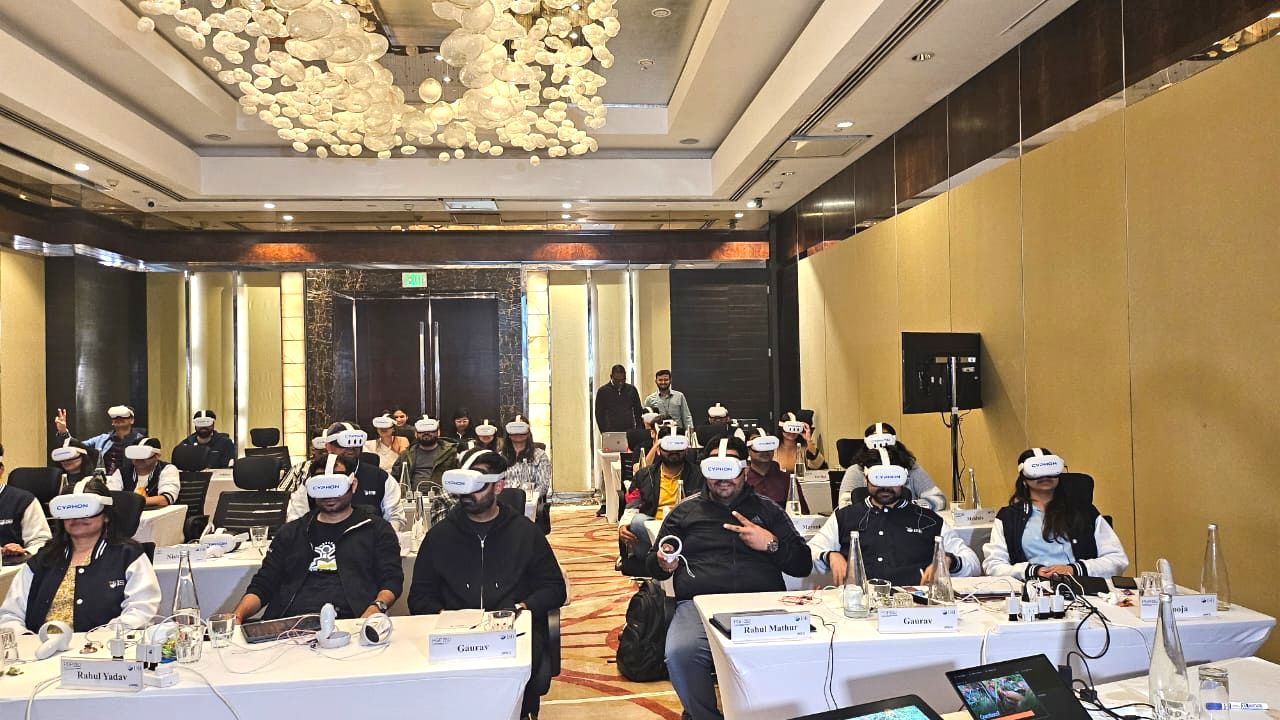
ISB students using VR headsets. Courtesy photo
BREAKING FEMALE STEREOTYPES…IN AMERICA
That’s not to say that Padhi hasn’t already worked at an elite level. At Goldman Sachs, she spearheaded a payroll transformation that reached across over 40,000 employees and 25 countries. Her work also cut $8-million in vendor costs. As an Accenture consultant, Ansh Sandeep Shah led a supply chain transformation project, one that made him a two-time winner of the firm’s Champion of the Quarter Award. Soham Sengupta also came to ISB from consulting. At ZS Associates, he created a marketing system for a global pharma client from scratch – something his firm had never attempted before.
“With no internal playbook, I trained myself outside of work hours, hired contractual developers, and rallied my team to deliver a system that was eventually scaled across the client’s markets,” Sengupta tells P&Q. “It was a turning point where I realised that courage and ownership often matter more than prior expertise.”
Prachi Shrivastava spent over three years at Microsoft, earning a promotion to technical consultant along the way. Working for a Fortune 500 client, Shrivastava says, she oversaw a CRM unification project that connected 500,000 users globally. Holding a Master’s in Development Studies, Simran Jaiswal joined the Centre for Teacher Accreditation (CENTA), eventually being promoted to its leadership team in two years. Kanuka Mareddy completed graduate school at Columbia University, where she studied Civil Engineering and Engineering Mechanics. While she earned a 4.33 GPA on a 4.0 GPA, she found that working in New York City came with a special set of challenges.
“My biggest career accomplishment has been excelling in construction, an industry where women represent less than 2% of the workforce,” explains Mareddy. “Taking this non-traditional path in the US came created added challenges: overcoming cultural differences, breaking stereotypes, navigating language barriers, and proving myself in a male-dominated environment.”
SEEING YOUR WORK HAVE MEANING
Before ISB, Suryank Gupta spent six years as a civil servant, working as an engineer and manager for Indian Railways. While Kushagra Mundra eventually landed at EY-Parthenon, he can still remember the pressures of Kota preparation.
“Some of my friends left within weeks, some skipped classes, and others lost their way in the sudden freedom,” he tells P&Q. “My batch got demoted twice. I still remember scoring (–2) out of 168 in a physics test…I saw intelligent peers stumble because they lacked effort, and average students rose through sheer perseverance. That was my biggest lesson: that consistency beats talent when talent stops working hard. After two years of relentless effort, I finally cleared JEE and got into my dream college, IIT Bombay.”
Other class members joined the PGP Class of 2026 from less traditional paths. Case in point: Ankita Khandelwal, a dentist who went on to head up a clinic. Her big career moment, she says, didn’t involve earning a promotion or achieving a goal. Instead, it was seeing the impact of her work on a patient.
“As a practising dentist, I once treated a patient who had hidden her smile for years due to severe dental damage. She returned weeks later—not for another appointment, but simply to thank me for giving her back her confidence. She said that she could finally eat comfortably and laugh without hesitation. That experience reminded me that real impact is measured not by scale, but by lives transformed.”
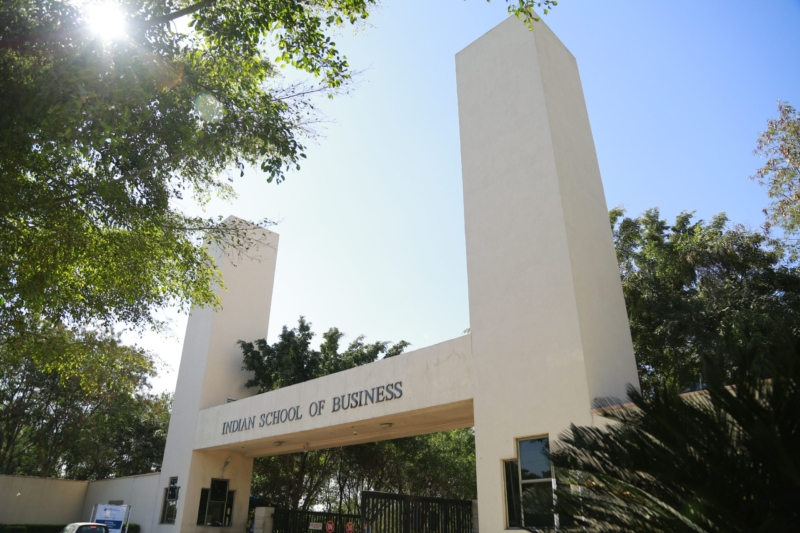
ISB Campus Entrance
A PROVING GROUND
After arriving at ISB, Khandelwal experienced a transformation of her own when she successfully completed Predictive Analytics in Decision Making, which she describes as one of the program’s toughest courses.
“Coming from dentistry, I hadn’t touched quantitative subjects in over 12 years. Instead of avoiding the challenge, I leaned into it – relearning statistics and building new modelling skills from scratch. More than the grade, the real win was building the self-belief to approach problems outside my comfort zone, and proving to myself that adaptability and hard work can overcome any learning curve. That experience has not only changed how I see data, but how I see my own potential to stretch and thrive even in the most unfamiliar territory.”
Like Khandelwal, Akshita Goyal believes proving that she belongs – and learning how to “channel” the pressure – has been her biggest achievement at ISB.
“[I] discover(ed) how much can be achieved in a single day when I value every hour. Managing classes, assignments, and the 100 activities buzzing across campus, while still making space for fun, taught me balance and prioritisation. For me, the real win has been building resilience, using time effectively, and moving forward with consistency.”
FILLING THE VOID IN HAITI
The Class of 2026 has stayed plenty busy away from coursework too. To celebrate Bandhan, Prachi Shrivastava partnered with an NGO to organize activities and fundraise for over 300 children. Soham Sengupta has been conducting consulting case prep for classmates. At the same time, Kushagra Mundra has been organizing event like Bollywood Night after his classmates elected him to be the events coordinator for the Student Life Council. Like many of her classmates, such activities have taught him multitasking at a whole new level.
How intense can things get at ISB? “In just one year, students organise 200+ events, host 300+ parties, tackle 400+ academic challenges, and discover 500+ creative ways to keep the community spirit alive, while creating infinite memories in the process,” Mundra shares.
Outside of class, Sandeep Shah is a FIDA-rated chess player. Ananya Padhi has had her paintings exhibited, while Singh Sahni has been helping to run PeaceX for the past four years. A UN-accredited impact venture, for the past four years, PeaceX most recently ran an education campaign in war-torn Haiti.
“When gang violence disrupted Haiti’s schools, we explored how we could educate students when traditional schooling becomes unsafe,” Padhi tells P&Q. “Our answer was deceptively simple: remote learning workshops that would reconnect 400+ Haitian students to their interrupted education. The venture became entrepreneurship’s greatest hits album: stakeholder juggling (each with their own delightful quirks), curriculum development for contexts I’d only read about, and trainer management across time zones that seemed designed to test human endurance.”
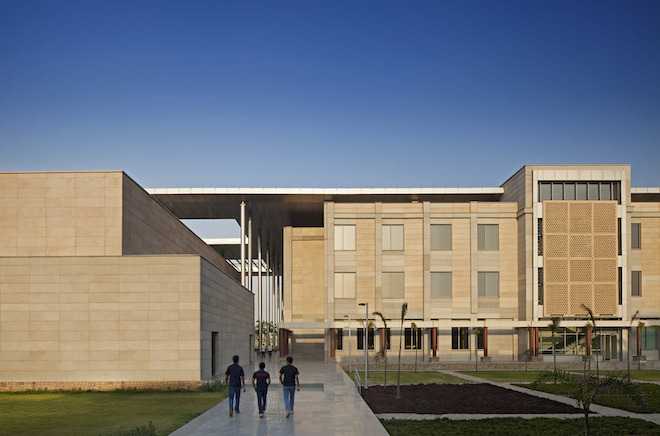
The Indian School of Business has campuses in Mohali, India (above) and Hyderabad. ISB photo
LOOKING AT THE LONG-TERM
Supplementing these skills with an ISB degree, Padhi is looking forward to making an impact in product development. “I want to apply ISB’s learning to messy, real-world problems and become a sharper, more empathetic product manager, turning frameworks into shipped features, data into decisions, and user insights into delight. I’m excited to carry that momentum forward by building products that are useful, inclusive, and scalable, while leading teams with the clarity and confidence ISB instilled in me.”
Along the same lines, Simran Jaiswal hopes to find a firm “where the pace is fast, the challenges are unstructured, and the impact is immediate.” While Akshita Goyal plans to launch a startup, she sees it as an extension of a longer trendline.
“For me, accomplishment has never been one fixed milestone: it has been a journey of continuously raising the bar. From earning a placement at J.P. Morgan right out of undergrad, to pivoting into consulting, to now pursuing my MBA at ISB, each stage has been a dream I worked towards. What I value most is not just checking off these goals, but the drive to keep challenging myself. Today, my biggest accomplishment is staying committed to this growth mindset – one that I hope will carry me into entrepreneurship while also building a secure career path.”
As a whole, the PGP Class of 2026 includes 826 students whose average age is 26. For Simran Jaiswal, diversity is the defining characteristic of the cohort. “Every discussion gains richness from peers who are doctors, consultants, entrepreneurs and engineers, all bringing unique lenses to the same problem. Add to that ISB’s world-class global faculty, who balance cutting-edge research with India-relevant insights, and the program becomes truly transformative.”
Next Page: An Interview with Professor Deepa Mani, ISB’s Deputy Dean of Academic Programmes
Page 3: Profiles of 12 Members of the PGP Class of 2026
© Copyright 2026 Poets & Quants. All rights reserved. This article may not be republished, rewritten or otherwise distributed without written permission. To reprint or license this article or any content from Poets & Quants, please submit your request HERE.