For most of its history, being a college football fan meant investing in the long game.
The die-hard fans, the ones on whom the sport built its tremendous growth, began following their team’s players before they ever even showed up on campus. They subscribed to message boards and recruiting sites, tracking every offer a player they wanted on their team received, and when and where he was going on visits.
Then, one day, when that player finally committed to their school, they imagined what they might become. They sat through the awkward freshman moments, the flashes of promise, the sophomore leap, the junior-year breakout. Eventually, there was a payoff. The player might become a star, a leader and a name you could associate with a specific era of your fandom long after he left campus.
That relationship was never formal, but it was understood. The school got four or five years of eligibility. The fan got continuity. You grew attached not just to laundry, but to people.
It’s a foundational part of college football fandom that the transfer portal is quietly eroding.
In this offseason alone, we have seen Washington quarterback Demond Williams Jr. agree to a deal to remain with the Huskies, only to change his mind and enter the portal before being forced to return and honor his contract (or whatever we’re allowed to call it).
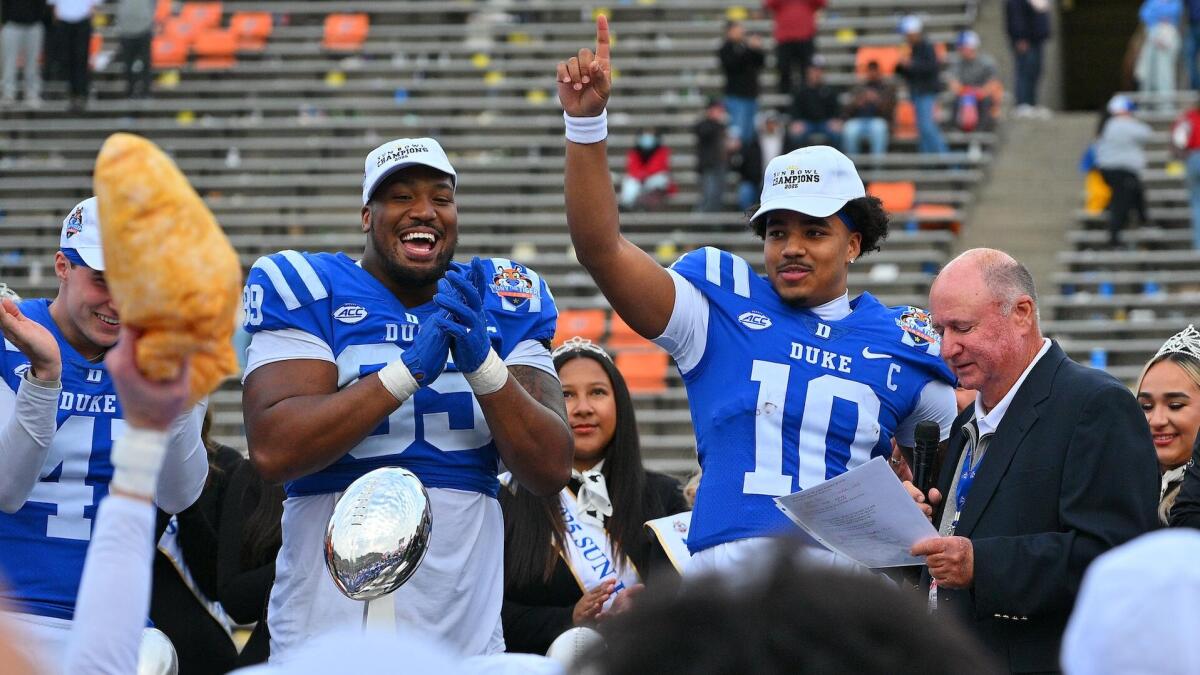
His initial decision to leave turned off a lot of Washington fans, and now both sides are stuck in some kind of arranged marriage. The same could happen to Duke’s Darian Mensah. Like Williams, he agreed to a new deal to remain at Duke before entering the transfer portal late in the process. His decision has led to Duke suing him to hold him to the deal.
How does that impact the relationship between the fan and a player: watching him perform, knowing that he’s only there because he’s legally required? Yes, the actual relationship between fans and players has always been romanticized in the mind of a fan, but that’s what fandom ultimately is. An illogical belief that you’re all in this together.
I’m not trying to tell you the transfer portal is bad. It isn’t.
Nor is empowering players who spent far too long receiving the short end of the stick as the sport generated millions upon millions of dollars. The problem is that we’re unintentionally disempowering fans.
Every season begins with a roster that looks like it was assembled on short notice, because it often was. You’re introduced to new players on your team via a graphic on social media where they’ve got a new AI-generated version of your team’s uniform plastered over their old one. It’s like when an NFL team signs a free agent, but that’s a part of pro fandom that’s long been part of the deal. It’s always been transactional in a way college fandom never was.
The emotions of college football fandom are changing. Now, when a player breaks out to become a star, the excitement comes with a layer of anxiety beneath. How long before other schools notice? Will he test his worth on the market in the offseason, and if we have to pay him more to keep him, how will that impact our ability to round out the rest of the roster?
It’s a brutal way to experience success.
Fans are subconsciously discouraged from making the kind of emotional investment that made the sport different in the first place, and while we all say and do stupid things because of our fandom, as a whole, sports fans aren’t stupid. They respond to incentives and when the incentive structure tells you every relationship is temporary your natural reaction is to protect yourself. Eventually that manifests in fandom by caring less about who and more about what. You’re suddenly worried about your team’s NIL collective, donor base, and ability to outspend your rival off the field more than the ability to beat them on it. The investment becomes financial, not emotional.
Which, in the long run, hurts the system that has fueled player empowerment to begin with. NIL only exists because fans care. Whether it’s by donating money directly to a collective, through buying merchandise, or watching the games on television to make sure those broadcast deals keep the money cannon firing. But we shouldn’t assume that buy-in is permanent and unconditional, because history has long suggested otherwise.
Fans don’t usually revolt all at once. They drift.
The emotional connection begins to fade. You don’t even notice it’s happening as it occurs. It’s just suddenly there. You stop watching or attending that weeknight game. You don’t learn the depth chart the way you used to. You stop caring about high school recruiting because it feels like a waste of time.
If that four-star doesn’t get immediate playing time, he’s just going to leave in the offseason, right?
The portal rewires how fans experience loss, too. When a player leaves through the portal, it’s a lot different than when they leave due to graduation or because they’re entering the NFL Draft. It’s transactional. It feels like rejection, even though it isn’t personal. It’s just business. You were simply outbid. Then, when that player does reach the NFL, even when they spent three years playing for your school, and one at the next, it’s the next school’s name they’ll mention during pregame player introductions. It’s a tough pill to swallow for a fan whose identity is tied to their school, not a paycheck.
Yes, winning still cures a lot of these ills — it always does. But the thrill of victory comes with an expiration date when that success is built through short-term acquisitions. Being a fan starts feeling less like a shared journey and more like content you’re consuming. It’s another thing you quickly scroll through like an Instagram or TikTok feed.
Fans will adapt. They always do. The question is whether what they adapt into still resembles the thing they fell in love with in the first place, or if they decide to take that love and transfer it somewhere else entirely.