EDGEWATER — Months after the City Council approved a rezoning of a large swath of Broadway in Edgewater and Uptown, neighbors are suing the city and asking a judge to reverse the decision.
Edgewater Residents for Responsible Development, a group of Edgewater property and business owners, filed a lawsuit against the city Monday, alleging the rezoning to allow for denser development violated their due process rights as well as the city’s and state’s rezoning requirements.
The neighbors argue that the city failed to follow its own zoning code by not properly notifying owners whose buildings would be rezoned as well as a failure to notify property owners whose buildings fall within 250 feet of the rezoned area, as required by city codes.
That includes properties on cross streets intersecting the affected portion of Broadway, whose buildings were also rezoned without official notice of the pending action, according to the lawsuit.
Additionally, property owners were denied the opportunity to speak at a public hearing about the rezoning, which the plaintiffs allege is also a violation of zoning law, according to the lawsuit.
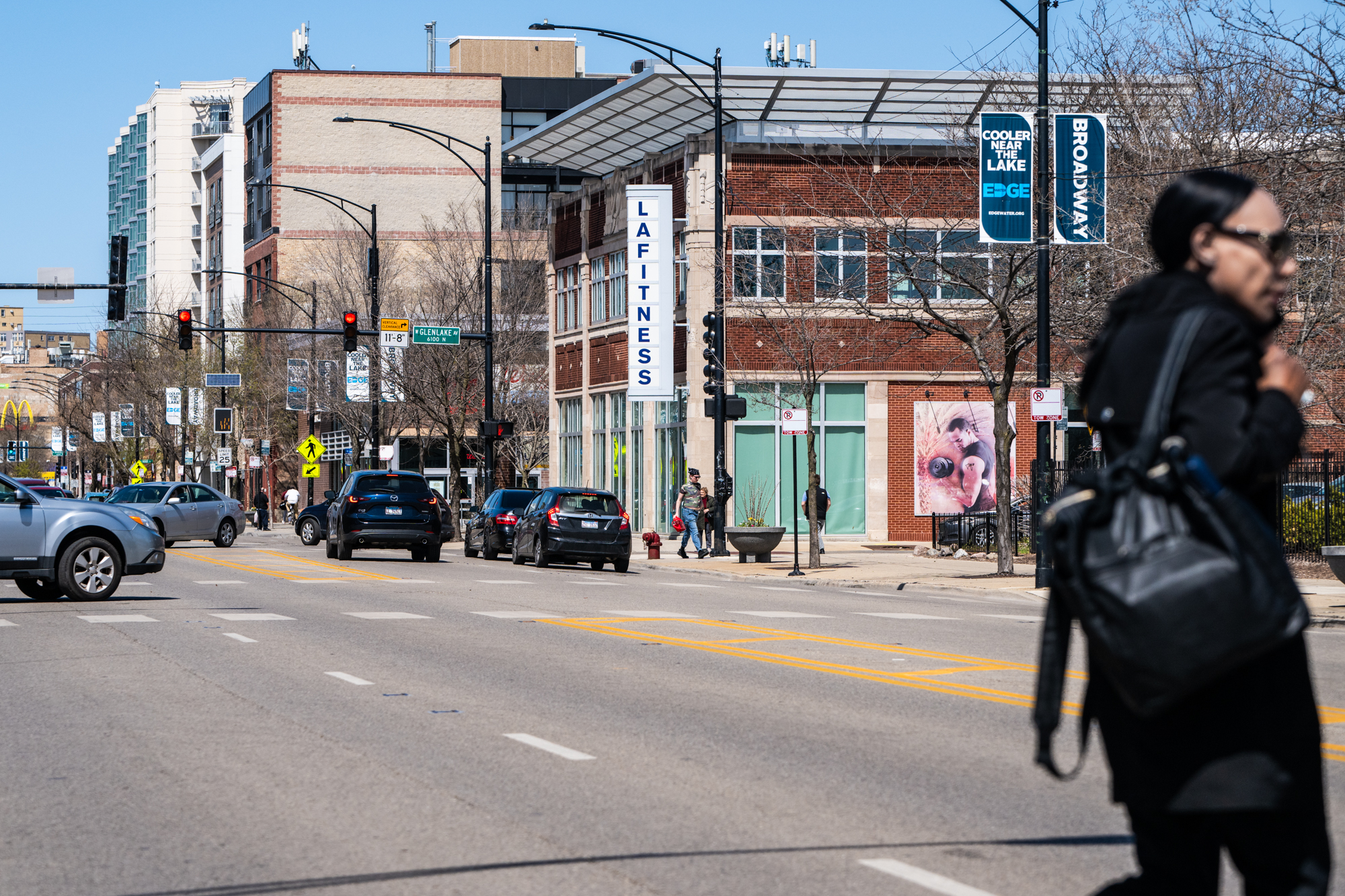
The lawsuit centers around the so-called upzoning — or a reclassification of an area’s zoning to allow for taller, denser buildings and permit additional business uses. Broadway from Devon Avenue to Montrose Avenue was rezoned after City Council approved the changes in October.
The goal of the upzoning was to create more housing on a corridor that abuts the Red Line and in an area that has seen housing prices spike and gentrification concerns increase, officials who back the plan have said. Those in support included the three alderpeople whose wards cover the area: Angela Clay (46th), Matt Martin (47th) and Leni Manaa-Hoppenworth (48th).
The proposed zoning changes saw intense neighborhood debate in Edgewater.
A group of Edgewater neighbors organized against the proposal by hiring an attorney and paying for two billboards in the neighborhood to direct people to their website, SaveEdgewater.com. Those same neighbors are behind the new lawsuit.
Other neighbors, who were in favor of the changes and agreed with the city’s belief they would address housing affordability issues and support local businesses, launched a digital campaign to advocate for the upzoning, started petitions to voice support to the zoning committee and made satirical flyers lampooning the opposition effort.
Ultimately, the zoning changes were approved by the city’s zoning committee with a vote of 15-2 and then were approved by a vote of the full City Council.
Neighbors opposed to the upzoning now hope a court will side with them and overturn the changes, which they say “threatens to significantly alter the long-standing fabric of the neighborhood, injuring property owners and renters,” according to the lawsuit.
“Edgewater’s Broadway is a vital neighborhood shopping district with many historic buildings that house beloved small businesses and affordable housing,” Patricia Sharkey, president of Edgewater Residents for Responsible Development, said in a statement. “The City’s reckless upzoning targets these buildings for demolition. It is unfortunate that our residents and businesses were forced to file an expensive lawsuit such as this to protect our neighborhood, but we were left with no other option.”
A spokesperson for the city’s Department of Law said Tuesday the department had yet to be served with the complaint, and the department doesn’t comment on pending litigation.
Manaa-Hoppenworth, whose constituents filed the lawsuit, directed questions about the lawsuit to the law department.
A hearing in the lawsuit filed in Cook County Circuit Court is set for March 13. A copy of the lawsuit is below.
The Zoning Changes
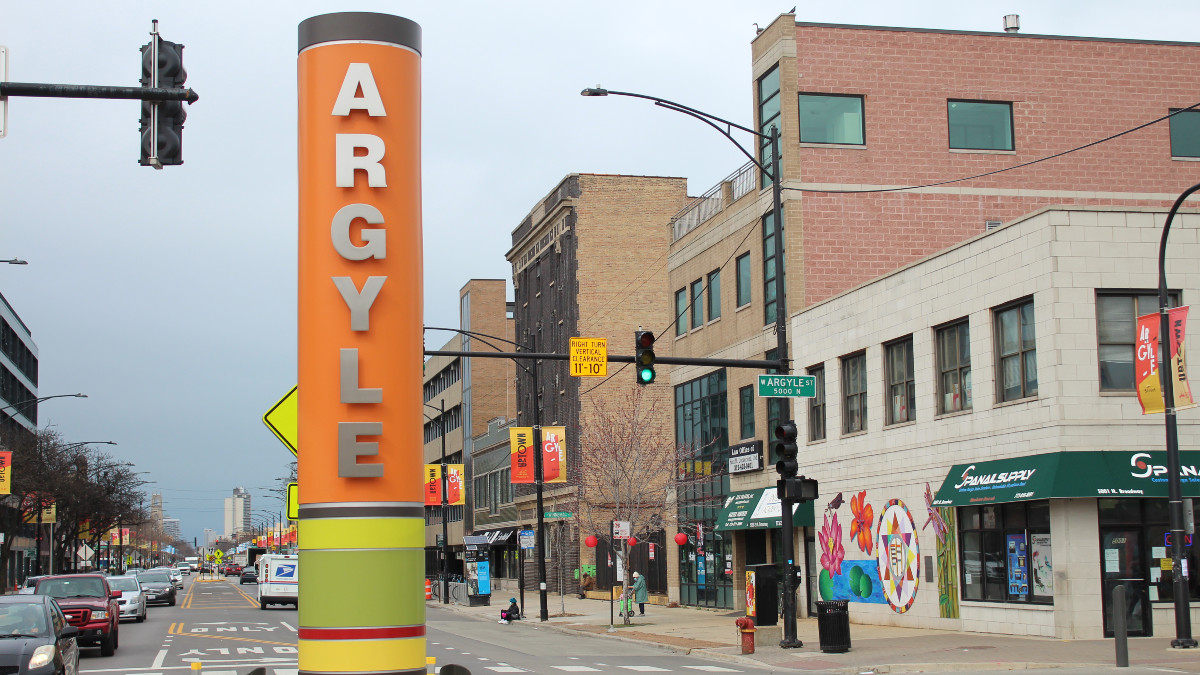
Under the changes approved last year, most of Broadway between Winona Street and Montrose Avenue in Uptown was rezoned to C1-5, the most permissive zoning for the area, automatically allowing for bars, liquor stores, dispensaries, tattoo parlors and salons. The maximum height for projects with this zoning is 80 feet, which is generally five to seven stories.
Drive-thru restaurants, gas stations and other car-centric businesses are typically allowed to be developed under a C1-5 zoning. But the city created a “pedestrian street designation” on the areas with this zoning to prevent such businesses, according to the ordinances.
A pedestrian street designation bans curb cutouts for driveways, limits on-site parking to alleys and requires the building’s exterior to abut the sidewalk — effectively barring strip malls — according to the city. It’s intended to “preserve and enhance pedestrian-oriented shopping districts,” but it won’t affect existing strip malls along Broadway, according to the city.
Between Devon and Foster avenues in Edgewater, most of Broadway was rezoned to B3-5. However, the west side of Broadway between Balmoral and Foster avenues was rezoned to B3-3, ordinances show. This was altered after community feedback from neighbors and because of the large size of these lots, Manaa-Hoppenworth said previously.
The B3-3 and B3-5 zoning allows for housing on upper floors and retail or restaurants on the ground floor. Businesses like bars and liquor stores would only be allowed with a special-use permit, which is granted through a separate community input and approval process with the city’s Zoning Board of Appeals.
Any proposed developments over 80 feet tall or that involve more than 100 apartments will trigger a planned development process. Such a process requires community input and city approval, similar to a standard rezoning.
Listen to the Block Club Chicago podcast: