By GARRY RAYNO, InDepthNH.org
CONCORD — With the state facing a revenue deficit this fiscal year, the House Thursday approved cutting the rate of the Business Enterprise Tax.
The tax along with the business profits tax, are the single biggest state revenue sources to fund state government, and lawmakers have been reducing the rates for about a decade.
House Bill 155, which reduces the rate from .55 to .50 percent next year, would lower state revenues by $4.3 million this fiscal year and $20 million next fiscal year.
To date business taxes are $21 million behind estimates for the first six months of the fiscal year.
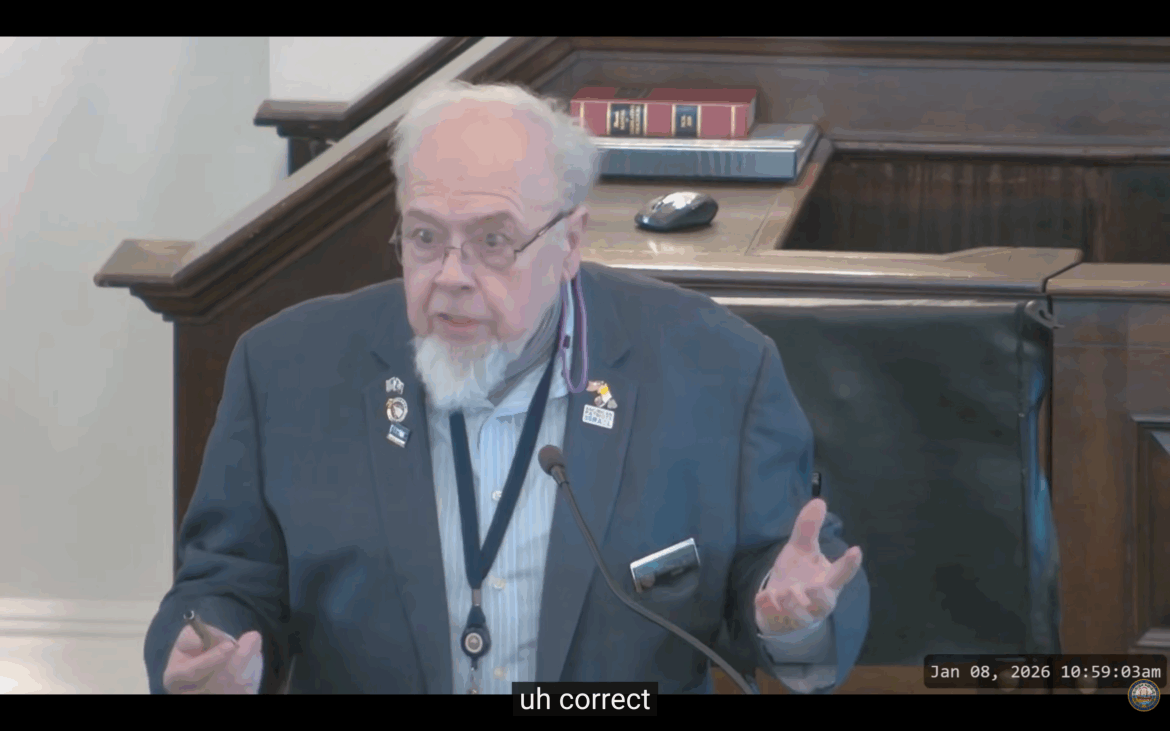
During debate on the bill, Rep. Jordan Ulery, R-Hudson, said cutting tax rates increases revenues because it spurs business activities, although numerous studies indicate rate cuts slow down revenue growth.
“Business are asking for help and that is what this bill does,” Ulery said. “Excessive taxation is legal plunder.”
He said higher taxes do not reduce the deficit, they simply increase spending.
The tax cut will encourage business growth and ensure the New Hampshire advantage, Ulery said.
But Rep. Susan Almy, D-Lebanon, said the tax cut will not help small businesses because those that gross under $300,000 do not pay the BET.
She noted 75 percent of the revenue collected comes from corporations and multinationals, many of whom did not realize they had a tax cut, it is such a small percentage of their costs.
“When we cut taxes, we cut services you people think are expendable,” she said, “but people and small businesses regard as essential.”
That is money for roads and bridges, water treatment and salaries for those who provide local services, Almy said.
She said the state did well with the federal stimulus money, but now some of that is about to be clawed back.
While the state is cutting taxes, property taxes are increasing and you lose local services, she said. “We cannot continue like this.”
Almy said businesses are asking for help with more housing, childcare and addiction treatment, and are writing letters to newspapers calling for the reversal of this tax policy of cutting rates.
After the vote advocates decried the tax cut.
“By deciding to cut taxes for a small group of out-of-state corporations, lawmakers have decided to raise property taxes for the rest of us,” said Louise Spencer, co-founder of Kent Street Coalition. “They say they need to cut funding for universities and hospitals, but apparently there’s enough revenue to hand millions of dollars to a few CEOs. Everyone should take note of which lawmakers voted yes today – that’s a list of politicians who want working people to pay more so that billionaires can pay less.”
The House voted 189-165 to approve the tax cut and send it to the Senate.
Abortion
The House passed House Bill 232 which would allow medical professionals to exercise their right of conscience to not participate in abortion procedures.
The bill would require health care institutions to post an employee notice of a worker’s right to object and establish civil remedies, including fines, for violations.
Opponents said the law amounts to a new abortion restriction because it would allow a receptionist to turn away a patient seeking an abortion without providing a referral or an explanation.
“A receptionist would have the power to deny health care to a patient,” said Rep. Zoe Manos, D-Stratham. “This is a new abortion restriction in New Hampshire.”
In rural areas there may not be any options that don’t require driving great distances to seek time sensitive care, she said.
Abortion is legal health care in this state, Manos said.
But Rep. Katy Peternel, R-Wolfeboro, said the right of conscience is in the Constitution, but it does not come from government, it precedes government.
“It protects a health care professional from being forced to end a life,” Peternel said.
The bill does not ban or restrict abortion and brings the state in line with 47 other states, she said, and noted it does not apply in an emergency or in a facility where a major service is abortion.
People have lost jobs and careers because they stay true to their beliefs, Peternel said.
The bill passed on a 184-164 vote.
The House also passed Senate Bill 36, which moves the date the Department of Health and Human Services has to begin collecting information on abortions in the state to July 2027.
The bill also removes the word estimated from the phrase “estimated gestational age when the abortion was performed,” which opponents said may subject patients to intrusive procedures to determine gestational age, requiring procedures which are both costly and medically unnecessary.
The bill was approved on a 188-162 vote and referred to the House Finance Committee for review.
Lobbying
The House killed House Bill 314, which would have required voters at a town meeting or a city board to approve spending public money for lobbying activities.
Opponents of the bill said it was aimed at the New Hampshire Municipal Association which represents cities and towns while lobbying lawmakers.
They said the bill would create a mess for the counties and is so broad that many other organizations such as the School Board Association dues or fees would need to go before a town or school meeting as well.
The sponsor of the bill Rep. Len Turcotte, R-Barrington, said the bill would allow the citizens of a community to decide if their tax dollars should be spent on lobbying lawmakers.
The bill was killed on a 198-152 vote.
Biological Sex
The House once again approved a bill that would allow “the classification of individuals based on biological sex” in the use of restrooms and locker rooms, participation in sports, and housing for jails.
Two nearly identical bills were vetoed by former Gov. Chris Sununu, and Gov. Kelly Ayotte.
Opponents said the bill is likely to have the same fate, but supporters said the issue is safety.
The bill was approved on a 185-155 vote.
Federal Law
The House approved House Bill 134, which would align the state’s work requirement for Medicaid with the recently passed federal work requirements.
The bill passed on a 204-150 vote.
The House also approved House Bill 392 which removes several divisions from state agencies to align with President Trump’s executive order doing away with Diversity, Equity and Inclusion programs.
The bill passed on a 192-159 vote.
Garry Rayno may be reached at garry.rayno@yahoo.com.