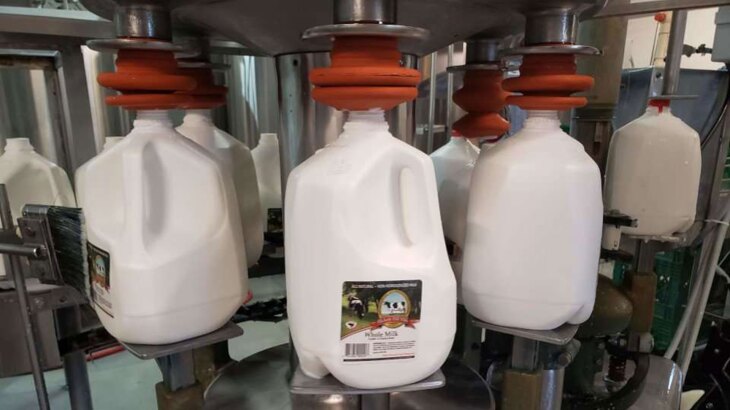
NASHVILLE, Tenn. (RFD-TV) — U.S. milk production is expected to expand again in 2026, outpacing most major exporters and reinforcing America’s role as the primary driver of global dairy growth, according to the USDA’s latest Dairy: World Markets and Trade report. USDA forecasts U.S. milk production at 106.2 million metric tons, up 1.2 percent from 2025, accounting for most of the net increase among major exporting countries.
The growth reflects continued herd expansion and rising processing capacity in the United States. Strong cheese demand and solid export performance are pulling more milk into plants, encouraging producers to add cows despite higher capital and labor costs. U.S. output gains more than offset modest production declines expected in the European Union and New Zealand.
Outside the U.S., production trends are mixed. Argentina is forecast to post the largest percentage gain, up 4.0 percent in 2026, as pasture conditions and feed availability improve following drought impacts in 2024.
Australia is expected to rebound 1.8 percent, supported by improved rainfall in southern dairy regions and relatively low feed costs, though long-term industry consolidation continues to limit expansion. Conversely, New Zealand output is projected to decline 0.5 percent, as declining cow numbers offset strong milk prices and export demand.
European Union milk production is also forecast to decline by 0.5 percent for the second consecutive year, as environmental regulations, disease pressure, and herd contraction outweigh gains in milk per cow.
Collectively, milk production among major exporters is expected to be 0.4 percent higher in 2026, with the United States accounting for most of the increase.
Tony St. James, RFD-TV Markets Specialist

Benchmark machinery costs against those of similar-sized, high-performing operations to inform equipment and investment decisions.

Record pace corn exports are helping stabilize prices despite softer global grain production and ongoing supply competition.

Broader export demand helps stabilize prices and supports stronger marketing opportunities over time.

Rising production underscores the importance of marketing discipline and margin protection as milk supplies expand.

The report shows that, despite production challenges, dairy farmers are producing more milk with fewer resources per gallon across the industry.

Smaller U.S. production and steady global demand could provide better pricing opportunities in 2026.

Higher yields are cushioning lower acreage, but reduced production could support firmer potato prices into 2026.

Producers across the country balanced winter weather disruptions, shifting export demand, and tightening margins as year-end decisions come into focus.