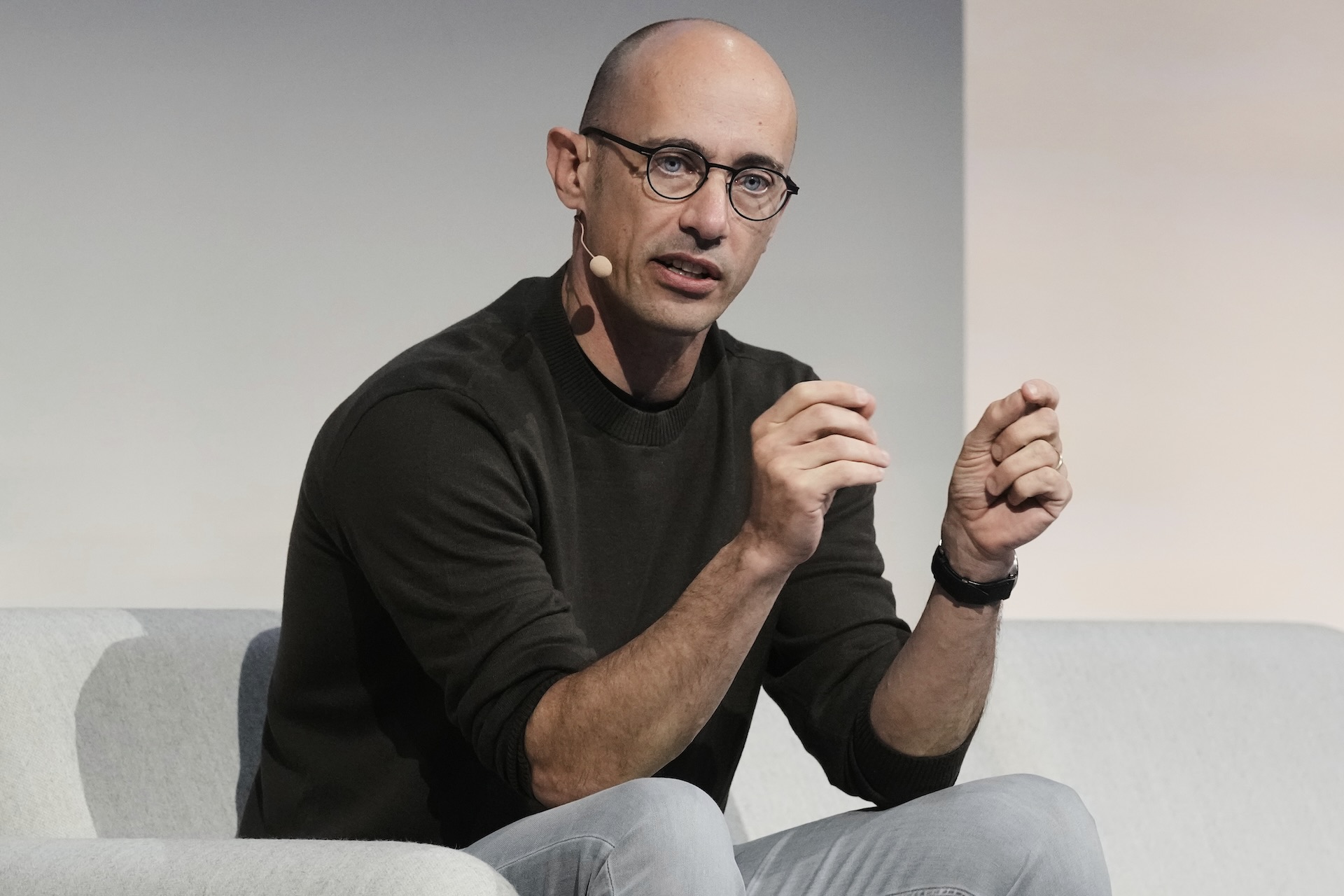

A Washington Post analysis of cases and studies of healthy elderly individuals aged 80 to 100 identified five common lifestyle habits: avoiding processed foods and eating smaller portions, exercising consistently, socializing, attempting recovery after health declines, and maintaining an optimistic attitude. Getty Images Bank
“Eat less, move consistently, socialize with people, try to recover from adversity, and be optimistic about the future.”
These are the five habits for a long and healthy life, shared by elderly individuals who maintain the memory and physical abilities of people 20 to 30 years younger even in their 80s and beyond, as well as by researchers.
On the 25th, the U.S. daily newspaper ‘The Washington Post’ summarized the conditions for a long and healthy life based on cases of long-lived elderly people and related research it reported on this year. Although genetic factors play a part, the common lifestyle habits that run through the lives of the long-lived elderly were relatively clear.
● Avoid processed foods and eat smaller portions
Marion Nestle, an 89-year-old nutritionist, cited “not eating a lot of processed food and eating a mostly plant-based diet” as the key to longevity. She explained that as people age, their basal metabolic rate decreases, so their intake should naturally be reduced.
Maria Branyas Morera, who passed away last year at the age of 117, also maintained a typical Mediterranean diet. For the last 10 years of her life, Morera ate three plain yogurts a day and continued with light meals centered on fish, olive oil, and fruit.
● Exercise with consistency rather than intensity
Emma Maria Mazzenga, a 92-year-old sprinter, holds four age-group world records by running two to three times a week and walking on her rest days. Her training focuses on repetition and regularity rather than strenuous intensity, lasting about an hour at a time. “Know your limits, consult with your doctor first, and then be consistent,” Mazzenga advises.
Jeannie Rice, a 77-year-old marathoner, holds the women’s world records for all distances in the 75-79 age group. Her maximum oxygen uptake, measured just after she set a world record of 3 hours, 33 minutes, and 27 seconds at last year’s London Marathon, was equivalent to that of a 25-year-old woman. Rice, who started running at 35, currently runs 50 miles (about 80 km) a week, increasing to 70-75 miles (about 112-120 km) a week when preparing for a marathon, and also incorporates weight training three times a week.
Bas van Hooren, a professor at Maastricht University in the Netherlands, said, “Consistent training and good genes can partially slow down the aging process,” adding, “It is never too late to start exercising.”
Eric Topol, founder of the Scripps Research Translational Institute and a cardiologist, said, “Exercise is the only method confirmed to be effective in slowing down the body’s overall aging process,” and recommended more than 30 minutes of aerobic exercise along with strength training.
● Socialize with people
A recent large-scale clinical trial showed that combining exercise, a healthy diet, social interaction, and brain games can improve cognitive function in older adults at risk of cognitive decline or dementia. Loneliness increases the risk of dementia, whereas strong social ties are beneficial for cognitive health.
Many of the long-lived elderly individuals featured as case studies actively socialized with people in nursing homes or their communities. Morera interacted with other residents and welcomed visitors at her nursing facility. Rice leads an active social life, such as going out dancing, except before important competitions.
Nicholas Epley, a professor at the University of Chicago, said, “Happiness depends more on the frequency of small positive experiences than on major events,” and “Accumulating positive activities like a habit is what makes a good life.”
● Attempt to recover even after health declines
Contrary to the view of aging as a one-way decline, a study published in the international journal ‘PLOS One’ last September revealed that it is possible to recover physical function and improve quality of life even after age 60. Factors that aid recovery include mental health, social relationships, quitting smoking, adequate sleep, and a balanced diet.
Florean Schuber, who experienced frequent falls around the age of 82, visited a local gym, consulted with a trainer, and started a regular exercise routine. Now 91, Schuber says, “I feel younger and my body feels stronger than it did 10 years ago,” adding, “Your body can improve even as you get older, but you have to be consistent.”
● Maintain an optimistic attitude
Si Liberman, a 101-year-old veteran, has overcome several life-and-death situations, including a truck accident at age 5, a heart attack at 39, and heart surgery at 89. During World War II, he served as a radio operator on a U.S. Army B-24 Liberator bomber, flying 13 bombing missions over Nazi Germany. The planes he was on were hit by enemy anti-aircraft fire multiple times during missions, but he survived.
Liberman has maintained consistent optimism despite numerous hardships. “I believe that if you endure through tough times, things will get better,” Liberman said. “People overlook the importance of attitude, but attitude is really important.”
A Washington Post analysis of cases and studies of healthy elderly individuals aged 80 to 100 identified five common lifestyle habits: avoiding processed foods and eating smaller portions, exercising consistently, socializing, attempting recovery after health declines, and maintaining an optimistic attitude.
Copyright ⓒ DongA Science. All rights reserved.