5-minute read

Federal Reserve lowers interest rates by quarter-point
The Federal Reserve cut interest rates by a quarter-point, for its third time in a row, aimed at lowering borrowing costs for consumers.
- A survey found that tariffs have impacted supply chains, forcing many businesses to increase prices for consumers.
- Despite a pessimistic business survey, some economists point to rising median income and tax collections as positive signs for the state’s economy.
- Incoming Governor-elect Mikie Sherrill has pledged to address business concerns, including freezing electricity rates and reducing regulations.
Tariffs and high energy costs have left an overall sour taste for New Jersey business owners in the past year, and many are not expecting the economic outlook in the state to improve in 2026.
Meanwhile, although the Federal Reserve unveiled its third rate cut of the year on Dec. 10, with the potential for at least one more in the next year, the move occurs against the backdrop of missing economic data — including the jobs report and inflation numbers thanks to a government shutdown earlier this year.
Federal Reserve Chair Jerome Powell’s term ends in May of 2026, and whoever President Donald Trump picks as his replacement may in turn pursue a more aggressive series of rate cuts backed by the president.
“I think a small rate cut won’t drastically affect business” in New Jersey, said Robert Scott, an economist at Monmouth University in West Long Branch.
Story continues below photo gallery
Amid on-again, off-again tariffs by the White House, the numbers that have been released point to a slowing economy, including nationwide job losses, soaring personal debt, slowdowns in hiring and cratering consumer sentiment.
“The winds of change are in the air and a new Fed chair in 2026 — and perhaps many more new Fed officials — means more interest rate cuts are coming next year as rate cuts are big on the Trump 2.0 economic agenda, even if not listed explicitly, if for nothing else but to weigh against the slowing economy due to the import tariffs uncertainty,” Chris Rupkey, chief economist at FWDBONDS, told NorthJersey.com.
Some NJ business leaders feel economy is stagnant
The pessimistic attitude among New Jersey businesses is reflected in the annual survey issued Monday, Dec. 8 by the New Jersey Business and Industry Association, a trade group that includes some of the state’s largest employers.
Monday’s survey was conducted in September and October and is based on 569 separate responses.
“We’re stagnant as an economy in New Jersey,” Michele Siekerka, president of the NJBIA, said in a phone interview on Tuesday, Dec. 9. “We’re sitting static right now.”
Not everyone felt the same way, including Monmouth University’s Scott. New Jersey’s median income has been on the rise from over $85,000 before the COVID-19 pandemic to $103,500 last year.
Tax collections have increased, Scott noted, and New Jersey’s unemployment rate, while rising, remains at 5%. And the 2026 FIFA World Cup is expected to be an economic boom for the state, Scott said.
The poll found that 41% of New Jersey businesses felt the state’s economy would be worse in the first half of 2026, compared to 16% who felt it would improve.
Tariffs affect supply chain, with cost passed to consumers
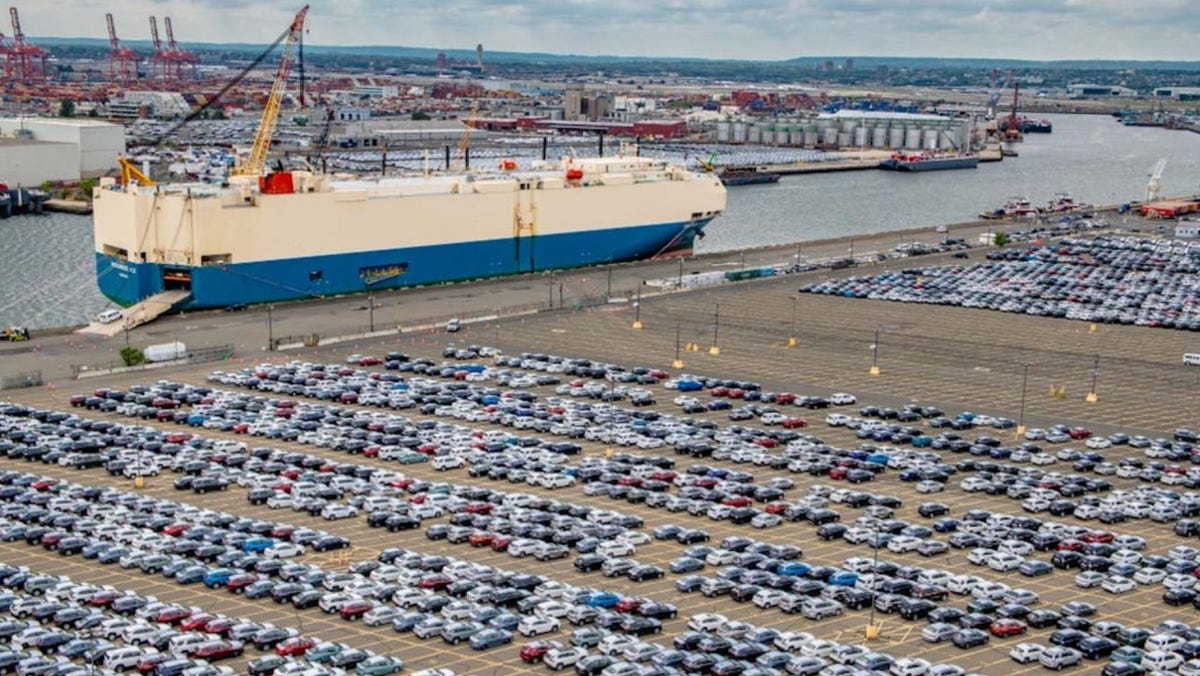
In addition, the poll reported that 49% of respondents said tariffs affected their supply chain, and of that, 88% had to increase their prices. A total of 81% of businesses that responded said they were not confident in their ability to absorb higher costs from tariffs, the survey found, meaning customers would end up paying more.
Higher costs from increased energy bills have also been passed onto consumers, Siekerka said.
The poll found that 77% of business owners felt the effect from electricity rate hikes over the summer.
“What do you do when you’re struck all of a sudden with a one-time high cost and then that high cost continues,” she said. “You have to adjust your business model.”
There was some room for optimism despite the bearish outlook by New Jersey employees for 2026, Siekerka and the NJBIA said.
Can Sherrill freeze electricity rates?
Many businesses said hoping they could pursue policies with the incoming administration of Gov.-elect Mikie Sherrill — who will be sworn into office on Jan. 20, 2026 — that would benefit the private sector.
On the campaign trail, Sherrill — a Democrat who represented New Jersey’s 11th Congressional District — promised to freeze electricity rates on the first day of her administration. Legal experts have questioned her ability to enact such a freeze.
Electricity prices skyrocketed at the start of the summer when the state’s utility rates went up about 17% to 20% because electricity auction prices were higher due to greater demand and lower supply.
The blame for high electric costs ranges from increased demand by artificial intelligence data centers in the state to grid PJM’s slow adoption of clean energy sources and even outgoing-Gov. Phil Murphy’s push for clean energy, such as offshore wind.
Stockpiling goods, diversifying suppliers to deal with tariffs
As for tariffs, President Donald Trump has relied heavily on them as a means to force negotiations with many of the United States’ international trading partners, as well as onshoring manufacturing in the U.S.
“The issue with tariffs was the continuing change in the program, so again, no predictability or certainty there,” NJBIA’s Siekerka said.
The poll found that businesses had diversified their international suppliers, sourced domestically or stockpiled goods to deal with the tariffs.
But changing their sourcing “may mean a slowing of their receiving their inventory,” Siekerka said.
Hiring slowed down in 2025, with 17% saying that they increased hiring this past year, compared to 20% in 2024 and 23% in 2023, the survey found.
Thirty percent of businesses reported profits in 2025, while 45% of businesses reported a loss. Thirty-six percent of businesses believe they will make a profit next year, compared 28% who anticipate losing money.
Typically businesses handled increased costs like tariffs by not expanding, pursuing layoffs, putting a freeze on hiring or passing higher costs to consumers.
The poll found that 59% of businesses said they had no plans to expand in 2026, compared to 28% of businesses that would actually grow their operations next year.
Economic data doesn’t paint a good picture
The three big, interconnected issues facing New Jersey and the U.S. are affordability — especially in housing and health care — inflation and tariffs, Scott said.
Data from payroll processing firm ADP showed a nationwide net decrease of 32,000 jobs.
“Hiring has been choppy of late as employers weather cautious consumers and an uncertain macroeconomic environment,” ADP Chief Economist Nela Richardson said in a statement. “And while November’s slowdown was broad-based, it was led by a pullback among small businesses.
And a rate cut wouldn’t likely boost a sluggish hiring rate “depressed by overhiring, solid productivity growth, policy growth, a rise in people with multiple jobs, and less immigration,” said Ryan Sweet, chief global economist at Oxford Economics.
How do NJ businesses feel about Mikie Sherrill?
Siekerka said the state government under Sherrill will need to be quicker with licensing and permitting, something the incoming governor has pledged to do.
“Red tape and a culture of ‘no’ in Trenton have made it too hard to start and grow a business here, and it’s hurting our economy and driving jobs away from our state,” Sherrill said in an October statement to NorthJersey.com.
Fewer regulations is critical, Siekerka said, because the more rules businesses have to follow, the more costs they take on. And the state’s corporate business tax, ranked the highest in the nation by the Tax Foundation, is also a problem for New Jersey’s competitiveness, according to Siekerka.
The fact that none of the state’s property tax relief programs, such as ANCHOR and StayNJ, were geared toward business owners was another issue which needs to be addressed in the new year, Siekerka said.
Daniel Munoz covers business, consumer affairs, labor and the economy for NorthJersey.com and The Record.
Email: munozd@northjersey.com; Twitter:@danielmunoz100; Facebook and Instagram