Founded in 1995 in Montreal, Canada, by Mark Rosenzweig with the objective to offer innovative products at great value, SharkNinja has grown from a vacuum and blender maker into a global lifestyle brand leading in floorcare, kitchen, and emerging categories like cooling and beauty. Its two pillars – Shark, built on power and reliability, and Ninja, defined by creativity and performance-now dominate their markets, with Shark the top U.S. vacuum brand and Ninja the best-selling kitchen appliance brand for four consecutive years. Let’s take a closer look.
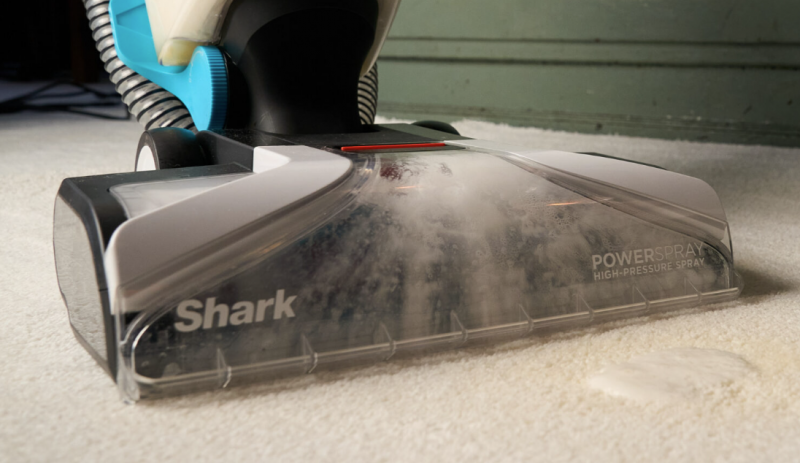
SharkNinja’s portfolio now covers 36 sub-categories across cleaning, cooking, food preparation, home environment, and beauty, with each launch tied to a clear consumer need. Shark remains the power and performance brand—its lineup spans upright, cordless, and robotic vacuums under the PowerDetect platform, steam mops, wet/dry floor systems, and carpet extractors. The company entered the cooling segment with FlexBreeze, an indoor-outdoor fan system that became one of 2024’s fastest-growing launches, and extended its beauty range with HyperAIR and FlexStyle hair stylers. The FDA-cleared CryoGlow marked Shark’s first step into professional-grade skincare, combining LED, infrared, and cryo therapy in a consumer product.
Ninja represents the brand’s creative and culinary side, evolving from its Master Prep blender into a complete kitchen ecosystem. It leads in blenders, air fryers, and multi-cookers, while expanding into new premium segments with the Luxe Café espresso system, designed to compete with high-end European models, and the Ninja Crispi, a portable cooker that redefines air frying through compact, high-performance design.
SharkNinja’s six innovation centers in the US, UK, and Asia bring together over 700 engineers who turn consumer insights into rapid product development, supported by a flexible Southeast Asian supply chain that’s expanding beyond China to protect margins. Its global reach keeps growing – international sales topped $1.7 billion in 2024, nearly doubling in two years, with strong momentum in Europe and Latin America. The U.K. remains its largest overseas market, and the company is now replicating that DTC success across Germany, France, and emerging regions, positioning international revenue to rival its US base.
In Q3 2025, net sales rose 14.3% YoY to $1.63 billion, supported by broad-based category expansion. Cleaning appliances grew 12.4% thanks to strong demand for carpet extractors and robotic vacuums. Cooking and beverage appliances rose 6.3%, driven by the early success of the Ninja Luxe Café espresso system, even as air fryers and outdoor grills softened slightly. Food preparation appliances advanced 11.9%, fueled by blenders and portable frozen-drink systems, while Beauty and Home Environment surged 56.7% on the strength of the CryoGlow skincare device and FlexBreeze indoor-outdoor cooling fans.
Profitability improved across the board with adjusted gross margin expanded to just over 50%, operating income climbed 46% to $262.9 million, and adjusted EBITDA reached $316.5 million, representing a 19.4% margin. Adjusted net income increased 25% to $213 million, and generated $4.3 billion in revenue, up 15% YoY, for the first 9 months, with strong operating leverage despite higher marketing spend tied to product launches.
The group benefits from $264 million in cash, $489 million in available credit capacity, and $749 million in total debt, resulting in a conservative 0.5x net leverage ratio. Inventory levels increased modestly by 7.6% YoY, consistent with higher volumes and category diversification. Management raised full-year guidance, now expecting 15.0–15.5% sales growth, adjusted EBITDA between $1.115 and $1.125 billion, and adjusted EPS between $5.05 and $5.15.
The key risks are external – macroeconomic pressure on discretionary spending, raw-material and logistics costs, currency fluctuations, and potential tariff headwinds. Internally, the challenge will be maintaining product differentiation and quality as the company scales into more categories. However, its integrated design–manufacturing–marketing model, strong cash generation, and category leadership provide a significant competitive moat.
Looking ahead, SharkNinja’s roadmap revolves around three pillars: growing share in existing categories, entering adjacencies and new categories, and accelerating international expansion. The company plans to introduce around 25 new products in the coming year, including next-generation cooling, skincare, and beverage systems. Management’s margin focus remains disciplined, emphasizing product-cost control, pricing optimization, and economies of scale. Marketing will continue to absorb investment as new launches roll out, but the leverage seen in the past few quarters suggests the model can sustain expansion without compressing profitability.