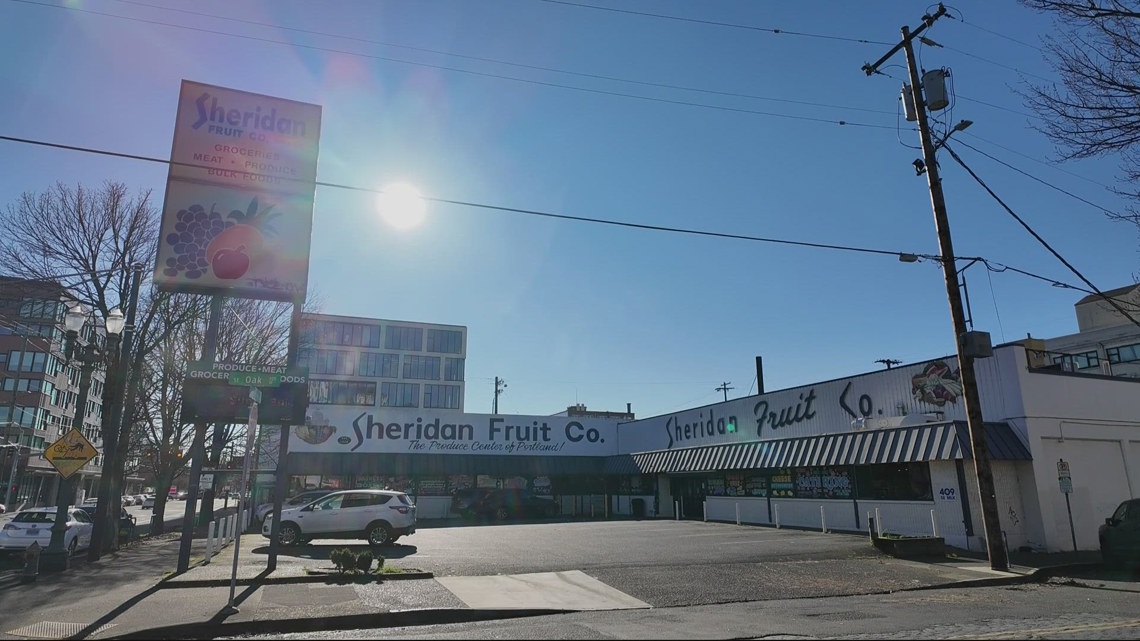
Sheridan Fruit Company, founded in 1916, has been hit hard since the COVID-19 pandemic, company President Anne Barwick told KGW.
PORTLAND, Ore. — A more than century-old Portland grocer is at risk of closing.
Sheridan Fruit Co., founded in 1916, is the last retail and wholesale grocer operating on Produce Row. The business has been owned by the family of company President Anne Barwick since 1946.
“It means a lot to me personally,” Barwick said. “I don’t want to see this go away, and there are so many things out of my control.”
Barwick said Sheridan’s wholesale business, which once delivered to hundreds of restaurants, was hit hard during the COVID-19 pandemic as many restaurants closed. The business has not fully recovered.
“It’s just never been able to come back, and we wanted to service those restaurants,” Barwick said. “We still have very few, but so many of them — it just broke our hearts to see them go. But we understood why, and that really affected us.”
Barwick said the company is also facing higher costs from suppliers, with some prices up as much as 50% compared with a few years ago.
She added that customers have changed their spending habits as prices rise and affordability becomes a concern.
“You can tell that they are watching what they spend,” Barwick said. “Even during the holidays, we do gift baskets and gift boxes. They are reasonably priced, but still that’s a luxury that a lot of people who used to give those out don’t do anymore because of the expense.”
Longtime employee and general manager Byron Hanson said the area has changed significantly since he started working at Sheridan in the 1990s.
“Thirty years ago — my God — this place was packed,” Hanson said. “We had foot traffic everywhere. People were working, and now they’re not working. They are working from home. They are not coming out as much. Now businesses are closing over here.”
One customer who spoke to KGW said he gets lunch at Sheridan almost every day and would be devastated to see it close, but said he does less grocery shopping there than in the past.
“The bottom line is we just need our customers to be here,” Barwick said. “And I know it’s hard to ask that when we don’t have a lot of things to sell them right now.”